
MP High Court: Guest Faculty Regularisation Denied, Nearest Posting Mandated
Summary
- The Madhya Pradesh High Court ruled that guest faculty in government colleges have no vested right to regularisation or the minimum salary of a regular Assistant Professor.
- The court upheld the State's honorarium of Rs 2,000 per day, capped at Rs 50,000 monthly, finding it consistent with UGC guidelines for guest faculty.
- Petitioners' claims under UGC Regulations 2018 Clause 13.0 were rejected as that clause applies to contractual teachers selected via the same process as regular faculty, which was not the case here.
- The court directed the State to offer displaced guest faculty the nearest available posting in their subject, providing limited relief.
- Existing provisions for guest faculty, including a 25% horizontal reservation and age relaxation under the M.P. Education Service Recruitment Rules 1990, were deemed fair and upheld.
Court Clarifies Guest Faculty Rights and Obligations
The Madhya Pradesh High Court has affirmed that guest faculty members in government colleges do not possess an inherent right to regularisation and cannot demand the same minimum salary as a regularly appointed Assistant Professor.
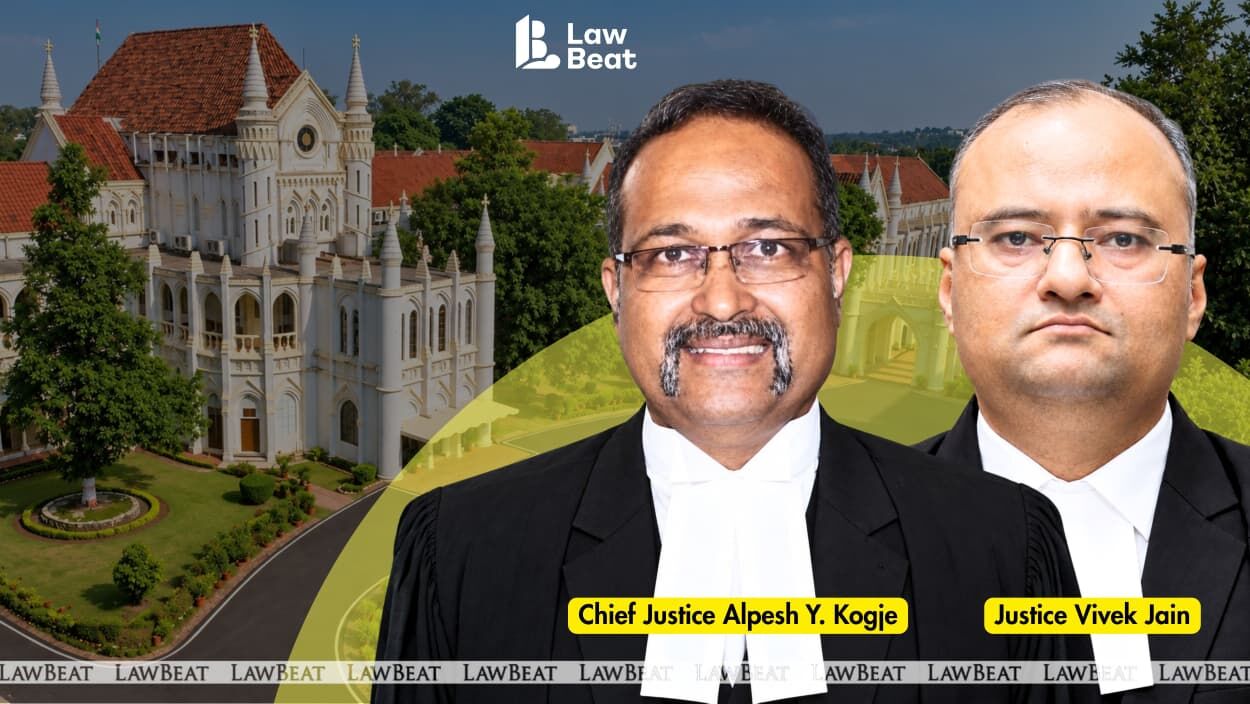
The Madhya Pradesh High Court has affirmed that guest faculty members in government colleges do not possess an inherent right to regularisation and cannot demand the same minimum salary as a regularly appointed Assistant Professor. This significant ruling, delivered by a Division Bench comprising Chief Justice Alpesh Y. Kogje and Justice Vivek Jain, upheld the State's policy of an honorarium capped at Rs 50,000 per month for guest faculty, based on a daily rate of Rs 2,000.
While denying the primary claims for regularisation and higher pay, the court, in an order authored by Justice Jain, did provide a crucial directive. It mandated that the State must offer any displaced guest faculty member the nearest available posting within their specific subject area. This limited relief was granted as part of the disposal of three consolidated petitions filed by guest faculty working in various government degree and postgraduate colleges across Madhya Pradesh.
Legal Arguments and Regulatory Context
The petitioners had challenged Clause 6.1 of a State circular dated October 5, 2023, which increased their daily honorarium from Rs 1,500 to Rs 2,000 but introduced the Rs 50,000 monthly ceiling. They contended that this cap contravened Clause 13.0 of the UGC Regulations, 2018, which stipulates that contractual teachers' emoluments should not fall below the gross monthly salary of a regular Assistant Professor. Furthermore, relying on precedents such as the Gambhirdan K. Gadhvi judgment, Jaggo v. Union of India, and Shah Samir Bharatbhai, the guest faculty sought regularisation and continuous service, even upon the arrival of permanent appointees. They highlighted their participation in the 2017 MPPSC examination, arguing against the necessity of repeated competitive assessments.
Representing the State, Additional Advocate General Bramhadatt Singh defended the circular as a legitimate policy decision. He argued that Clause 13.0 of the UGC Regulations, 2018, specifically applies to contractual teachers, not guest faculty, and that the Rs 50,000 honorarium cap aligns with a UGC circular issued on January 28, 2019. The court, before delving into the merits, reiterated that judicial intervention in policy matters is warranted only if the policy is arbitrary or violates constitutional or statutory provisions. It ultimately agreed with the State, concluding that Clause 6.1 was not in conflict with Clause 13.0 of the UGC Regulations, 2018, as the latter applies only to teachers selected through the same rigorous procedure as regular Assistant Professors. The court noted that the petitioners were appointed locally based on merit, without a competitive examination, and that the UGC itself differentiates between contractual teachers and guest faculty.
Rationale for Denying Regularisation and Other Provisions
The Madhya Pradesh High Court explicitly rejected the plea for regularisation, stating that the petitioners had failed to establish any vested right to such status. The court clarified that guest faculty members possess a right to continue their service only until regular incumbents assume their positions, either through appointment or transfer. It observed that regular recruitment processes are consistently underway, with MPPSC advertisements regularly issued, providing guest faculty with opportunities to compete for permanent roles.
The court also distinguished the Shah Samir Bharatbhai case, noting that relief was granted there because the contractual teachers had been recruited through the same public process as regular teachers, a key distinction from the present petitioners' situation. Furthermore, the bench highlighted Rule 11(8) of the M.P. Education Service (Collegiate Branch) Recruitment Rules, 1990, which provides guest faculty with a 25% horizontal reservation and age relaxation of one year per session taught, up to a maximum of ten years. The court found these existing relaxations to be free from arbitrariness or discrimination and consequently declined to quash the recruitment advertisement, reinforcing the State's current framework for managing guest faculty employment and transitions.
Practical Implications
Lawyers advising guest faculty or educational institutions in Madhya Pradesh should note that this ruling clarifies guest faculty have no vested right to regularisation or minimum salary of regular professors, but the State is obligated to offer them the nearest available posting upon displacement. This provides a clear precedent for managing expectations and policies regarding guest faculty employment and transitions in government colleges.
Source
How does this affect you?
Get an AI analysis of this article grounded in your jurisdictions, practice areas, and any policy documents you've uploaded to Wansom.
Finish Reading the Full Story and the Expert Analysis.
Get the latest legal & regulatory intelligence in India
Wansom is AI and can make mistakes.