
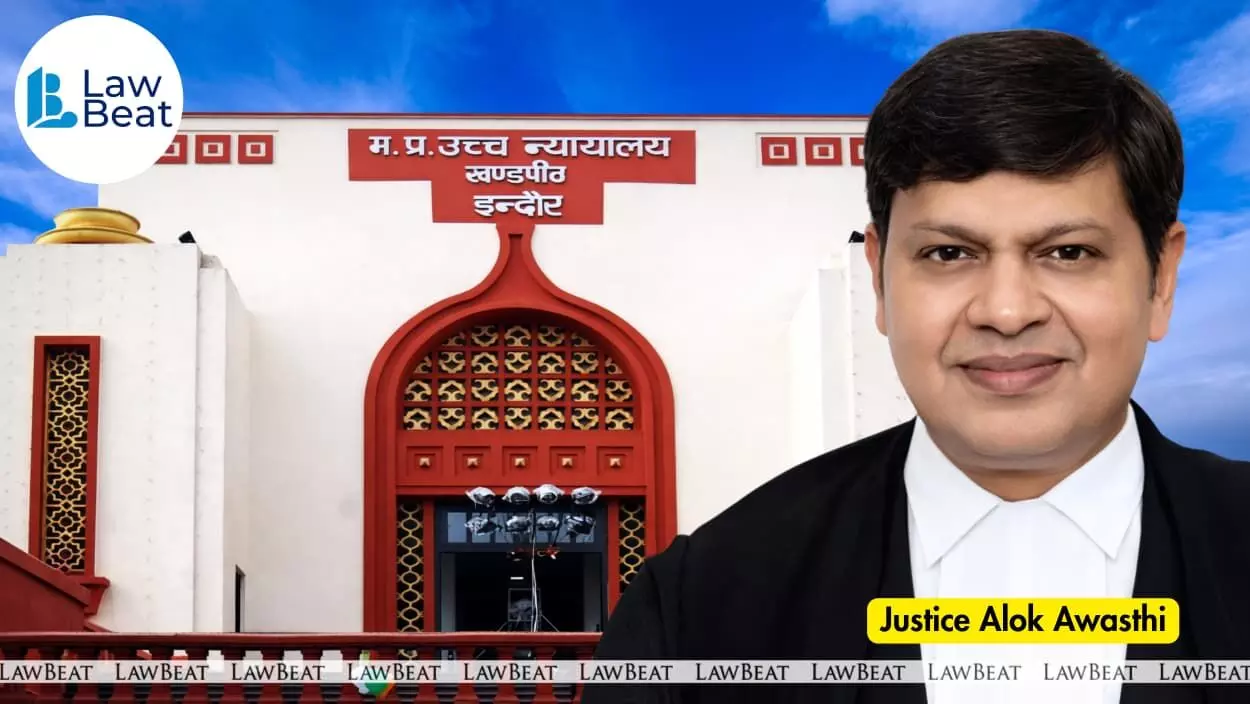
MP High Court: Grants Bail Amidst Ownership Culpability Claims
Summary
- The Madhya Pradesh High Court granted bail to Mukesh Vij and Anil Malviya in connection with a Dewas fireworks factory blast that killed 12 workers.
- The court ruled that mere ownership or financial involvement in an enterprise does not automatically establish criminal culpability.
- Chief Justice Alok Awasthi noted that continued detention was not indispensable for investigation or trial, especially after the charge-sheet was filed and investigation completed.
- The ruling emphasized that bail is not a punishment before conviction and that the seriousness of allegations alone cannot justify denying bail.
- The court reiterated the principle that bail is the rule and jail is the exception, as established by Supreme Court precedents.
Court Grants Bail in Tragic Blast
Mere designation as owner/financier or manager/partner/owner cannot, in every circumstance, automatically establish criminal culpability.
The Madhya Pradesh High Court, sitting at Indore, recently granted bail to two individuals, Mukesh Vij and Anil Malviya, who were implicated in a devastating fireworks factory explosion in Dewas. This incident, which occurred on May 14, 2026, at an illegal unit in Village Tokkala, resulted in the deaths of 12 workers and left 19 others seriously injured. The court's decision, delivered by Chief Justice Alok Awasthi on October 26, overturned a previous order from September 9 by the 1st Additional Sessions Judge/Special Judge, Dewas, which had denied their bail applications.
The prosecution's account detailed that approximately 70 to 75 laborers were engaged in filling fireworks with gunpowder and chemicals within tin sheds when the blast took place. The First Information Report (FIR) filed in connection with the incident cited numerous legal provisions, including sections of the Bharatiya Nyaya Sanhita, the Explosive Substances Act, the Explosives Act, the SC/ST Act, the Arms Act, the Child and Adolescent Labour (Prohibition and Regulation) Act, and the Juvenile Justice Act. Anil Malviya had been in custody since May 17, and Mukesh Vij since May 19, prior to the High Court's ruling.
Challenging Criminal Culpability
The state contended that Mukesh Vij, through his companies Vij Technology & Consultants and S.K. Enterprises, functioned as the primary financial controller and partner, with substantial financial transactions, amounting to crores of rupees, flowing between his firms and Anil Malviya, who was described as the apparent operator of the unit. Government Advocate Aditya Garg, representing the state, characterized Vij and Malviya as the "financial backbone" of the operation and expressed concerns that they could potentially influence vulnerable migrant witnesses.
However, Senior Advocate Vishal Baheti, supported by Advocates Aditya Singh and Kinjal Shrivastava, argued on behalf of the appellants that the case against them was predominantly based on business dealings. They emphasized that neither Vij nor Malviya was present at the factory on the day of the explosion, nor did they directly handle explosives, supervise manufacturing processes, or commit any overt act linked to the blast. Furthermore, the defense highlighted that the charge-sheet had been filed, the investigation was complete, and neither individual had any prior criminal record, challenging the notion that their continued detention was necessary.
Legal Precedent on Ownership and Bail
In its ruling, the High Court acknowledged the "extremely grave and tragic" nature of the incident but firmly stated that the severity of allegations alone cannot be the sole justification for continued custody, reiterating that bail is not intended as a form of punishment before conviction. The court observed that while owners and managers of establishments dealing with explosives are expected to exercise due care, the question of whether a breach occurred, if it was attributable to either appellant, and if it directly caused the explosion, were matters to be determined during trial.
The bench articulated a crucial legal principle: "Mere designation as owner/financier or manager/partner/owner cannot, in every circumstance, automatically establish criminal culpability." While noting that manufacturing firecrackers in a tin-roofed shed during the intense heat of May demonstrated "gross negligence," the court also found no documentary evidence indicating the involvement of minors in manufacturing and concluded that the accident was not the result of any deliberate act. The court stressed that it was not absolving the appellants of responsibility but found that with the factory premises, records, and physical evidence already in the investigating agency's possession, custodial interrogation was no longer required, making continued incarceration unjustifiable solely on the basis of the allegations' seriousness. The decision relied on Supreme Court precedents, including State of Rajasthan v. Balchand and Kumer Singh v. State of Rajasthan, reinforcing the principle that bail is the rule and jail the exception, contingent on the specific facts of each case and the relevance of witness intimidation.
Practical Implications
This ruling provides a significant precedent for defense lawyers in industrial accident cases, clarifying that mere ownership or financial involvement in an enterprise does not automatically establish criminal culpability. It reinforces that direct involvement or a demonstrable link between an individual's actions/inactions and the incident must be proven, and that bail should be the norm once investigations are complete and no direct culpability is shown, rather than detention based solely on the seriousness of the allegations.
Source
Source: Original reporting via Live Law
How does this affect you?
Get an AI analysis of this article grounded in your jurisdictions, practice areas, and any policy documents you've uploaded to Wansom.
Finish Reading the Full Story and the Expert Analysis.
Get the latest legal & regulatory intelligence in India
Wansom is AI and can make mistakes.