
MP High Court: Agreement to Sell Land Title Cannot Void Later Sale Deed
Summary
- The Madhya Pradesh High Court ruled that an agreement to sell does not convey land title or automatically grant the right to prevent a seller from disposing of property.
- A buyer cannot seek a declaration or injunction against a seller or a subsequent buyer without also claiming specific performance of the agreement to sell.
- The court dismissed a 36-year-old land suit where the plaintiff had only an agreement to sell and had not sought specific performance.
- This decision overturned lower court rulings that had declared a subsequent sale deed void based on an earlier agreement to sell.
- The ruling emphasized that Section 53A of the Transfer of Property Act protects an intending buyer's possession, not their ownership, against the seller.
Background of a Decades-Long Land Dispute
The Madhya Pradesh High Court has unequivocally stated that an agreement to sell, even when accompanied by possession, does not transfer ownership of land, nor does it automatically grant the right to prevent the seller from disposing of the property to another party.
A protracted legal battle spanning over three decades concerning a land parcel in Gohad, District Bhind, has finally been resolved by the Madhya Pradesh High Court at Gwalior. The dispute centered on 0.158 hectares of land, part of a larger 0.549-hectare plot (Survey No. 1712). The plaintiff initiated the lawsuit on July 13, 1990, asserting that the original seller had agreed to sell the land to him for Rs 33,000 on December 27, 1989, accepting an advance payment of Rs 5,200 and granting possession. The agreement stipulated that the formal sale deed would be executed once the seller's name was officially recorded in the revenue records.
Alleging that the seller was negotiating with other potential buyers, the plaintiff sought a declaration that the seller was prohibited from selling the land to anyone else, along with a permanent injunction to prevent such a transaction. However, after the suit was filed, the seller and his brothers proceeded to sell the land to Kiledar Singh on October 10, 1991. The plaintiff subsequently amended his complaint to challenge this new sale deed. Both the trial court and the first appellate court ruled in favor of the plaintiff, declaring the later sale deed void on the basis of the earlier agreement to sell.
High Court Overturns Lower Court Decisions
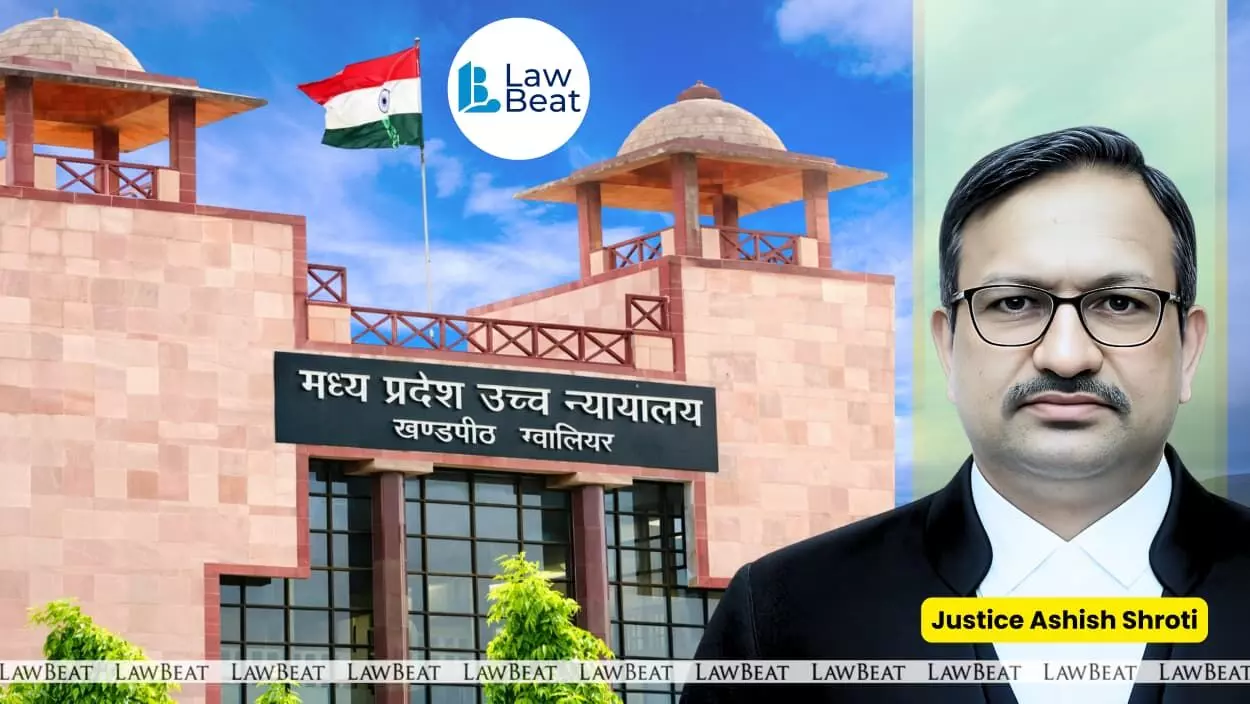
Justice Ashish Shroti, presiding over the Madhya Pradesh High Court, allowed a second appeal filed by the legal representatives of Kiledar Singh, the buyer under the 1991 sale deed. This decision effectively set aside the concurrent decrees issued in 2001 by the Additional District Judge, Gohad, and the Civil Judge Class-I, Gohad, thereby dismissing the suit that had been pending for over 36 years. The appeal, titled Kiledar Singh (Deceased) Through LRs Kalyan Singh and Others vs Anil Kumar and Others, was admitted by the High Court in 2008 to address two critical legal questions: whether a decree could be granted solely on the strength of an agreement to sell, and if the subsequent sale deed could be declared void without the payment of ad valorem court fees.
Advocate Avadhesh Parashar, representing the appellants, argued that an agreement to sell does not transfer title and, consequently, no decree could be issued without a specific claim for specific performance of the agreement. The High Court concurred with this position, noting that the plaintiff's claim of ownership was based "solely" on the registered agreement. The court explicitly stated that while the parties had agreed to sell the land, the title had not been conveyed to the plaintiff. This pivotal finding underscored the court's decision to overturn the previous judgments.
Legal Precedent and the Absence of Specific Performance
The High Court's ruling heavily relied on established legal principles, including the Supreme Court's landmark decision in *Suraj Lamp & Industries (P) Ltd vs State of Haryana*. This precedent unequivocally states that "an agreement of sale, whether with possession or without possession, is not a conveyance." The court further cited recent Supreme Court rulings, such as *Indian Overseas Bank vs M.A.S. Subramanian* and *RBANMS Educational Institution vs B. Gunashekar*, along with its own previous decisions in *Prem Bai* and *Nehal Shah*.
These cases collectively emphasize that Section 53A of the Transfer of Property Act primarily serves to protect an intending buyer's possession against the seller, rather than conferring ownership rights against the world. The court identified a "fatal gap" in the plaintiff's case, concluding that "In absence of any relief for specific performance of agreement to sell, there is no chance of plaintiff’s acquiring title over the suit property." Consequently, without possessing title, the plaintiff was deemed not entitled to a permanent injunction, and a declaration preventing the seller from alienating the land was deemed impermissible under law. Regarding the second question, the court determined that the plaintiff, not being a party to the 1991 sale deed, was not obligated to pay ad valorem court fees to seek its voidance.
Implications for Land Transactions in India
This ruling from the Madhya Pradesh High Court clarifies that a mere agreement to sell does not confer title or the right to an injunction preventing the seller from alienating the property. The decision underscores a critical distinction in Indian property law: an agreement to sell, even with possession, does not equate to a transfer of ownership. For a prospective buyer to secure their rights and prevent a subsequent sale by the original owner, actively seeking specific performance of the agreement is paramount.
The judgment in *Kiledar Singh vs Anil Kumar* serves as a significant reminder that relying solely on an agreement to sell for land title is insufficient to claim ownership or to obtain a land sale injunction without title. It highlights the necessity for buyers to pursue the full legal process, including specific performance, to convert an agreement into a legally recognized transfer of property, thereby safeguarding their investment against future disputes.
Practical Implications
This ruling from the Madhya Pradesh High Court clarifies that a mere agreement to sell does not confer title or the right to an injunction preventing the seller from alienating the property. Lawyers advising prospective land buyers in India must ensure that clients not only enter into agreements to sell but also actively seek specific performance to secure their rights and prevent subsequent sales by the original owner.
Source
How does this affect you?
Get an AI analysis of this article grounded in your jurisdictions, practice areas, and any policy documents you've uploaded to Wansom.
Finish Reading the Full Story and the Expert Analysis.
Wansom is AI and can make mistakes.