
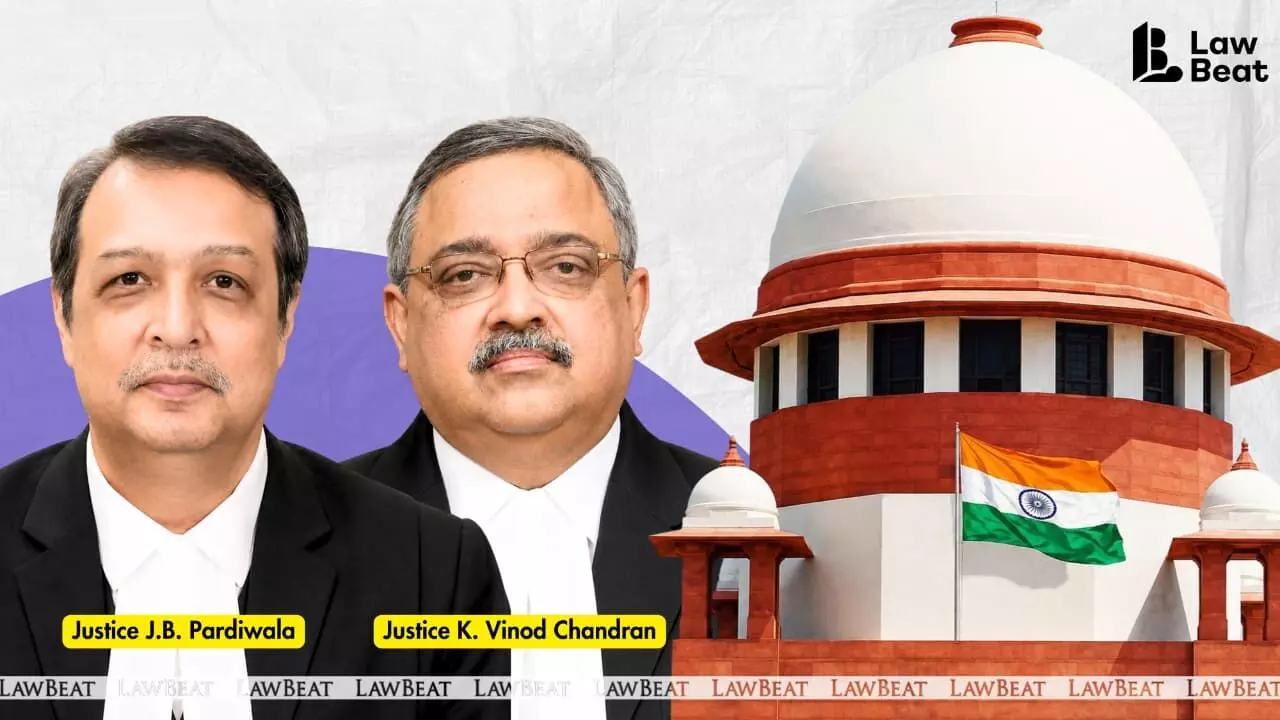
Supreme Court: Bank Officers Not Liable Under SC/ST Act for Loan Recovery
Summary
- The Supreme Court quashed criminal proceedings against bank officials under the SC & ST Act for loan recovery actions.
- The Court ruled that specific allegations of caste-based insult or discrimination are essential for invoking the Act, not merely economic grievances.
- Allegations of economic boycott or non-compliance with RBI guidelines are insufficient to prosecute bank officers under the SC/ST Act.
- The case involved State Bank of India and Hritasha Infra Projects Private Limited, managed by Scheduled Caste and Scheduled Tribe members.
- Justices J B Pardiwala and K Vinod Chandran emphasized the necessity of direct discriminatory intent for criminal liability under the Act.
Supreme Court Quashes Proceedings
The Supreme Court has clarified that criminal liability under the SC & ST (Prevention of Atrocities) Act necessitates specific allegations of caste-based insult or discrimination against the accused, rather than merely economic grievances.
The Supreme Court recently intervened to halt criminal proceedings initiated under the Scheduled Castes and Scheduled Tribes (Prevention of Atrocities) Act against several bank officials. This significant ruling clarifies that bank officers cannot face prosecution under the SC/ST Act solely for undertaking loan recovery actions against a company managed by members of Scheduled Castes and Scheduled Tribes, unless specific allegations of caste-based insult or discrimination are present.
The case originated from an FIR filed in 2019 at the CID Police Station in Hyderabad, targeting Chavan Dharmendar and other bank personnel. The core of the dispute revolved around business loans, non-performing assets (NPAs), and the bank's alleged failure to provide rehabilitation benefits to the borrowing entity. Hritasha Infra Projects Private Limited, a small-scale industry, had been receiving credit facilities from the State Bank of India since 2010, providing collateral security. The company's accounts became non-performing in 2016 following financial setbacks. Despite claims by the promoters of repaying a term loan of Rs 2.90 crore and an additional Rs 45 lakh to regularize the account, they alleged persistent caste-based discrimination by certain bank officials. They further contended that documents were falsified and misleading information was submitted to senior authorities, leading to actions that caused them to injury and annoyance, purportedly violating Section 3(1)(q) of the SC & ST Act.
Legal Interpretation of Discrimination
The Supreme Court, through a bench comprising Justices J B Pardiwala and K Vinod Chandran, underscored that criminal liability under the SC & ST (Prevention of Atrocities) Act requires concrete allegations of caste-based insult or discrimination directed at the accused. The Court explicitly stated that proceedings under the Act cannot be sustained merely on claims of an economic boycott. The promoters of Hritasha Infra Projects had alleged that their small-scale enterprise, managed by Scheduled Castes and Scheduled Tribes members, faced an economic boycott, claiming that influential entrepreneurs from higher castes received rehabilitation packages with substantial discounts, a benefit denied to their company. However, the Court found no specific accusation that any bank official had denigrated the company's directors purely due to their caste.
The Court also addressed the allegations concerning the violation of RBI circulars and guidelines, and the failure to extend a rehabilitation package. It clarified that non-compliance with RBI directives, by itself, does not warrant criminal prosecution under the SC/ST Act simply because the company's directors belong to Scheduled Castes or Scheduled Tribes. The bench noted that while the high court record indicated the company was predominantly managed by Scheduled Caste and Scheduled Tribe women, the Managing Director, who was the second respondent, was not a woman. Ultimately, the Court was not persuaded that the criminal prosecution should proceed based on the allegations presented.
Implications for Loan Recovery
This ruling significantly clarifies the scope of the SC/ST Prevention of Atrocities Act, particularly in the context of commercial disputes and loan recovery actions involving bank officers. It establishes a crucial precedent that the Act is not a tool for addressing general economic grievances or perceived unfairness in banking practices, even when the aggrieved parties are from Scheduled Castes or Scheduled Tribes. Instead, it mandates a direct link to caste-based discriminatory intent for its invocation.
The decision by Justices J B Pardiwala and K Vinod Chandran reinforces that the mere status of a borrower as belonging to a Scheduled Caste or Scheduled Tribe does not automatically trigger the Act's provisions in a financial dispute. The Court's stance emphasizes that for bank officers to face SC/ST Act prosecution, there must be clear and specific allegations demonstrating that their actions were motivated by caste-based prejudice, rather than being part of standard loan recovery procedures or alleged non-compliance with banking regulations. This provides important guidance for financial institutions and their personnel regarding their exposure to such complaints during loan recovery criminal proceedings.
Practical Implications
This ruling clarifies that the SC/ST Act cannot be invoked against bank officials for loan recovery actions without specific allegations of caste-based insult or discrimination, even if the borrower is from a Scheduled Caste/Tribe. Lawyers advising financial institutions should note this precedent to defend against or assess the viability of SC/ST Act complaints arising from commercial disputes, emphasizing the need for direct discriminatory intent rather than general economic grievances or non-compliance with banking regulations.
Source
Source: Original reporting via Live Law
How does this affect you?
Get an AI analysis of this article grounded in your jurisdictions, practice areas, and any policy documents you've uploaded to Wansom.
Finish Reading the Full Story and the Expert Analysis.
Wansom is AI and can make mistakes.