
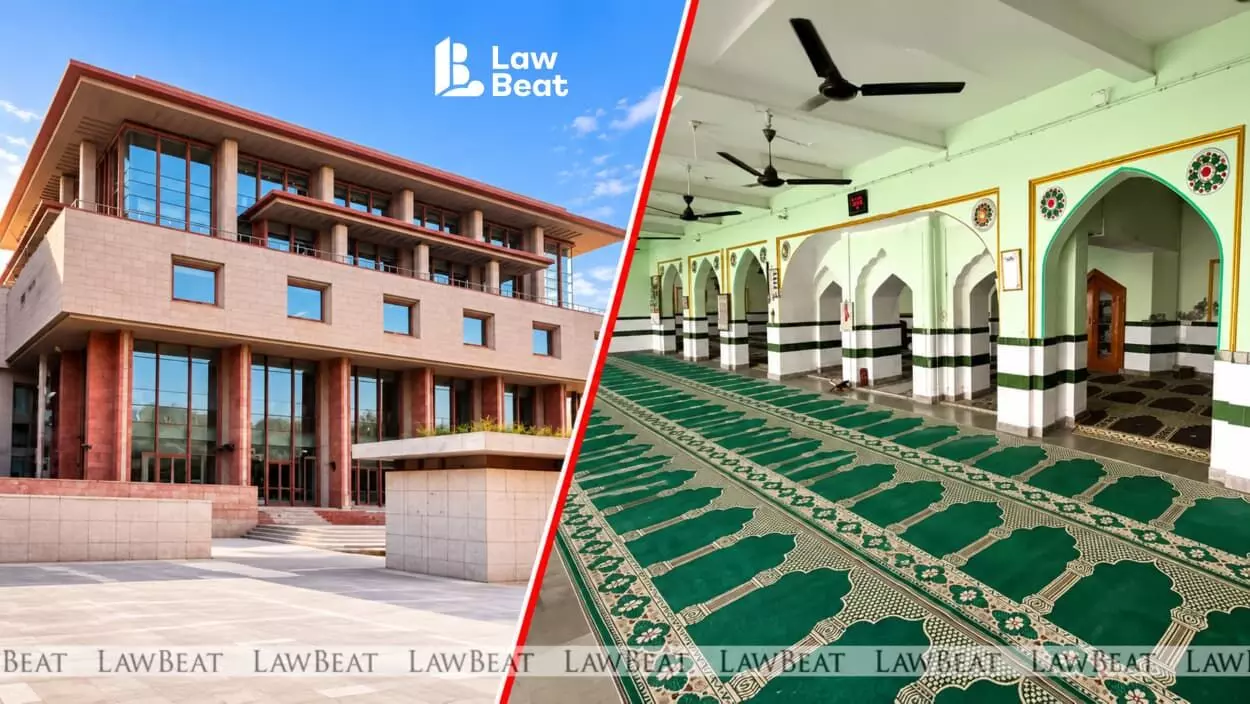
Delhi High Court: No Coercive Action on Mosque Demolition Near PM Residence
Summary
- The Delhi High Court has ordered a temporary halt to any demolition action against a mosque near the Prime Minister's residence.
- This stay is contingent on the Union government's review of a representation from the Delhi Waqf Board within four weeks.
- Access to the mosque, located in the Jaipur Polo Ground area, remains restricted due to ongoing demolition work and safety concerns.
- The court directed parties to submit status reports and photographs to clarify the extent of demolition work at the site.
- The Delhi Waqf Board had previously approached authorities under Section 32 of the United Waqf Management, Empowerment, Efficiency and Development Act, 1995 (UWMEED Act 1995).
Court Intervenes on Mosque Demolition
The Delhi High Court's directive to maintain a temporary demolition stay on the mosque near the PM residence underscores the critical importance of due process, particularly when dealing with religious structures.
The Delhi High Court has temporarily halted any demolition activities targeting a mosque situated within the Jaipur Polo Ground, an area located in close proximity to the Prime Minister's residence. This judicial intervention came after the Union government assured the court that no coercive measures would be taken against the religious structure. The government committed to reviewing a formal representation submitted by the Delhi Waqf Board within a four-week timeframe, promising a written response.
During this period, however, access to the mosque will remain restricted. Authorities cited ongoing demolition work in the surrounding vicinity as the primary reason, emphasizing safety concerns for individuals attempting to enter the premises. This decision by Justice Anish Dayal was made while hearing a petition initiated by a worshipper seeking protection for the mosque and restoration of public access. The court has scheduled further proceedings for December 16, 2026, indicating continued judicial oversight of the situation.
Legal Arguments and Procedural Directives
The legal proceedings before Justice Anish Dayal were initiated by a worshipper who sought judicial protection against the potential demolition of the mosque, alongside a plea for the restoration of access for devotees and the enforcement of the Delhi Waqf Board's statutory duties. Representing the Union government, Central Government Standing Counsel Ashish Dixit informed the court that the Land and Development Office (LNDO) would consider the Delhi Waqf Board's representation within four weeks, with a written reply to follow. Deputy LNDO Kunal Bhaskar was present during this submission, reinforcing the government's commitment.
Dixit further clarified that the Delhi Waqf Board had already approached the authorities under Section 32 of the United Waqf Management, Empowerment, Efficiency and Development Act, 1995 (UWMEED Act 1995), formerly known as the Waqf Act, 1995, indicating a formal process was underway. While the petitioner's counsel, Advocate Sufyan Siddiqui, asserted the right of worshippers to independently seek legal recourse for religious practices, Justice Dayal emphasized that the court was not delving into the merits of the broader dispute. The judge instructed Siddiqui to focus his arguments solely on the relief requested in the writ petition, distinguishing it from a public interest litigation. This focus ensures the court addresses the immediate concerns without expanding the scope unnecessarily.
Disputed Access and Safety Justifications
A significant point of contention during the hearing revolved around the continued restriction of access to the mosque. Advocate Sufyan Siddiqui, representing the petitioner, pressed for the immediate restoration of entry and exit for worshippers, highlighting that devotees had been barred from the premises. In response, Central Government Standing Counsel Ashish Dixit reiterated that demolition activities were still ongoing in the surrounding area, posing considerable safety risks to anyone attempting to enter. He underscored this point by noting that access was similarly denied to a temple located within the same vicinity, indicating a uniform safety protocol.
Justice Dayal acknowledged the Centre's position, concluding that access could not be permitted at this juncture given the active demolition work and the inherent potential for injury. However, Siddiqui challenged the government's assertion regarding ongoing demolition, presenting photographs taken that morning which, he claimed, demonstrated the completion of the work. In light of this discrepancy, the court mandated that all involved parties submit detailed status reports, accompanied by photographic evidence, pertaining to the demolition work and the current conditions at the site. This directive aims to provide clarity on the factual situation before the next hearing.
Implications for Religious Structures and Due Process
The Delhi High Court's directive to maintain a temporary demolition stay on the mosque near the PM residence underscores the critical importance of due process, particularly when dealing with religious structures. By requiring the Union government to formally address the Delhi Waqf Board representation within a specified timeframe, the court has emphasized that administrative bodies must engage with statutory authorities like the Waqf Board before proceeding with any significant action, such as demolition. This judicial stance reinforces the legal framework governing religious properties and the rights of communities associated with them.
This ruling could serve as a significant precedent for property disputes involving religious or community assets in Delhi. It highlights that courts are prepared to intervene and prevent coercive action when proper procedures and representations have not been fully considered. The insistence on a written response from the Land and Development Office to the Waqf Board's submission, made under United Waqf Management, Empowerment, Efficiency and Development Act, 1995 (UWMEED Act 1995) Section 32 Delhi, ensures accountability and transparency in decision-making processes that affect sensitive community sites. The case thus reinforces the principle that even in areas undergoing redevelopment or security enhancements, the legal rights and representations concerning religious structures must be duly respected and addressed.
Practical Implications
Lawyers advising on property disputes or land use in Delhi, particularly concerning religious structures, should note this ruling as it reinforces the importance of due process and considering representations from bodies like the Delhi Waqf Board before any demolition action. It highlights a judicial precedent for temporary stays on coercive action pending administrative review, which could be cited in similar cases involving religious or community properties.
Source
How does this affect you?
Get an AI analysis of this article grounded in your jurisdictions, practice areas, and any policy documents you've uploaded to Wansom.
Finish Reading the Full Story and the Expert Analysis.
Wansom is AI and can make mistakes.