
Mozambique: Venâncio Mondlane Trial Public Opinion Shaped by Frelimo Allies
Summary
- Venâncio Mondlane's trial for post-election violence has become a battle for public opinion in Mozambique.
- Pro-Frelimo commentators have begun appearing at the Supreme Court, offering narratives that support the prosecution's case.
- The prosecution is attempting to link Mondlane's public appeals to protest violence, even if he sought to prevent it.
- A documentary examining grievances behind the 2024-2025 protests was fined MZN1.75m by a state body for alleged lack of authorization.
- These developments suggest a concerted effort by authorities to control information and public opinion surrounding the trial and broader political dissent.
The Battle for Public Opinion
The combined efforts to shape the narrative around the trial and restrict critical documentary content highlight a broader strategy to manage public opinion concerning sensitive political events in Mozambique.
The ongoing trial of opposition politician Venâncio Mondlane, facing charges related to the violence that followed Mozambique's contested 2024 elections, has evolved beyond a mere legal proceeding into a significant contest for public perception. Authorities and the ruling Frelimo party appear to be actively engaged in shaping the political environment surrounding the case, with recent developments suggesting a concerted effort to influence how the public understands the proceedings and might react to the eventual verdict.
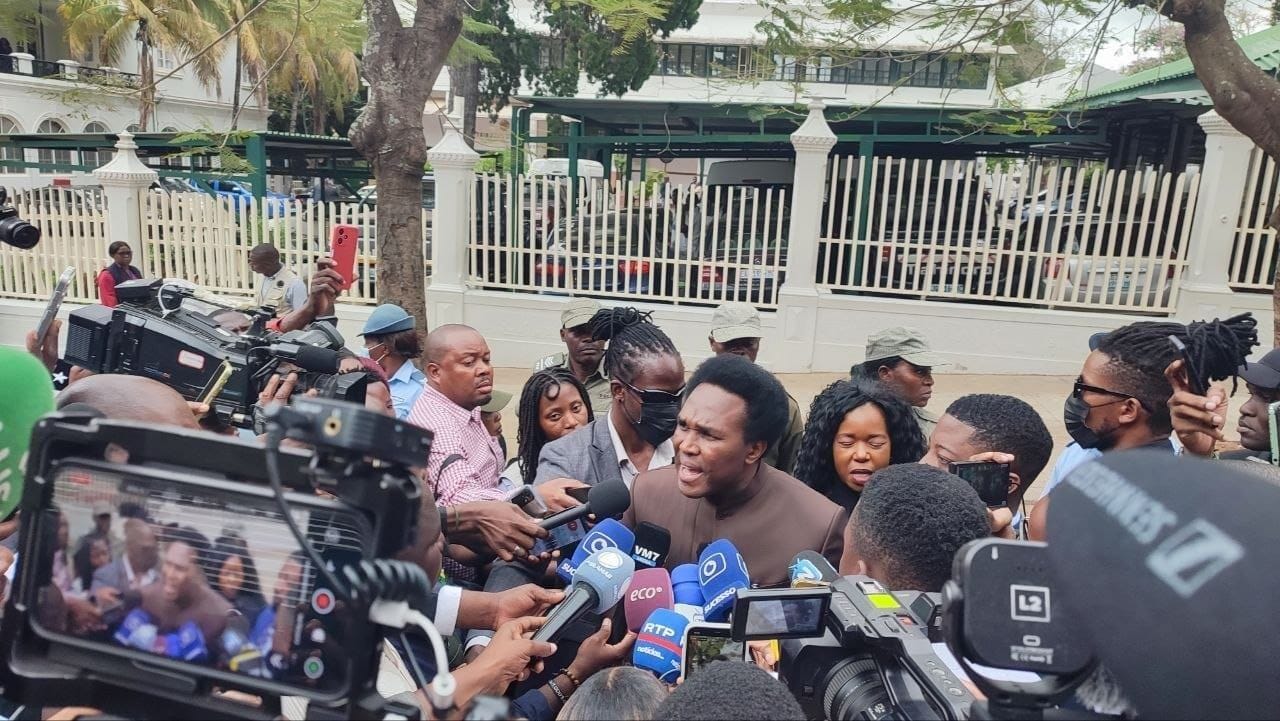
Initially, briefings provided to journalists outside the Supreme Court were largely dominated by Mondlane's supporters and civil society representatives. Prominent figures such as Fátima Mimbire, Salomão Moyana, António Muchanga, and economist Roberto Tibana consistently challenged the prosecution's evidence, raised questions about the judges' conduct, and criticized police operations around the courthouse. Their accounts played a crucial role in forming public understanding of the trial, especially since live broadcasts of the proceedings are not permitted.
Shifting Narratives in Court
A notable shift occurred recently with the appearance of new commentators outside the courtroom. Academic Régio Conrado attended on Monday, followed by singer and influencer Narciso Paulo on Tuesday, and influencer DJ Júnior alongside journalist Gustavo Mavie on Wednesday. These individuals, known for their sympathy towards Frelimo, presented a starkly different interpretation of the events, often praising the prosecution's case and criticizing Mondlane. DJ Júnior, for instance, informed journalists that his observations inside the court diverged significantly from other commentators' reports, claiming Mondlane appeared visibly embarrassed during the hearing.
Inside the courtroom, the prosecution, led by Chuquela and Rodrigo Rocha representing the road concessionaire Revimo, has intensified its focus on Mondlane's alleged role in directing and encouraging the protests. During Wednesday's proceedings, they renewed their questioning and introduced additional video evidence depicting protest violence. One particularly disturbing amateur recording reportedly showed two alleged police officers being beaten to death while bystanders filmed on mobile phones. Prosecutor Chuquela specifically questioned Mondlane about what words he used to instruct protesters *not* to kill police officers, a line of inquiry designed to establish a connection between Mondlane's public appeals and the subsequent acts of violence, implying responsibility even if he actively sought to prevent such actions. This emphasis within the trial aligns closely with the narrative promoted by the Frelimo-aligned commentators outside, suggesting Mondlane bears responsibility for the actions of some protesters.
Controlling Information and Dissent
Beyond the courtroom, efforts to control public discourse extend to documentary film. The National Institute of Cultural and Creative Industries (INICC) recently imposed a fine of approximately MZN1.75 million (equivalent to $27,000) on the Rural Environment Observatory (OMR) for its documentary, "Não é nosso país este aqui?" (Isn't This Our Country?). The INICC alleged that the film, which examines the social and economic grievances that fueled the 2024–2025 demonstrations and uses footage and testimony to revisit a period of significant public mobilization against election results and the government, was produced without the necessary authorizations.
OMR, coordinated by researcher João Feijó, disputes the legal basis for this penalty, contending that its non-commercial educational work should not be subject to such regulatory requirements. A planned screening of the documentary at Maputo's Scala cinema was subsequently canceled in October, further illustrating the challenges faced by organizations attempting to disseminate critical content related to sensitive political events in Mozambique.
Implications for Justice and Expression
The combined efforts to shape the narrative around the trial and restrict critical documentary content highlight a broader strategy to manage public opinion concerning sensitive political events in Mozambique. The lack of live trial broadcasts amplifies the influence of competing external accounts, making the battle for public opinion particularly impactful. This situation raises significant questions about due process and the fairness of trials when external pressures are so pronounced.
For legal and compliance professionals in Mozambique, these developments underscore the potential for government influence on public perception and information dissemination surrounding high-profile political trials. It also highlights the inherent risks for organizations producing content that challenges official narratives and the necessity of understanding regulatory challenges, such as the INICC fine, when engaging in public discourse related to political events. The ongoing Venâncio Mondlane trial public opinion Mozambique dynamic serves as a critical case study in the intersection of law, politics, and public information control.
Practical Implications
Lawyers and compliance officers in Mozambique should note the potential for government influence on public perception and information dissemination surrounding high-profile political trials, which could impact due process and freedom of expression. This case highlights the risks for organizations producing critical content and the need to understand regulatory challenges (like the INICC fine) when engaging in public discourse related to sensitive political events.
Source
How does this affect you?
Get an AI analysis of this article grounded in your jurisdictions, practice areas, and any policy documents you've uploaded to Wansom.
Finish Reading the Full Story and the Expert Analysis.
Get the latest legal & regulatory intelligence in Mozambique
Wansom is AI and can make mistakes.