
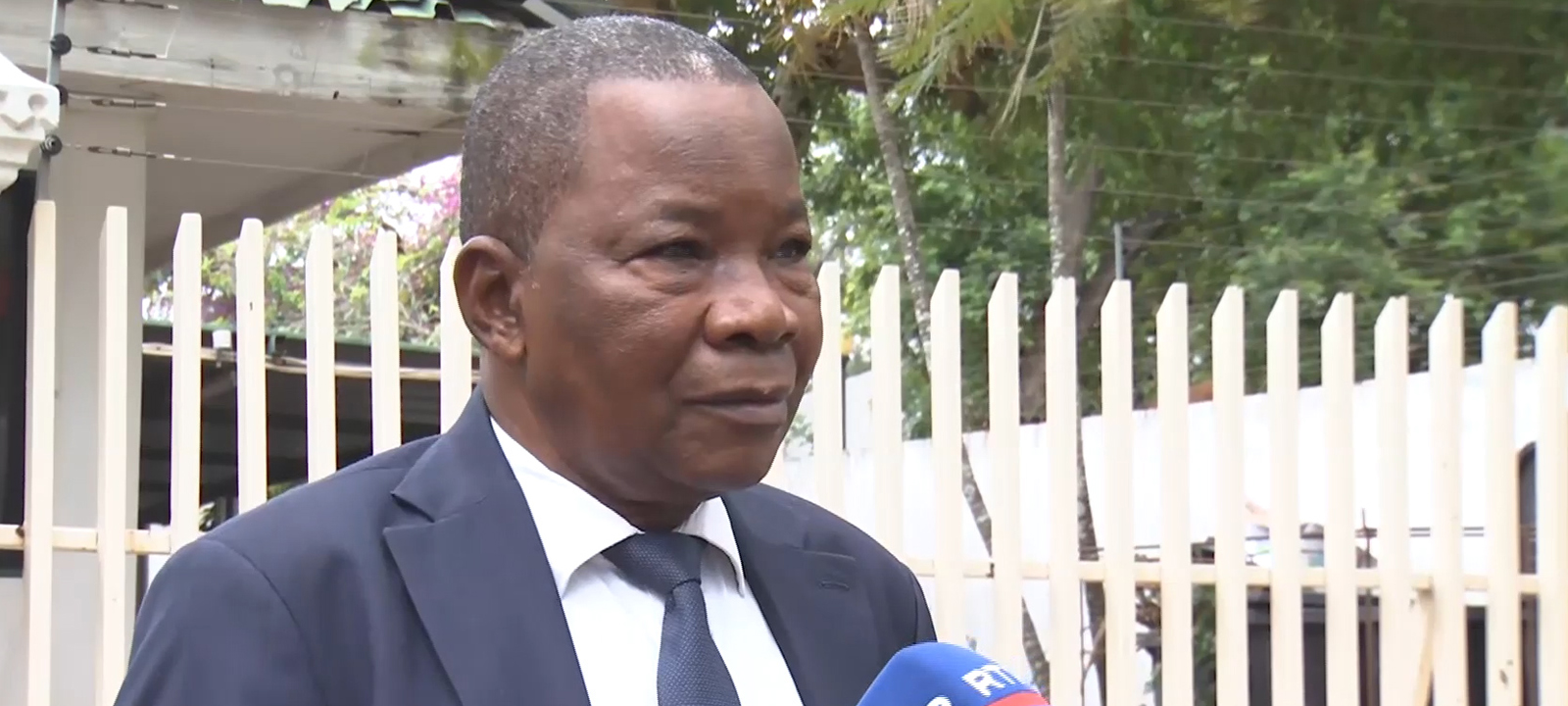
Gustavo Mavie: Venâncio Mondlane Trial New Declarants' Impact Doubted
Summary
- Journalist Gustavo Mavie believes new testimonies from Graça Machel and Samanta Lemos will not significantly influence the Venâncio Mondlane trial.
- The defense team for Venâncio Mondlane requested the hearing of both Machel and Lemos.
- Mavie asserts that the accusations against the defendant are well-documented.
- He explicitly rejects the notion that the trial is political in nature.
New Witnesses in Mondlane Trial Face Scrutiny
Mavie has expressed his view that the statements from Graça Machel and Brazilian businesswoman Samanta Lemos are unlikely to significantly impact the outcome of the trial.
The ongoing legal proceedings involving Venâncio Mondlane have recently seen a development concerning the potential introduction of new testimony, which has drawn commentary from journalist Gustavo Mavie. Mavie has expressed his view that the statements from Graça Machel and Brazilian businesswoman Samanta Lemos are unlikely to significantly impact the outcome of the trial. These two individuals were requested to provide testimony by the defense team representing Venâncio Mondlane, indicating a specific aspect of the Venâncio Mondlane defense strategy.
Mavie's assessment suggests a skepticism regarding the substantive contribution these new declarants might offer to the case. The defense's move to call such high-profile figures as Graça Machel and Samanta Lemos introduces a new dynamic, but Mavie's perspective downplays their potential to alter the core trajectory of the legal arguments. This highlights the public and expert scrutiny that often accompanies the introduction of new evidence, particularly when the relevance of the new declarants' testimony is not immediately apparent to external observers.
Expert Opinion on Case Documentation and Political Nature
Gustavo Mavie further elaborated on his stance by asserting that the accusations leveled against the defendant are thoroughly documented. This emphasis on existing evidence forms the basis of his belief that additional testimonies, such as the Graça Machel Samanta Lemos testimony, may not sway the court significantly. His comments underscore a view that the prosecution's case is built on a solid foundation of verifiable information, making it less susceptible to external influences from new witnesses.
Moreover, Mavie explicitly rejected the characterization of the proceedings as a Mozambique political trial. This refutation directly addresses a common narrative that sometimes surrounds high-profile cases involving public figures. By dismissing the political interpretation, Mavie reinforces his position that the trial is fundamentally about the documented facts and legal merits, rather than being driven by political motivations or agendas. This perspective offers a counter-narrative to those who might view the trial through a political lens, further framing the context in which the Venâncio Mondlane trial new declarants are being considered.
Strategic Implications of Defense Witness Choices
The decision by the Venâncio Mondlane defense strategy to call Graça Machel and Samanta Lemos as new declarants, and the subsequent public commentary by Gustavo Mavie, brings into focus the strategic considerations involved in high-stakes legal battles. Mavie's opinion, that their contributions will not be significant, suggests that the perceived value of new testimony can be subject to immediate public and expert evaluation, even before it is presented in court. This scrutiny can influence how the defense's actions are interpreted, both by the public and potentially by the court itself.
In high-profile cases, the introduction of new witnesses, particularly those whose connection to the core facts might appear tangential, can be a double-edged sword. While it might aim to introduce new perspectives or lend credibility, it also opens the door to questions about the necessity and relevance of such testimony. Mavie's remarks about the documented nature of the accusations and his rejection of the 'Mozambique political trial' label implicitly challenge the strategic efficacy of the Graça Machel Samanta Lemos testimony, suggesting that the defense's move might be viewed as less impactful than intended, especially when the existing evidence is considered robust.
Practical Implications
Lawyers involved in high-profile cases should note the public and expert scrutiny applied to the introduction of new witnesses, particularly when their testimony is perceived as potentially tangential or politically motivated. This case highlights the need to strategically assess the likely impact and reception of new evidence, beyond its mere admissibility, to avoid undermining the defense's credibility.
Source
Source: Original reporting via O País
How does this affect you?
Get an AI analysis of this article grounded in your jurisdictions, practice areas, and any policy documents you've uploaded to Wansom.
Finish Reading the Full Story and the Expert Analysis.
Get the latest legal & regulatory intelligence in Mozambique
Wansom is AI and can make mistakes.