
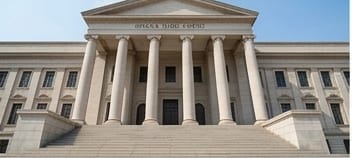
Maputo Court: Podemos Leadership Mandate Challenged, New Elections Ordered
Summary
- The Maputo City Judicial Court has intervened in a leadership dispute within Podemos, temporarily barring central bodies from acting due to expired mandates.
- Hélder Mendonça, a former secretary-general, initiated the court challenge, questioning Albino Forquilha's leadership.
- Podemos also faces a separate financial dispute, with its accounts frozen and a qualified-disobedience case opened for failing to honor a 2024 electoral funds agreement.
- The Renamo party also faced judicial scrutiny when António Muchanga successfully challenged his suspension, arguing a violation of party statutes.
- These cases highlight a trend where internal political party disputes in Mozambique are increasingly resolved through judicial intervention, emphasizing the need for strict adherence to party statutes and financial agreements.
Judicial Intervention in Podemos Leadership
This trend underscores a critical lesson for all political entities: internal party mandates and disciplinary actions are subject to judicial review, necessitating strict adherence to party statutes and financial agreements to prevent external legal challenges and potential court-ordered interventions.
The Maputo City Judicial Court has recently intervened in a significant internal dispute within the Podemos political party, following an application filed by Hélder Mendonça, a former secretary-general. This action represents a direct challenge to the continued authority of the party's central bodies, with Mendonça asserting that their mandates have officially expired. The court's involvement highlights a growing trend where internal party governance in Mozambique is increasingly subject to external legal scrutiny, particularly when established internal mechanisms fail to resolve disputes.
An interim order issued by the court has temporarily barred these central bodies from exercising their functions. This ruling has led to the prohibition of Albino Forquilha's leadership, as the court has suspended the party's central bodies and ordered new elections, finding that their mandates had expired. The case underscores the necessity for political parties to meticulously adhere to their own statutory timelines and governance procedures to avoid such judicial interventions.
Financial Accountability and Legal Scrutiny
Beyond the leadership mandate dispute, Podemos is concurrently grappling with a separate financial controversy that has also drawn judicial attention. In September, the same Maputo court ordered the freezing of the party's accounts and initiated a qualified-disobedience case against its leadership. This legal action stemmed from the party's failure to honor a 2024 memorandum of understanding with the Associação Solidariedade Cívica de Moçambique, which outlined terms for the sharing of electoral funds.
While these two cases address distinct obligations—one concerning the Podemos mandate and the other financial agreements—their combined effect paints a picture of a political entity whose leadership, financial management, and contractual commitments have all become matters for judicial determination. This situation emphasizes that political parties, like any other organization, are accountable under the law for their financial dealings and contractual obligations, especially when public funds or electoral resources are involved.
Broader Implications for Mozambican Political Parties
The challenges faced by Podemos are not isolated incidents but reflect a broader pattern within Mozambique's political landscape, where internal party disagreements frequently escalate into external legal battles. A parallel situation unfolded within Renamo, where António Muchanga pursued legal action following his suspension from the party. Muchanga contended that the disciplinary process violated Renamo's own statutes, particularly after he had voiced criticism of Ossufo Momade's leadership. A Maputo court subsequently found that Renamo had denied Muchanga a fair hearing, reinforcing the principle that internal party disciplinary actions must conform to established legal and statutory frameworks.
These cases collectively demonstrate that while political parties in Mozambique often demand accountability from their adversaries, they frequently struggle to enforce it internally. The recurring theme is the difficulty of holding leaders accountable through institutions that those very leaders control. Consequently, members are increasingly resorting to the judiciary when internal rules prove insufficient to constrain those in power. This trend underscores a critical lesson for all political entities: internal party mandates and disciplinary actions are subject to judicial review, necessitating strict adherence to party statutes and financial agreements to prevent external legal challenges and potential court-ordered interventions.
Practical Implications
Lawyers advising political parties in Mozambique should note that internal party mandates and disciplinary actions are subject to judicial review, requiring strict adherence to party statutes and financial agreements to prevent external legal challenges and potential court-ordered interventions.
Source
How does this affect you?
Get an AI analysis of this article grounded in your jurisdictions, practice areas, and any policy documents you've uploaded to Wansom.
Finish Reading the Full Story and the Expert Analysis.
Get the latest legal & regulatory intelligence in Mozambique
Wansom is AI and can make mistakes.