
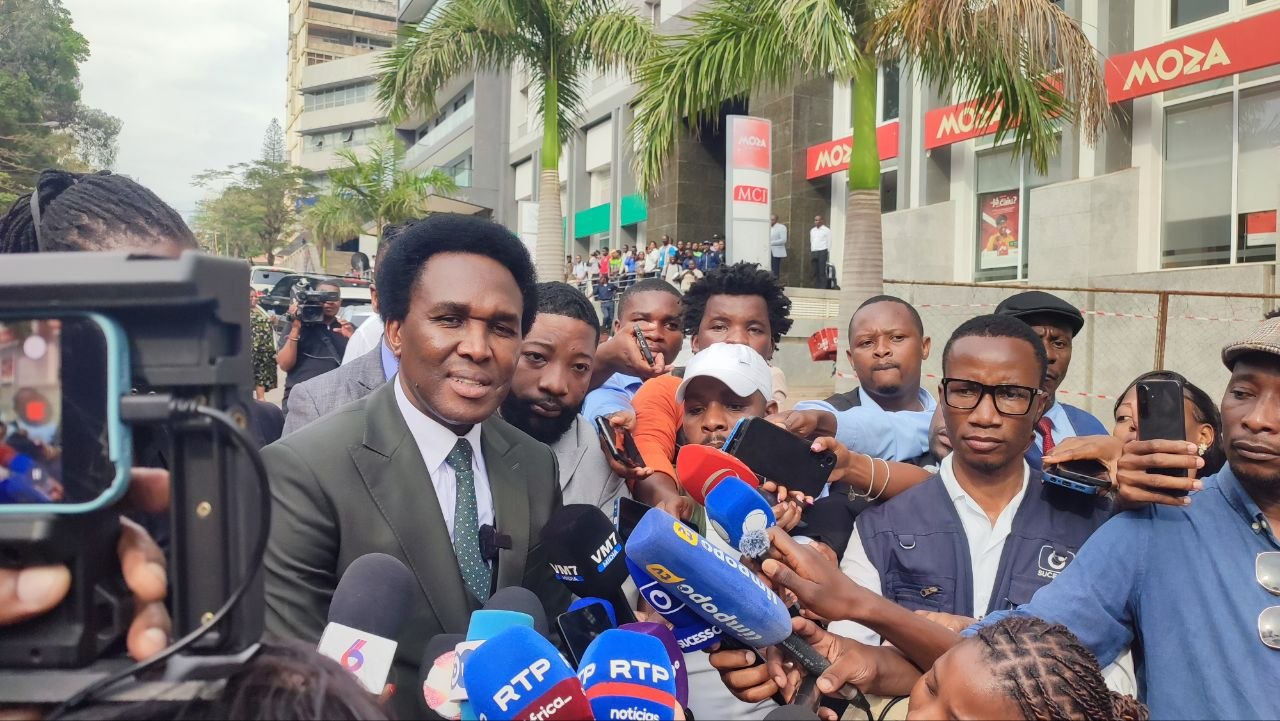
Venâncio Mondlane Supreme Court Trial: Leader Denies Incitement Charges
Summary
- The Venâncio Mondlane Supreme Court trial is testing Mozambique's political and judicial institutions regarding a divisive case.
- Mondlane admitted calling for post-2024 election protests but denied inciting violence, blaming infiltrators and security forces.
- President Daniel Chapo stated protest damage would cost over MZN3 billion ($47 million) to repair, reinforcing the prosecution's narrative.
- The Mozambique Bar Association has also intervened in the ongoing legal proceedings.
- The trial's handling is a critical test of judicial independence and the rule of law in Mozambique.
The Ongoing Proceedings
This trial is emerging as a critical examination of the independence and resilience of Mozambique's political and judicial institutions.
The Venâncio Mondlane Supreme Court trial is currently underway, representing a significant challenge for Mozambique's political and judicial institutions as they navigate one of the nation's most contentious recent legal battles. Prosecutors have begun their questioning of the opposition leader, focusing on his role in the public demonstrations that followed the disputed 2024 elections.
During his testimony, Mondlane acknowledged having called for these demonstrations but vehemently denied any intention to incite violence or the destruction of property. He characterized his appeal to supporters to "take power" as a purely political metaphor, rather than a literal call to action. Furthermore, he attributed the violence that occurred during the Mozambique 2024 election protests to infiltrators and members of the security forces, challenging the prosecution to demonstrate a direct link between his actions and any specific economic difficulties faced by the country. The prosecution faces the critical task of establishing a clear connection between Mondlane's directives and the particular crimes committed during the period of unrest, a key element in substantiating the Venâncio Mondlane incitement charges.
External Influences and Interventions
Beyond the courtroom, the proceedings have been further complicated by external statements and interventions. President Daniel Chapo has publicly addressed the destruction resulting from the protests, visiting Namacurra in Zambézia province. During his visit, the President highlighted that the cost to rebuild damaged public infrastructure would exceed MZN3 billion, equivalent to approximately $47 million. He emphasized that these funds could otherwise have been allocated to vital public services, such as schools and health centers.
The timing of President Chapo's remarks is particularly noteworthy, as it carries significant political weight. His focus on the extensive damage serves to bolster a central argument of the prosecution's case, even as the courts are still in the process of determining responsibility for the violence. In addition to the President's comments, the Mozambique Bar Association has also made an intervention, adding another layer of institutional scrutiny to the already high-profile case.
A Test of Judicial Independence
This trial is emerging as a critical examination of the independence and resilience of Mozambique's political and judicial institutions. The interventions by high-ranking political figures, such as President Chapo, and professional bodies like the Mozambique Bar Association, introduce complex dynamics into a legal process that demands impartiality. The outcome and conduct of the Venâncio Mondlane Supreme Court trial will inevitably set important precedents for how future cases involving political dissent and public unrest are handled within the Mozambican legal system.
The manner in which the judiciary navigates these external pressures, while upholding the principles of the rule of law and ensuring a fair trial, will be closely observed. The case underscores the delicate balance required to maintain judicial autonomy, particularly when politically sensitive matters are at stake, and will offer insights into the robustness of the separation of powers in Mozambique.
Practical Implications
This trial is a critical test of judicial independence and the rule of law in Mozambique, especially concerning politically sensitive cases. Lawyers should closely observe how external political statements and institutional interventions influence the court's proceedings, as the outcome and process could establish significant precedents for handling future cases involving political dissent, public unrest, and the separation of powers within the Mozambican legal system.
Source
How does this affect you?
Get an AI analysis of this article grounded in your jurisdictions, practice areas, and any policy documents you've uploaded to Wansom.
Finish Reading the Full Story and the Expert Analysis.
Get the latest legal & regulatory intelligence in Mozambique
Wansom is AI and can make mistakes.