
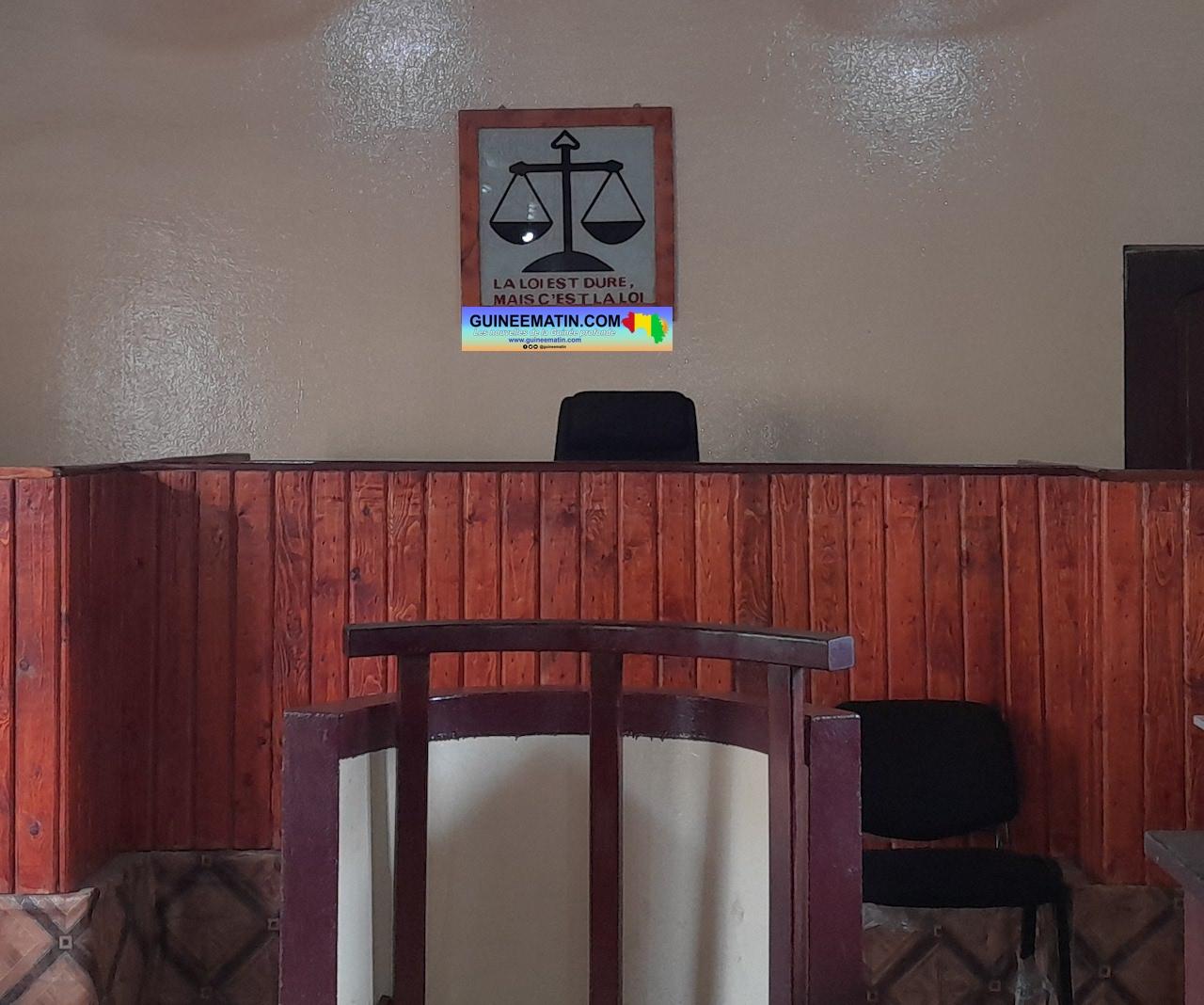
Moussa Soumah: Mafanco Trial for Involuntary Homicide, Detention
Summary
- Moussa Soumah appeared before the Mafanco Criminal Tribunal on November 24, 2026, facing multiple charges.
- He is accused of involuntary homicide and sequestration concerning Ramatoulaye Diallo, alongside possession of Indian hemp.
- Soumah did not deny the accusations, stating he "no longer knew what I was doing" regarding his girlfriend's death.
- The trial involves complex legal considerations due to the combination of violent, detention, and drug-related charges.
What Happened
His statement, "I no longer knew what I was doing," while not a denial, suggests a potential defense strategy or an attempt to explain his state of mind during the incident involving Ramatoulaye Diallo.
Moussa Soumah appeared before the Mafanco Criminal Tribunal on Tuesday, November 24, 2026, to face a series of serious charges. The proceedings against him include involuntary homicide and unlawful detention, both pertaining to the victim, Ramatoulaye Diallo. Additionally, Soumah is accused of possessing Indian hemp.
During his testimony, Soumah did not contest the accusations brought forward by the prosecution. When asked to provide his version of the events, he offered an account of the circumstances surrounding the death of his girlfriend, Ramatoulaye Diallo, which occurred in his room. His statement included the admission, "I no longer knew what I was doing," as he recounted the incident.
Legal Context
The case against Moussa Soumah illustrates the criminal justice process in Guinea, specifically concerning grave offenses heard by the Tribunal criminel Mafanco. The primary charge of involuntary homicide in Guinea, or "homicide involontaire Guinée," implies that while a death occurred, it was not intentionally caused, often resulting from negligence or recklessness. This contrasts with premeditated murder, carrying different legal ramifications and requiring a distinct burden of proof. The Guinean Penal Code (Loi L/2016/059/AN), adopted in October 2016, includes provisions for involuntary homicide.
Furthermore, the accusation of sequestration, or unlawful detention, indicates that Ramatoulaye Diallo was allegedly held against her will, a serious offense under Guinean law. Articles 303, 304, 305, and 306 of the Guinean Penal Code define and punish "enlèvement, détention ou séquestration." The inclusion of a charge for the possession of Indian hemp, a controlled substance, adds another dimension to the legal proceedings. The Guinean Penal Code (Loi n°2016/059/AN) prohibits the illicit use, purchase, detention, or cultivation of psychotropic substances, including cannabis derivatives. This combination of charges—a violent crime, unlawful detention, and a drug offense—requires the court to consider distinct legal frameworks and evidence during the trial, presenting a complex procedural challenge for the Mafanco Criminal Tribunal.
Significance of the Proceedings
The ongoing "procès Moussa Soumah" is noteworthy due to the defendant's immediate admissions regarding the core allegations. His statement, "I no longer knew what I was doing," while not a denial, suggests a potential defense strategy or an attempt to explain his state of mind during the incident involving Ramatoulaye Diallo. Such admissions can significantly influence the trajectory of a criminal trial, potentially streamlining certain aspects of the evidentiary phase by narrowing the scope of contested facts.
This particular case, involving Moussa Soumah and Ramatoulaye Diallo, highlights the complexities that can arise when multiple, disparate charges are consolidated into a single trial. The Mafanco Criminal Tribunal, an existing judicial body in Guinea, must meticulously evaluate the evidence for each count, from the circumstances leading to the involuntary homicide and sequestration of Ms. Diallo to the separate matter of drug possession. The court's handling of Soumah's admissions, alongside the procedural aspects of combining these distinct charges, offers a practical illustration for legal professionals analyzing criminal proceedings in Guinea. The outcome will depend on how the court weighs Soumah's narrative against other presented evidence.
Practical Implications
This case offers a practical illustration of criminal proceedings in Guinea, particularly regarding involuntary homicide and associated charges. Lawyers practicing criminal defense or prosecution in the region can analyze the court's handling of admissions from the accused and the procedural aspects of combining charges like sequestration and drug possession within a single trial at the Mafanco Criminal Tribunal.
Source
How does this affect you?
Get an AI analysis of this article grounded in your jurisdictions, practice areas, and any policy documents you've uploaded to Wansom.
Finish Reading the Full Story and the Expert Analysis.
Get the latest legal & regulatory intelligence in Guinea
Wansom is AI and can make mistakes.