
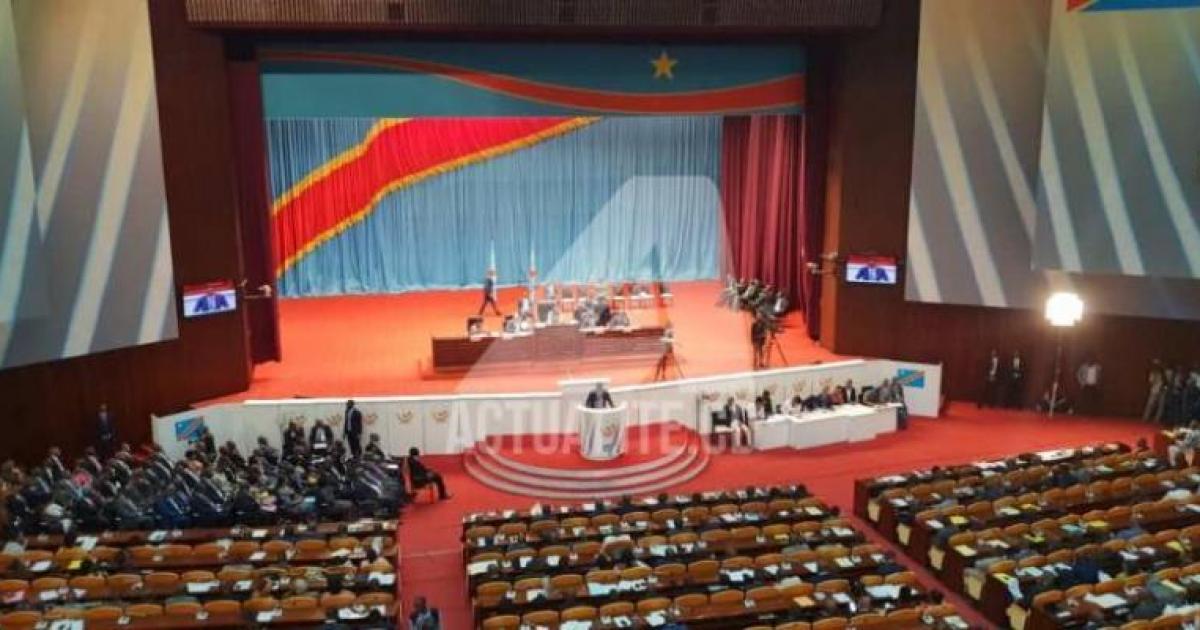
DRC National Assembly: Motions Défiance Ministres Muhindo Nzangi Sombo Set for Debate
Summary
- The National Assembly is set to examine motions of no confidence this Wednesday, November 25.
- These motions specifically target ministers Muhindo Nzangi and Marie-Thérèse Sombo.
- The legislative actions have been formally deposited with the bureau of the lower house of Parliament.
- The plenary session for the examination of these motions is scheduled for November 25, 2026.
What Happened
The examination of motions of no confidence against Minister Muhindo Nzangi and Minister Marie-Thérèse Sombo carries substantial weight for the political landscape and governance in the Democratic Republic of Congo.
The National Assembly of the Democratic Republic of Congo is scheduled to convene a plenary session this Wednesday, November 25, to deliberate on motions of no confidence. These significant legislative actions specifically target two government officials: Minister Muhindo Nzangi and Minister Marie-Thérèse Sombo. The motions, which represent a formal challenge to their tenure, have been officially lodged with the bureau of the lower house of Parliament, initiating a critical phase of parliamentary oversight. The scheduled examination marks a pivotal moment for the legislative body as it exercises its constitutional role in holding the executive accountable.
The upcoming session will see national deputies engage in a detailed review of the accusations or concerns that underpin these motions. While the precise grounds for the motions against Minister Muhindo Nzangi and Minister Marie-Thérèse Sombo are not detailed in the immediate announcement, the very act of their submission indicates a serious challenge to their respective ministerial responsibilities. The process underscores the dynamic interplay between the legislative and executive branches in the DRC, where parliamentary members can initiate procedures to question the performance and suitability of government ministers. The date for this crucial deliberation is set for November 25, 2026, according to official reports.
Legal Framework and Procedure
In the Democratic Republic of Congo, the `procédure motion de défiance RDC` is a fundamental mechanism through which the National Assembly can express its lack of confidence in a government minister or even the entire government. Such `motions défiance ministres` are typically initiated by a certain number of deputies who believe a minister has failed in their duties, committed misconduct, or is no longer fit to hold office. Once deposited with the bureau of the lower house, these motions trigger a formal parliamentary process that includes debate and, potentially, a vote.
The examination of these `Assemblée nationale RDC motions` involves a structured process where the movers of the motion present their arguments, and the targeted ministers, such as `Muhindo Nzangi Assemblée nationale` and `Marie-Thérèse Sombo motion`, are given an opportunity to respond and defend their actions. Following these presentations and subsequent debates among the deputies, a vote is typically held. If a motion of no confidence passes with the required majority, it can lead to the `destitution ministres Congo`, compelling the minister to resign from their position. This mechanism is a cornerstone of democratic accountability, ensuring that ministers remain answerable to the elected representatives of the people.
Why It Matters
The examination of motions of no confidence against Minister Muhindo Nzangi and Minister Marie-Thérèse Sombo carries substantial weight for the political landscape and governance in the Democratic Republic of Congo. These proceedings are not merely procedural; they reflect the legislative branch's commitment to upholding transparency and accountability within the executive. The outcome of these deliberations could lead to significant shifts in ministerial portfolios, potentially influencing policy direction and the implementation of government programs in the sectors overseen by the affected ministers.
Beyond the immediate fate of the ministers involved, these `motions défiance ministres Muhindo Nzangi Sombo` serve as a powerful reminder of the checks and balances inherent in the DRC's political system. They underscore the power of the `Assemblée nationale RDC motions` to influence the composition and direction of the government. For various stakeholders, including international partners and the general populace, the results of these votes will be closely watched as an indicator of political stability and the effectiveness of parliamentary oversight in the nation.
Practical Implications
Lawyers and compliance officers in the DRC should closely monitor the outcome of these motions, as changes in ministerial leadership can lead to shifts in regulatory priorities, policy implementation, or the interpretation of laws within the affected sectors, potentially impacting client operations or compliance requirements.
Source
Source: Original reporting via PMaki
How does this affect you?
Get an AI analysis of this article grounded in your jurisdictions, practice areas, and any policy documents you've uploaded to Wansom.
Finish Reading the Full Story and the Expert Analysis.
Get the latest legal & regulatory intelligence in DR Congo
Wansom is AI and can make mistakes.