
Kenya: Mosiria Papa TV Arrest Raises Due Process Concerns
Summary
- Nairobi County Chief Officer for Citizen Engagement and Customer Service, Geoffrey Mosiria confronted TikToker Papa TV while the latter was handcuffed, raising due process concerns in Kenya.
- The incident followed an online dispute where Papa TV allegedly posted insulting content targeting Mosiria, who characterized it as cyberbullying.
- Critics question the impartiality of a public official directly engaging with a handcuffed suspect when they are also the complainant.
- The alleged conduct could fall under Kenya's Computer Misuse and Cybercrimes Act, which was significantly amended in October 2025, though some provisions, including those on cyber harassment, have faced constitutional challenges and temporary suspensions.
- This event highlights broader issues regarding public official conduct during arrests and the presumption of innocence for accused individuals.
Incident Sparks Due Process Debate
The central question is not whether Mosiria could report alleged cyber harassment or cooperate with investigators, but whether his visible involvement in the encounter with the suspect could create concerns about impartiality in the enforcement process.
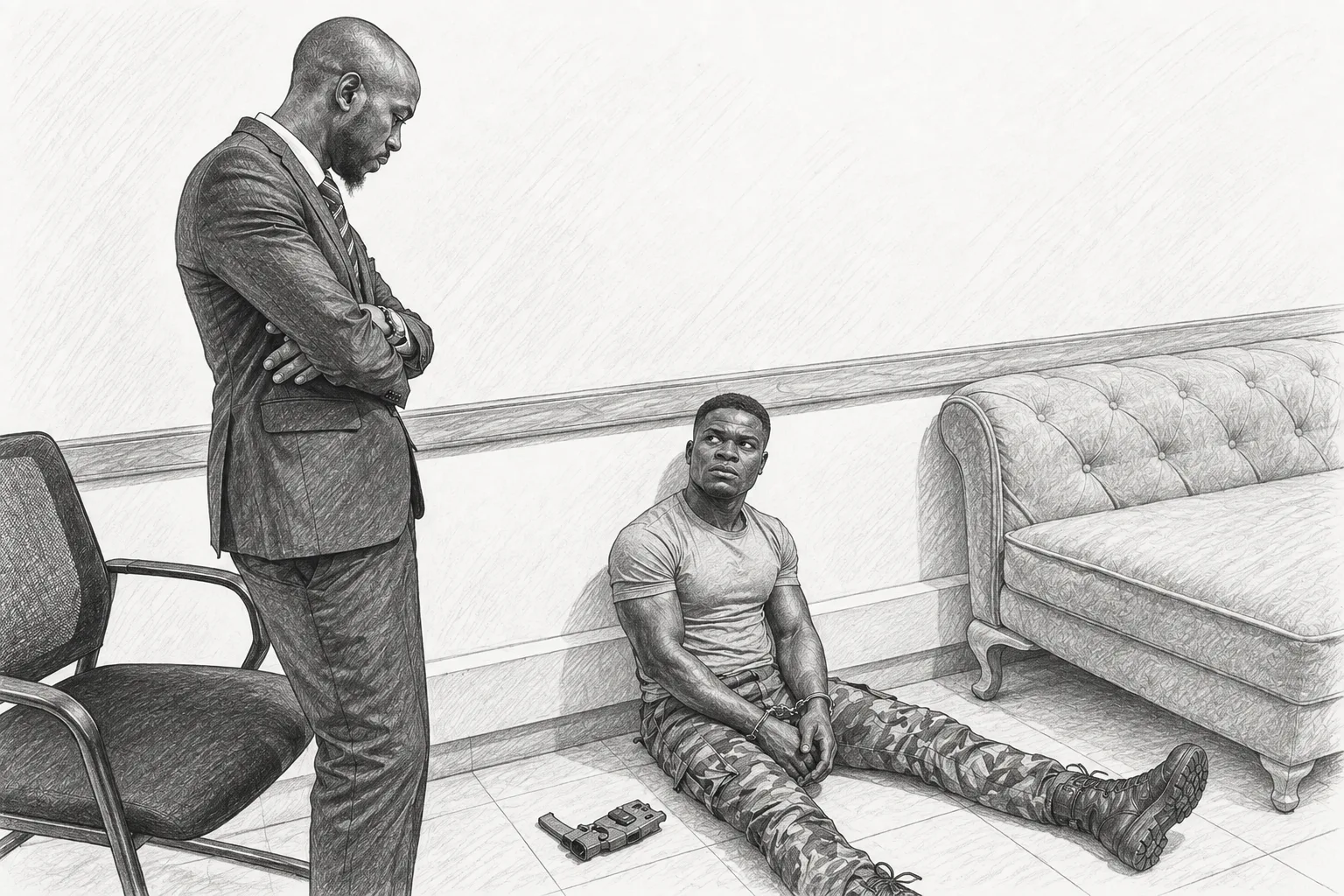
Nairobi County Chief Officer for Citizen Engagement and Customer Service, Geoffrey Mosiria has drawn scrutiny following his direct involvement in the arrest of popular TikTok creator Papa TV. Footage circulating online depicts Mosiria confronting Papa TV shortly after his apprehension, while the content creator was handcuffed and in police custody. During the encounter, Papa TV was observed pleading for forgiveness, to which Mosiria responded by reminding him of a previous instance where he had pardoned similar online attacks.
The arrest reportedly stemmed from an online dispute between the two individuals. Papa TV is alleged to have published insulting and abusive content directed at Mosiria, following repeated criticisms of the county official's initiatives targeting explicit content creators and influencers. Mosiria himself described the arrest as a response to alleged cyberbullying. However, the circumstances surrounding the incident have shifted public attention from the alleged online misconduct to the conduct of a public official who was also the subject of the purported abuse.
The core issue at hand is not whether Mosiria possessed the right to report alleged cyber harassment or to collaborate with investigators. Rather, the concern centers on whether his visible and direct engagement with a handcuffed suspect could undermine perceptions of impartiality within the law enforcement process. This incident, involving Mosiria and Papa TV, has ignited significant due process concerns in Kenya, prompting a wider discussion on the appropriate boundaries for public officials during such actions.
Furthermore, the circulating footage has raised questions regarding the treatment of a suspect prior to any judicial determination. Papa TV has not been convicted of any offense and, like any accused individual, remains entitled to the presumption of innocence. Any criminal liability arising from the alleged online conduct would ultimately need to be established through the formal judicial process, underscoring the critical distinction between accusation and conviction.
Legal Framework and Official Conduct
The alleged online conduct could potentially fall under the provisions of Kenya's Computer Misuse and Cybercrimes Act, which was significantly amended by the Computer Misuse and Cybercrimes (Amendment) Act, 2024 (assented to in October 2025). While specific charges against Papa TV had not been publicly confirmed at the time of publication, this legislation includes clauses addressing cyber harassment and various forms of offensive or harmful electronic communication, though some of these provisions have faced constitutional challenges and temporary suspensions by the High Court. This legal context highlights the serious nature of the allegations, yet simultaneously emphasizes the procedural safeguards designed to protect individuals accused under such laws.
Lawyers should advise public officials on maintaining strict impartiality during law enforcement actions, particularly when they are also the complainant, to mitigate due process challenges. Compliance officers in public sector entities should review and reinforce protocols for official conduct during arrests to uphold the presumption of innocence and avoid perceptions of bias. The principle that an accused person remains a suspect until a court determines otherwise is fundamental to Kenya's legal system, and any actions that appear to prejudge guilt can erode public trust in the justice system.
This event underscores the importance of public official impartiality during arrests in Kenya. While public officials are fully entitled to report alleged offenses and cooperate with law enforcement agencies, direct confrontation with a handcuffed suspect by an official who is also the complainant can significantly raise concerns about the appearance of impartiality. This holds true even when police remain primarily responsible for the formal investigation and subsequent arrest, as the visual optics can heavily influence public perception of fairness and justice.
Broader Implications for Public Service
This incident is not an isolated occurrence regarding Mosiria's involvement in arrests. He has been increasingly visible in enforcement operations across Nairobi, including actions targeting alleged violations of public order regulations and inappropriate online content. In August, for instance, Mosiria announced the arrest of a Nigerian national following complaints from women alleging sexual assault, violence, and non-consensual recording. Police from Parklands Police Station were involved in that operation, during which electronic devices such as laptops, iPads, and mobile phones were reportedly recovered from the suspect's apartment.
In that prior case, Mosiria urged potential victims to report to Parklands Police Station to assist investigators in identifying additional complainants. This earlier situation also served to illustrate the crucial distinction between an allegation, an arrest, and a conviction, reinforcing the legal principle that an individual accused of an offense remains a suspect unless and until a court rules otherwise. These instances collectively highlight the complex role of public officials when their duties intersect with personal disputes or high-profile enforcement actions.
The Papa TV incident has thus transcended the initial allegations of insults to provoke a broader examination of how public officials should conduct themselves when they become personally embroiled in disputes with members of the public. The episode also brings into focus the increasingly blurred boundary between social media disputes and official public enforcement, as officials and content creators frequently clash on platforms such as TikTok. For now, Papa TV remains an accused person, awaiting the judicial process to determine culpability.
Practical Implications
Lawyers should advise public officials on maintaining strict impartiality during law enforcement actions, particularly when they are also the complainant, to mitigate due process challenges. Compliance officers in public sector entities should review and reinforce protocols for official conduct during arrests to uphold the presumption of innocence and avoid perceptions of bias.
Source
How does this affect you?
Get an AI analysis of this article grounded in your jurisdictions, practice areas, and any policy documents you've uploaded to Wansom.
Finish Reading the Full Story and the Expert Analysis.
Wansom is AI and can make mistakes.