
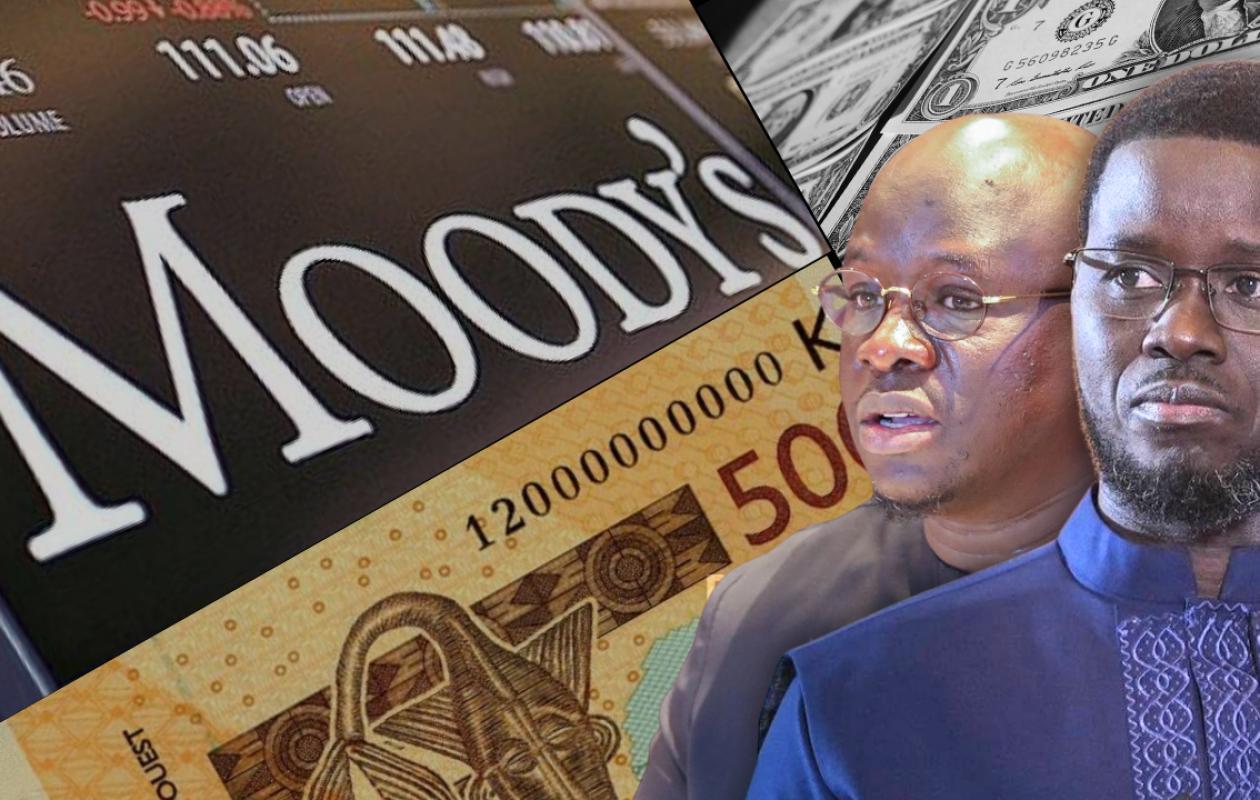
Moody's Senegal Rating Downgrade: From Caa2 to Ca Amid Debt Crisis
Summary
- Moody's downgraded Senegal's long-term foreign currency rating from Caa2 to Ca due to weakened public finances and undisclosed debt.
- Standard & Poor's also lowered Senegal's foreign currency debt rating to CC, deeming a distressed exchange or default "extremely probable."
- Bank of America anticipates external debt restructuring is increasingly likely and potentially unavoidable by mid-2026.
- Moody's projects external private creditors could face losses between 35% and 65% in a debt resolution.
- Senegal's local currency debt retains a Caa2 rating and is excluded from restructuring, while UEMOA membership offers some financial stability.
Senegal's Sovereign Credit Ratings Plummet
For external private creditors, Moody's has outlined a grim forecast, anticipating potential losses ranging from 35% to 65% as part of any resolution for Senegal's public debt.
International credit rating agency Moody's recently lowered Senegal's long-term foreign currency rating from Caa2 to Ca, signaling a significant deterioration in the nation's creditworthiness. This severe downgrade reflects the ongoing fragility of public finances, exacerbated by the disclosure in 2024 of billions of dollars in previously undisclosed debt accumulated by the prior administration. This hidden debt has cast a long shadow over the country's financial stability and its prospects for debt management.
Concurrently, Standard & Poor's also took action, reducing Senegal's long-term foreign currency debt rating to CC. This assessment from S&P indicates an "extremely probable" scenario of a distressed exchange or an outright default on the nation's external commercial debt. These parallel downgrades from leading agencies underscore the heightened risk environment for investors holding Senegalese sovereign debt.
Mounting Pressure for Debt Restructuring
The revelation of substantial undeclared debt is significantly complicating the outlook for any potential restructuring efforts, according to financial analysts. Bank of America, for instance, has projected that a comprehensive restructuring of Senegal's external debt is becoming increasingly likely, potentially becoming unavoidable by the second half of 2026. This forecast is driven by the weight of these inherited financial obligations and a staff-level agreement with the International Monetary Fund (FMI) for a new support program, which is pending final approval.
For external private creditors, Moody's has outlined a grim forecast, anticipating potential losses ranging from 35% to 65% as part of any resolution for Senegal's public debt. This stark prediction highlights the severe exposure faced by those holding the country's foreign currency-denominated instruments. The focus remains squarely on the "dette privée externe Sénégal" as the primary area for these anticipated haircuts.
Navigating Financial Challenges and Reforms
Despite the critical situation concerning foreign currency debt, Senegal's local currency debt has maintained its Caa2 rating from Moody's. The government has explicitly stated that this domestic debt will not be included in any forthcoming restructuring operations, although it still faces inherent liquidity risks. Short-term ratings for the nation's debt instruments remain at Not-Prime, reflecting continued short-term uncertainties.
Moody's acknowledges that while significant debt challenges persist, alongside potential delays in implementing the FMI programme Sénégal, Senegal's membership in the West African Economic and Monetary Union (UEMOA) offers some counterbalancing advantages. This regional affiliation helps mitigate certain financial risks and facilitates continued access to borrowing in the regional market. The intense pressure on public finances has also underscored the urgent need for comprehensive reforms aimed at improving revenue collection and enhancing transparency in public accounts. In support of these efforts, the African Development Bank has approved a financing package of 20 billion CFA francs, equivalent to approximately $35 million, specifically to bolster state revenue collection and improve the presentation of public financial statements. Moody's has also adjusted the sovereign outlook from negative to stable, suggesting that while the situation is dire, the trajectory is not necessarily worsening further.
Practical Implications
Lawyers advising external private creditors holding Senegalese public debt must assess their clients' exposure to potential losses (35-65%) and prepare for imminent debt restructuring negotiations or default scenarios, as indicated by the severe credit rating downgrades from Moody's and S&P. Compliance officers should update risk assessments for investments in Senegalese sovereign debt.
Source
Source: Original reporting via Setal
How does this affect you?
Get an AI analysis of this article grounded in your jurisdictions, practice areas, and any policy documents you've uploaded to Wansom.
Finish Reading the Full Story and the Expert Analysis.
Wansom is AI and can make mistakes.