
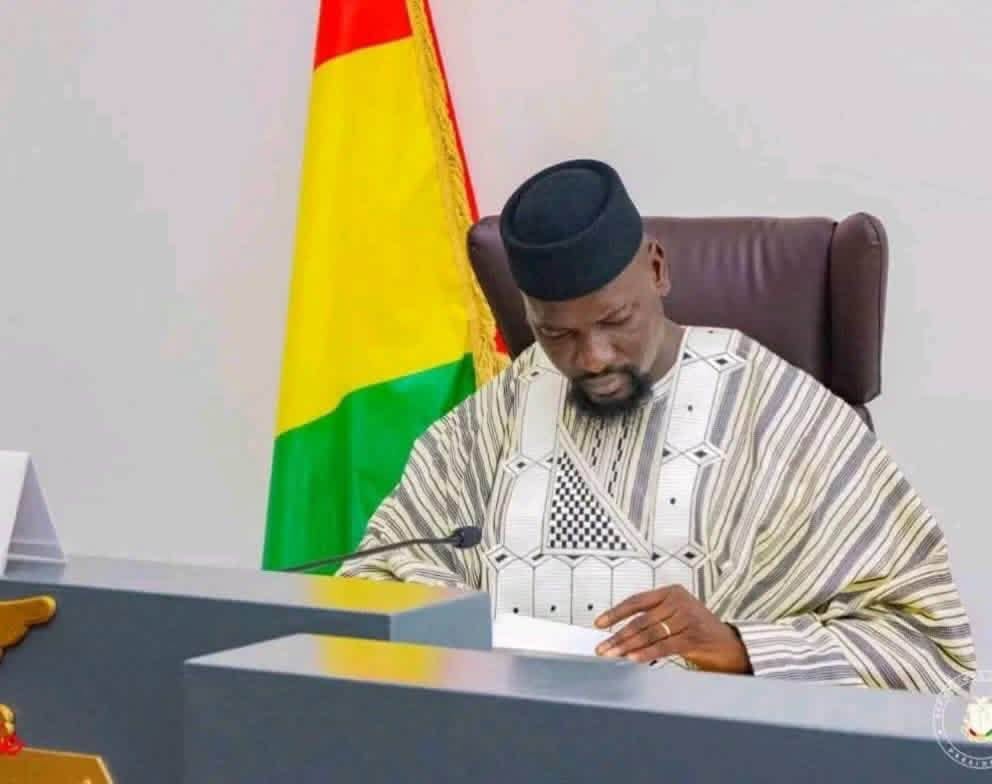
Guinée Police: Mohamed Fodé Laye Bangoura Leads National School
Summary
- President Mamadi Doumbouya issued decrees appointing several officers to leadership positions within the National Police of Guinée.
- These appointments were made on Thursday, November 19, 2026.
- Mohamed Fodé Laye Bangoura, a Divisional Commissioner, was named Director General of the National School of Police and Civil Protection.
- The changes affect key administrative and educational roles within the Guinean police nationale.
Key Appointments in Guinean Police Leadership
Among the notable appointments, Mohamed Fodé Laye Bangoura was named the new Director General of the National School of Police and Civil Protection.
President Mamadi Doumbouya initiated significant administrative changes within the National Police of Guinée, issuing decrees on Thursday, November 19, 2026, that formalized new leadership roles. These presidential decisions saw the appointment of several officers to critical positions of responsibility across the national law enforcement apparatus. The move underscores the head of state's direct involvement in shaping the command structure of the country's security forces.
Among the notable appointments, Mohamed Fodé Laye Bangoura was named the new Director General of the National School of Police and Civil Protection. This particular role is pivotal for the future development and training of both police officers and civil protection personnel throughout Guinée. The appointment of a Divisional Commissioner to such a high-ranking educational and training institution highlights the emphasis placed on experienced leadership in shaping the next generation of security professionals.
Strategic Role of the National School
The National School of Police and Civil Protection serves as a foundational institution for law enforcement and emergency services in Guinée. Its Director General is responsible for overseeing the curriculum, training methodologies, and overall professional development of individuals entering or advancing within these critical sectors. Therefore, the selection of Mohamed Fodé Laye Bangoura, a Divisional Commissioner, for this role suggests a strategic focus on enhancing the capabilities and standards of the police nationale.
Leadership changes at this level, particularly concerning an institution that molds future officers, can have far-reaching implications for the operational effectiveness and public perception of the police force. The decrees issued by Mamadi Doumbouya signal a deliberate effort to reinforce key administrative and educational pillars within Guinée's security framework, potentially influencing the direction of police training and doctrine for years to come.
Broader Context of Administrative Shifts
These appointments are part of broader administrative changes that frequently occur within national security institutions, reflecting the executive's prerogative to align leadership with its strategic vision. While the specific details of all appointments were not immediately disclosed, the focus on the Director General position for the National School of Police and Civil Protection indicates a priority placed on foundational aspects of law enforcement capacity building. Such changes in police leadership are common mechanisms through which governments seek to implement reforms or reinforce specific operational philosophies.
The timing of these changes, enacted in November 2026, positions them as forward-looking adjustments to the Guinean police structure. The elevation of experienced officers like Mohamed Fodé Laye Bangoura to roles that influence training and institutional development is a key aspect of how the government under President Mamadi Doumbouya is managing the evolution of its security forces. These décrets police underscore the ongoing process of administrative oversight and strategic recalibration within Guinée's national security apparatus.
Practical Implications
This article reports on administrative appointments within the Guinean National Police. While it signifies changes in leadership, it does not present a direct, actionable legal implication for lawyers or compliance officers in terms of new regulations, compliance requirements, or legal precedents.
Source
How does this affect you?
Get an AI analysis of this article grounded in your jurisdictions, practice areas, and any policy documents you've uploaded to Wansom.
Finish Reading the Full Story and the Expert Analysis.
Get the latest legal & regulatory intelligence in Guinea
Wansom is AI and can make mistakes.