
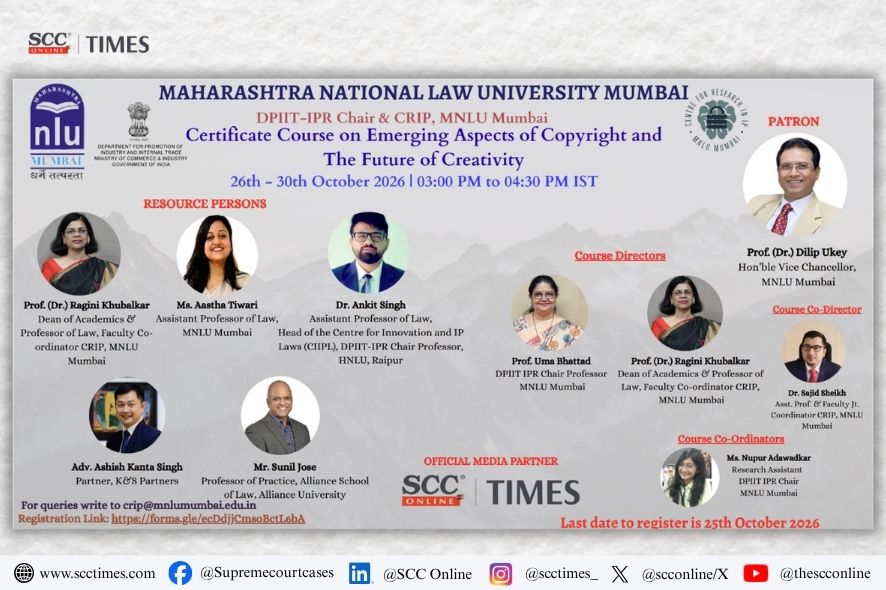
MNLU Mumbai: Certificate Course on Copyright and Creativity
MNLU Mumbai is offering a certificate course from October 26-30, 2026, focusing on emerging aspects of copyright law and creativity in the digital era.
This specialized certificate course, hosted by the Maharashtra National Law University (MNLU) Mumbai, is designed to explore the dynamic and often challenging relationship between copyright law, technological innovation, and creative expression in the contemporary digital landscape. The curriculum will address the novel legal and policy issues arising from rapid advancements in technologies such as Artificial Intelligence (AI), the proliferation of social media platforms, sophisticated digital content distribution systems, and the increasing adoption of open-source models. These technological shifts have fundamentally transformed how creative works are produced, disseminated, and consumed, creating a pressing need for updated legal understanding.
For legal practitioners, businesses, and the public, this course highlights the critical and urgent need to grapple with the profound impact of digital technologies on intellectual property rights, particularly copyright. The rapid evolution of AI, for instance, raises unprecedented questions regarding authorship, ownership of AI-generated content, the definition of infringement in algorithmic contexts, and the boundaries of fair use in an era of data scraping and machine learning. For attorneys, this translates into navigating complex new legal scenarios, advising clients on protecting their digital assets, and understanding potential liabilities in a rapidly shifting technological and legal environment. Businesses in creative industries, technology, and media face significant legal risks and opportunities that demand sophisticated and up-to-date legal counsel.
In India, copyright law is primarily governed by the Copyright Act, 1957, which has undergone several amendments to adapt to technological changes, though legislative reform often struggles to keep pace with innovation. International treaties such as the Berne Convention and the WIPO Copyright Treaty also inform and influence national copyright jurisprudence. The challenges posed by AI, social media, and digital distribution directly impact fundamental copyright principles like originality, the requirement of human authorship, and the scope of exclusive rights. The course will likely delve into how existing legal frameworks are being interpreted, or found inadequate, in the face of AI-generated works, deepfakes, user-generated content, and the licensing complexities of open-source software and content.
Attorneys specializing in intellectual property, technology law, and media law must proactively engage with these emerging issues. Participation in specialized educational programs like this one is crucial for staying current and developing the expertise required to advise clients effectively. Practitioners should counsel clients on developing robust IP strategies that account for the unique challenges and opportunities presented by AI-generated content, data utilization, and digital distribution models. Furthermore, they should prepare for potential litigation or legislative changes that will inevitably arise from these technological shifts, as a nuanced understanding of digital copyright is now central to modern IP practice.
How does this affect you?
Get an AI analysis of this article grounded in your jurisdictions, practice areas, and any policy documents you've uploaded to Wansom.
Finish Reading the Full Story and the Expert Analysis.
Get the latest legal & regulatory intelligence in India
Wansom is AI and can make mistakes.