
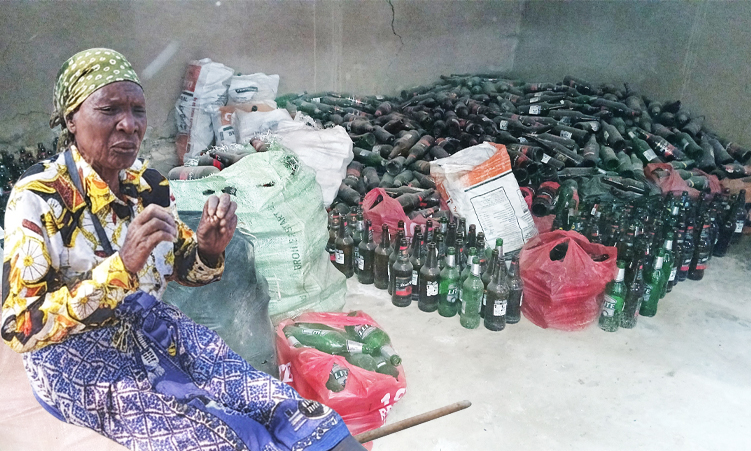
Metro Katima Mulilo: New Bottle Vendor Ban Hits Informal Traders
Summary
- The commercial entity Metro Katima Mulilo implemented a change in its purchasing policy regarding informal bottle vending in March, affecting numerous residents.
- The change has significantly disrupted the income streams of informal bottle vendors in the town.
- Judith Ndabeni, a 70-year-old pensioner, relied on selling collected bottles for up to N$2,300 monthly to supplement her government pension.
- The commercial entity's action has caused struggle for vendors who depend on this activity for their livelihood.
- The change highlights the precarious nature of income generation within Namibia's informal sector.
Metro Katima Mulilo Imposes Ban
The change in purchasing policy by Metro Katima Mulilo regarding bottle vendors has cast a spotlight on the fragile economic realities faced by many within Namibia's informal sector.
The commercial entity Metro Katima Mulilo has implemented a change in its purchasing policy that directly impacts informal bottle vendors within the town. This commercial policy change, which became effective in March, has significantly disrupted the income streams of numerous individuals who rely on collecting and selling empty bottles. The measure has drawn attention due to its immediate and tangible effects on the livelihoods of vulnerable residents.
One prominent example is Judith Ndabeni, a 70-year-old pensioner residing in Katima Mulilo. For more than a decade, Ms. Ndabeni has diligently walked the town's streets, gathering discarded beer bottles. Her efforts in selling these collected items provide a vital financial supplement to her government old-age pension. In a good month, this informal trade can generate as much as N$2,300 for her, underscoring its importance to her economic well-being. The recent change in purchasing policy by Metro Katima Mulilo directly threatens this established means of support for Ms. Ndabeni and others in similar circumstances.
Impact on Vulnerable Livelihoods
The change in purchasing policy by Metro Katima Mulilo regarding bottle vendors has cast a spotlight on the fragile economic realities faced by many within Namibia's informal sector. For individuals like Ms. Ndabeni, who depend on such activities to bolster their often-meager formal incomes or state pensions, the abrupt cessation of bottle collection represents a significant blow. This commercial entity's action effectively eliminates a crucial revenue source, directly impacting their ability to cover daily expenses and maintain a basic standard of living.
The N$2,300 monthly income that Ms. Ndabeni reported earning from bottle vending, while not a large sum in absolute terms, is a substantial contribution to her financial stability, especially when combined with her pension. Such changes, therefore, extend beyond mere regulation; they directly impinge upon the capacity of residents to meet essential needs. The struggles now faced by these vendors highlight the broader challenges inherent in balancing urban management objectives with the socio-economic realities of informal traders, particularly in communities where formal employment opportunities are scarce.
Regulatory Context and Broader Implications
The decision by Metro Katima Mulilo to cease purchasing from informal bottle vendors prompts a closer examination of the impact of commercial policies on informal trading. While the specific legal underpinnings of this particular change are not detailed in the available information, local governments typically possess mandates to oversee public spaces, sanitation, and commercial activities. However, the profound and immediate impact on vendors' income streams, as evidenced by the reported struggles, signals a significant shift in commercial approach that warrants scrutiny.
This type of commercial policy change carries implications for how local authorities across Namibia might consider the informal sector. The change in purchasing practices by Metro Katima Mulilo, by specifically impacting a long-standing informal trade, could potentially influence future policy decisions in other municipalities. Legal professionals would be well-advised to assess the legality and scope of such commercial policy changes, particularly considering their potential effects on vulnerable populations and the precedent they might establish for legal challenges or similar regulations elsewhere in Namibia. Furthermore, compliance officers in related sectors should closely monitor comparable commercial actions that could impact supply chains or informal economic activities, given the interconnectedness of formal and informal economies.
Why This Matters for Policy and Society
The change in purchasing policy by Metro Katima Mulilo regarding bottle vendors holds significance not only for the individuals directly affected but also for the broader national conversation surrounding informal sector dynamics and social welfare in Namibia. It starkly illustrates the critical role that informal economic activities play in poverty alleviation and income generation for a substantial portion of the citizenry, especially for pensioners and those with limited access to formal employment. The reported struggle of vendors like Judith Ndabeni vividly portrays the direct human cost when these essential informal income streams are disrupted without adequate consideration for alternative livelihoods or transitional support.
This situation underscores a fundamental need for municipalities to thoroughly evaluate the socio-economic ramifications of their regulatory decisions on vulnerable groups. The change in purchasing policy's direct effect on supplementing government old-age pensions demonstrates how commercial policies can inadvertently exacerbate financial insecurity for those already on the margins. A comprehensive understanding of the full implications of such changes is therefore crucial for policymakers striving to foster inclusive economic development and to genuinely support the livelihoods of all residents, including those who operate within the vital informal economy.
Practical Implications
Lawyers should assess the legality and scope of municipal bans on informal trading, particularly concerning their impact on vulnerable populations and potential for legal challenge or precedent in other Namibian municipalities. Compliance officers in related sectors should monitor similar municipal actions that could affect supply chains or informal economic activities.
Source
How does this affect you?
Get an AI analysis of this article grounded in your jurisdictions, practice areas, and any policy documents you've uploaded to Wansom.
Finish Reading the Full Story and the Expert Analysis.
Get the latest legal & regulatory intelligence in Namibia
Wansom is AI and can make mistakes.