
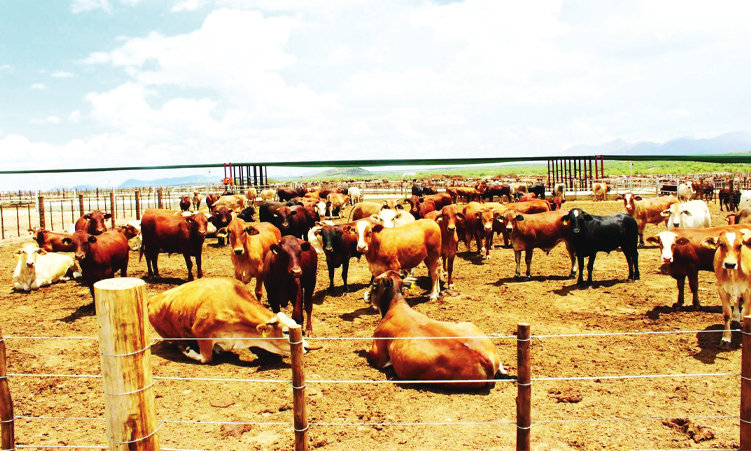
Namibia: FMD-Free Zone Subdivision to Bolster Livestock Exports
Summary
- Namibia plans to subdivide its FMD-free livestock zone into smaller areas.
- This action aims to protect the nation's livestock industry and its export markets.
- The decision follows an FMD outbreak at a commercial farm in the ||Kharas region.
- The affected farm was previously part of Namibia's designated FMD-free zone.
- The government is actively developing this new zoning strategy under the guidance of the Minister of Agriculture, Fisheries, Water and Land, Inge Zaamwani.
What Happened
This strategic re-evaluation aims to bolster the nation's defenses against animal diseases, thereby securing its vital livestock industry and preserving access to lucrative export markets.
Namibia is currently developing a comprehensive strategy to reconfigure its foot-and-mouth disease (FMD)-free livestock area. The government's plan involves subdividing this extensive region into a series of smaller, more manageable zones. This proactive measure is being undertaken with the explicit aim of bolstering the protection of the nation's vital livestock industry and safeguarding its crucial export markets.
This strategic re-evaluation aims to bolster the nation's defenses against animal diseases, thereby securing its vital livestock industry and preserving access to lucrative export markets. The initiative represents a significant governmental undertaking, with the Minister of Agriculture, Fisheries, Water and Land, Inge Zaamwani, playing a key role in its development and implementation. The overarching goal is to enhance biosecurity measures and ensure the long-term viability of Namibia's agricultural sector.
The Immediate Catalyst
The impetus for this significant policy shift stems from a recent outbreak of foot-and-mouth disease. This particular incident occurred on a commercial farm situated within the ||Kharas region. Crucially, the affected farm was, at the time of the outbreak, designated as part of Namibia's established FMD-free zone.
The presence of FMD within a previously certified disease-free area highlighted a vulnerability in the existing, larger zonal structure. This event underscored the necessity for a more granular approach to disease management, prompting authorities to reconsider the efficacy of broad FMD-free designations in the face of localized outbreaks. The ||Kharas FMD outbreak impact has thus directly influenced the government's decision to pursue a more segmented approach to animal health zoning.
Protecting Trade and Industry
The subdivision into smaller Namibia foot-and-mouth disease zones is a direct response to the imperative of protecting both domestic livestock production and international trade. By creating more confined zones, authorities can more effectively contain potential outbreaks, limiting their spread and minimizing the economic disruption to unaffected areas. This approach is critical for maintaining the integrity of Namibia's animal health status on a global scale.
Such a refined zoning system is expected to reinforce Namibia livestock export regulations, ensuring that products from disease-free sub-zones can continue to access international markets without undue interruption. The ability to isolate affected areas quickly and precisely is paramount for a country heavily reliant on agricultural exports, allowing for targeted interventions rather than blanket restrictions that could cripple the entire industry. This strategic move aims to mitigate future risks and secure the economic future of the livestock sector.
Anticipated Regulatory Shifts
The proposed division of the FMD-free zone signifies a notable evolution in Namibia animal health policy changes. This initiative will likely lead to new or amended regulations governing livestock movement, trade, and biosecurity protocols within and between the newly defined zones. Stakeholders in the agricultural sector, particularly those involved in commercial farming and export, will need to adapt to these forthcoming changes.
The government's commitment to this plan, spearheaded by the Minister of Agriculture, Fisheries, Water and Land, Inge Zaamwani, indicates a proactive stance on animal disease management. These anticipated regulatory adjustments are designed to enhance the nation's capacity to prevent, detect, and respond to FMD, ultimately strengthening Namibia's position as a reliable source of livestock and related products in the global market.
Practical Implications
Lawyers advising agricultural clients in Namibia should monitor upcoming regulatory changes regarding FMD zone definitions and their impact on livestock movement, trade, and export compliance, especially for operations in or near the ||Kharas region.
Source
How does this affect you?
Get an AI analysis of this article grounded in your jurisdictions, practice areas, and any policy documents you've uploaded to Wansom.
Finish Reading the Full Story and the Expert Analysis.
Get the latest legal & regulatory intelligence in Namibia
Wansom is AI and can make mistakes.