
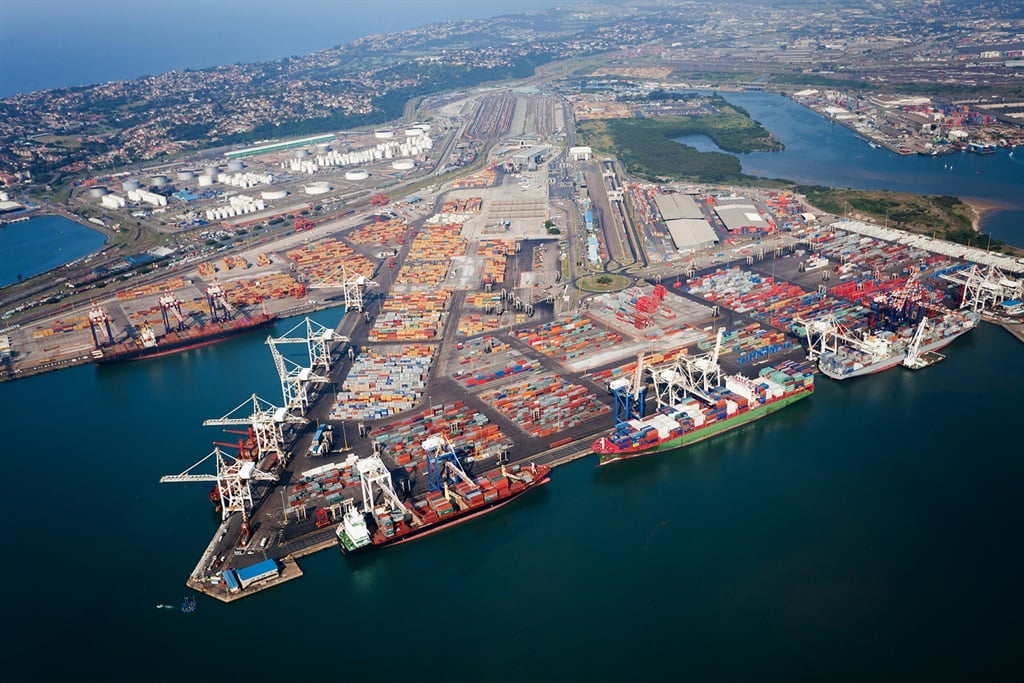
Metair: Activates Force Majeure over Durban Gateway Terminal Delays
Summary
- Automotive supplier Metair may invoke force majeure due to "crisis" delays at the Durban Gateway Terminal.
- Metair's shares dropped over 35% following the announcement, as port delays of up to 20 days disrupt production and increase costs.
- The Durban Gateway Terminal, operated by ICTSI in partnership with Transnet, handles half of South Africa's container traffic.
- Metair estimates additional costs from airfreight and overtime could reach 20-25% of last year's EBITDA.
- Industry experts and Metair anticipate that significant improvements at the congested port may not occur until early 2027.
Automotive Supplier Faces Major Disruption
Metair projects that these accumulated additional costs could amount to between 20% and 25% of its reported earnings before interest, tax, depreciation, and amortisation (EBITDA) from the previous year.
JSE-listed automotive parts manufacturer Metair has indicated it may activate force majeure provisions within its existing supply contracts, citing severe operational disruptions at the Durban Gateway Terminal (DGT). This announcement led to a significant decline in the company's share value, which plummeted by over 35% on Friday. Metair, a critical supplier of components to major automotive brands including Toyota, Ford, Volkswagen, and Isuzu, is grappling with delays at the port terminal that are now extending to approximately 20 days.
These prolonged Durban Gateway Terminal delays are directly causing interruptions in Metair's production schedules. Both incoming raw materials and outgoing finished vehicle components are experiencing substantial hold-ups, impacting the company's ability to meet its commitments. The situation at the Durban Gateway Terminal, South Africa's busiest container handling facility, has been described by Metair as reaching "crisis proportions," necessitating immediate action from both governmental bodies and the port operator.
Escalating Congestion at South Africa's Key Port
The Durban Gateway Terminal, which manages roughly half of South Africa's total container traffic, is at the heart of the current logistical challenges. Operations at this vital facility are managed by International Container Terminal Services Inc (ICTSI), a Filipino ports giant, under a 25-year partnership agreement with Transnet, which maintains a 51% ownership stake. This arrangement, which saw ICTSI take over management in January of the current year, followed the terminal's previous designation as Durban Container Terminal Pier 2.
The severe congestion at the Transnet Durban Gateway Terminal has drawn widespread criticism beyond Metair. Freight and logistics operators have voiced concerns for several months regarding the terminal's inefficiencies. Industry bodies, including the Southern African Association of Freight Forwarders (SAAFF) and Business Unity South Africa (Busa), estimate that supply chain delays are consistently reaching up to 20 days, despite some reported improvements in average anchorage times outside the port. Truck drivers, too, have reported spending as much as 22 hours in loading bays, even when holding valid appointment bookings, further highlighting the systemic issues contributing to South Africa force majeure port delays. In response to the ICTSI Durban port congestion, Maersk recently extended the grace period for returning empty containers from four to five days to mitigate detention charges for importers.
Financial Fallout and Future Outlook
The operational disruptions have already inflicted a substantial commercial toll on Metair. Since August, the company has resorted to costly emergency measures, including the use of airfreight at "exorbitant" rates to circumvent the Durban Gateway Terminal delays. Additionally, late deliveries have necessitated significant overtime expenses to fulfill customer obligations. Metair projects that these accumulated additional costs could amount to between 20% and 25% of its reported earnings before interest, tax, depreciation, and amortisation (EBITDA) from the previous year.
The ongoing challenges at the Durban Gateway Terminal have also led to an increase in Metair's working capital requirements, as more inventory remains in transit, demanding greater capital allocation for building up stock supplies to counteract the delays. Metair's CEO, Paul O’Flaherty, has underscored the critical need for strategic government decisions in the near term to sustain and grow production levels, advocating for stakeholder collaboration to enhance local manufacturing competitiveness, support localization, and completely knocked down (CKD) manufacturing. He also stressed the importance of protecting and diversifying export markets and resolving structural constraints, noting that slow decision-making continues to impede the industry. Metair has expressed concerns that significant improvement in the port situation might not materialize before the conclusion of the first quarter of 2027.
Practical Implications
Lawyers and compliance officers should review existing supply chain contracts for force majeure clauses, particularly those impacted by or reliant on the Durban Gateway Terminal. This development signals a potential increase in force majeure claims or notices, requiring legal teams to assess contractual obligations, advise clients on their rights, and prepare for potential disputes arising from significant port delays and disruptions.
Source
Source: Original reporting via Moneyweb
How does this affect you?
Get an AI analysis of this article grounded in your jurisdictions, practice areas, and any policy documents you've uploaded to Wansom.
Finish Reading the Full Story and the Expert Analysis.
Get the latest legal & regulatory intelligence in South Africa
Wansom is AI and can make mistakes.