
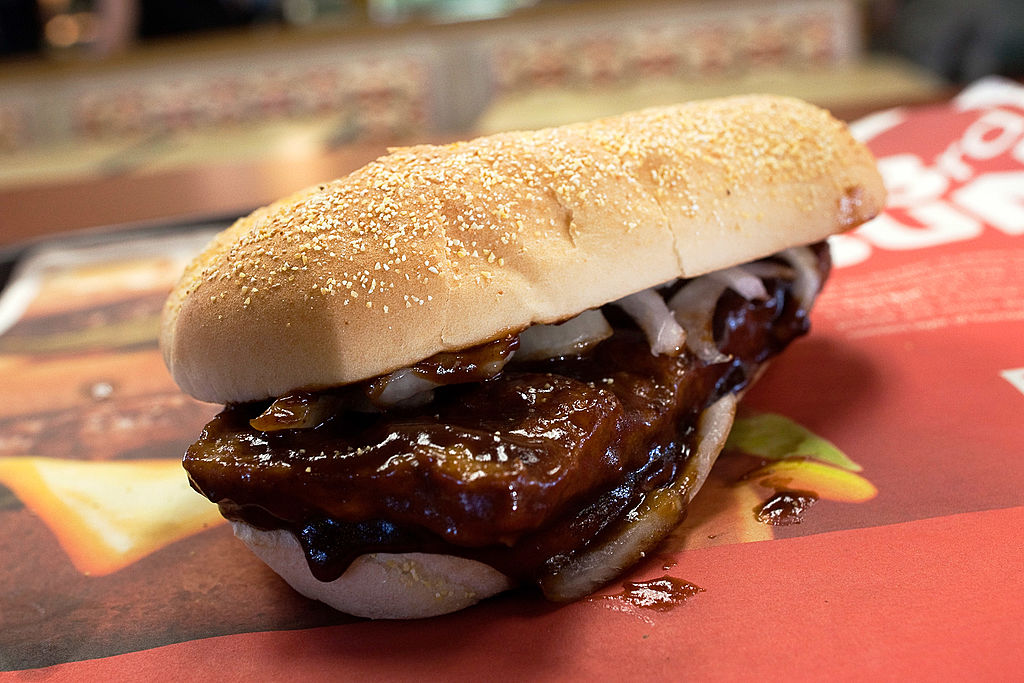
Judge April Perry: McRib Deceptive Marketing Lawsuit Proceeds
Summary
- A federal judge in Illinois allowed a class action lawsuit against McDonald's McRib to proceed, alleging deceptive marketing.
- Plaintiffs claim the $7 McRib's shape and ads mislead consumers into believing it contains rib meat, not cheaper pork cuts.
- U.S. District Judge April Perry rejected McDonald's argument that a reasonable customer would not expect rib meat.
- Judge Perry stated that the plaintiffs' understanding of the McRib's ingredients was "not unreasonable or fanciful."
- McDonald's maintains the lawsuit distorts facts and its claims are meritless, denying the use of certain alleged ingredients.
What Happened
Her written opinion further clarified that the plaintiffs' understanding of the McRib's composition was "not unreasonable or fanciful," suggesting a lower threshold for what constitutes a plausible consumer misinterpretation in food product marketing.
A federal judge in Illinois recently permitted a proposed class action lawsuit to advance against McDonald's, which alleges the fast-food giant misleads consumers about the ingredients of its popular McRib sandwich. The complaint, filed by plaintiffs, centers on the assertion that the $7 McRib, with its distinctive rib-like shape, and associated advertising campaigns, deceptively suggest to customers that the product contains actual rib meat. Instead, the plaintiffs contend, the sandwich is made from cheaper cuts of pork.
The lawsuit also brings into question specific ingredients, with McDonald's countering that it does not utilize hearts, tripe, or stomach in the McRib, despite the suit's allegations to the contrary. McDonald's, which has offered the McRib since 1981, maintains that its unique product names are not designed to deceive reasonable consumers. The company has publicly dismissed the legal challenge, stating that it "distorts the facts" and that the claims are "meritless."
Legal Context
U.S. District Judge April Perry, presiding in the Northern District of Illinois in Chicago, issued a ruling that, while dismissing some aspects of the complaint, crucially allowed the core deceptive marketing claim to proceed. Judge Perry notably rejected McDonald's argument that a typical, reasonable customer would not expect the McRib to contain actual rib meat. This decision underscores a judicial willingness to scrutinize consumer expectations regarding product labeling and advertising.
In her assessment, Judge Perry indicated that the advertisements featuring the sandwich's rib-shaped patties could potentially be construed as an attempt to defraud consumers, though she emphasized the need for further evidence to prove such intent. Her written opinion further clarified that the plaintiffs' understanding of the McRib's composition was "not unreasonable or fanciful," suggesting a lower threshold for what constitutes a plausible consumer misinterpretation in food product marketing. This judicial stance, as reported by Reuters, sets an important precedent for future cases involving product naming conventions.
Why It Matters
This judicial decision carries significant implications for the food and beverage industry, particularly concerning the naming and marketing of food products. The ruling by Judge April Perry signals an increased level of judicial scrutiny on how product names might implicitly convey specific ingredients, even when not explicitly stated. Companies may now face a heightened obligation to ensure that their product descriptions and advertising do not create misleading impressions about their contents.
For legal professionals advising food and beverage companies, this case highlights the importance of a thorough review of all advertising and product descriptions. The court's willingness to consider the plaintiffs' interpretation of the McRib as "not unreasonable or fanciful" suggests that the bar for what constitutes a "reasonable consumer" expectation regarding product contents may be shifting. This could lead to more challenges against product names that imply certain ingredients, urging businesses to adopt greater transparency to avoid potential deceptive marketing claims.
Practical Implications
This ruling signals increased judicial scrutiny on food product naming and marketing, particularly where product names might imply specific ingredients. Lawyers advising food and beverage companies should review client advertising and product descriptions for potential deceptive claims, as this case suggests a lower bar for what constitutes a 'reasonable consumer' expectation regarding product contents.
Source
How does this affect you?
Get an AI analysis of this article grounded in your jurisdictions, practice areas, and any policy documents you've uploaded to Wansom.
Wansom is AI and can make mistakes.