
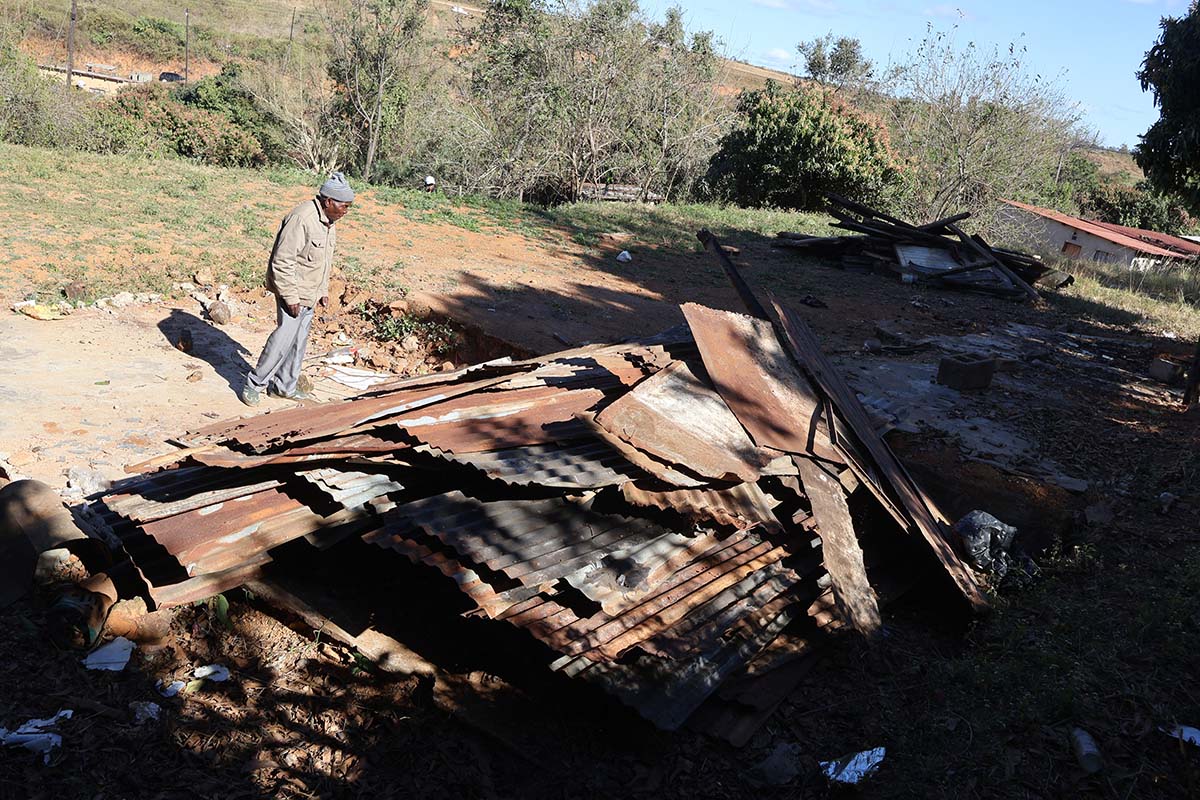
Mazingela Mkhonto Eswatini Land Dispute: Home Demolished After Royal Kraal Order
Summary
- An 80-year-old Eswatini resident, Mazingela Ellion Mkhonto, lost his home in Eticancweni following a land dispute.
- His structures were allegedly demolished by individuals acting on instructions from the royal kraal.
- Mr. Mkhonto claims he had continuously occupied the land for 23 years prior to the demolition.
- He further alleges that another resident illegally sold the land he had been living on.
- The incident highlights the significant tension between long-standing individual occupation and traditional land claims in Eswatini.
The Demolition Incident
The plight of Mazingela Mkhonto, an 80-year-old dispossessed of his home, serves as a compelling and stark illustration of the ongoing tension between customary land tenure and individual occupation rights in Eswatini.
An 80-year-old resident of Eticancweni, Mazingela Ellion Mkhonto, recently faced the devastating loss of his home and other structures following a contentious land dispute. The elderly man claims that individuals, purportedly acting under directives from the royal kraal, carried out the demolition. This severe action resulted in the complete destruction of his dwelling, which he had occupied for a substantial period, bringing a significant personal crisis to the forefront of local land issues.
Mr. Mkhonto explicitly states that he had resided on the land for more than two decades, precisely 23 years, before the structures were razed. The alleged purpose behind this Eticancweni land demolition was to clear the parcel, making way for alternative uses or claims on the property that had been his home for so long. This incident highlights the vulnerability of long-term occupants in areas governed by traditional land tenure systems.
The Genesis of the Dispute
The roots of this particular Mazingela Ellion Mkhonto land dispute trace back to an alleged illicit transaction. Mr. Mkhonto has accused another resident of the community of illegally selling the very piece of land he had continuously occupied for over two decades. This purported sale appears to be a central catalyst for the subsequent actions that led to the demolition of his home.
The accusation of an unauthorized sale, coupled with the alleged royal kraal instructions, paints a picture of a complex conflict over land rights. It suggests a scenario where established, long-term occupation by an individual like Mr. Mkhonto can be challenged and potentially overridden by claims or transactions initiated by others, particularly when traditional authorities are invoked. This sequence of events underscores the challenges faced by individuals in securing their land tenure in Eswatini.
Eswatini's Customary Land Framework
This incident profoundly illustrates the intricate and often challenging nature of Eswatini customary land rights. The alleged involvement of the royal kraal in issuing demolition instructions signifies the powerful role traditional authorities play in land governance across the nation. Under customary law, land is often held in trust by the monarch for the nation, with local chiefs and royal kraals managing its allocation and use within their jurisdictions.
Such royal kraal land claims Eswatini can create significant tension when they intersect with individual occupancy, even if that occupancy has been peaceful and long-standing for 23 years, as in Mr. Mkhonto's case. The absence of formal, individual title deeds in many customary areas means that security of tenure can be less certain, leaving occupants susceptible to decisions made by traditional structures, regardless of their duration of residence.
Broader Implications for Land Security
The plight of Mazingela Mkhonto, an 80-year-old dispossessed of his home, serves as a compelling and stark illustration of the ongoing tension between customary land tenure and individual occupation rights in Eswatini. This specific Mazingela Mkhonto Eswatini land dispute brings into sharp focus the precarious position of many citizens who have invested decades into building homes and lives on land governed by traditional systems.
The Eticancweni land demolition underscores the critical need for clearer legal frameworks that reconcile traditional land governance with the protection of long-term occupants' rights. Without robust mechanisms to address and resolve conflicts arising from royal kraal land claims Eswatini versus established individual presence, similar incidents are likely to continue, potentially undermining social stability and individual property security across the country.
Practical Implications
This case highlights the ongoing tension between customary land tenure and individual occupation rights in Eswatini. Lawyers advising clients on property transactions or land use in Eswatini must diligently assess the potential for challenges from traditional authorities, even for long-standing occupations, and clarify the interplay between customary and statutory land laws to mitigate client exposure.
Source
How does this affect you?
Get an AI analysis of this article grounded in your jurisdictions, practice areas, and any policy documents you've uploaded to Wansom.
Finish Reading the Full Story and the Expert Analysis.
Wansom is AI and can make mistakes.