
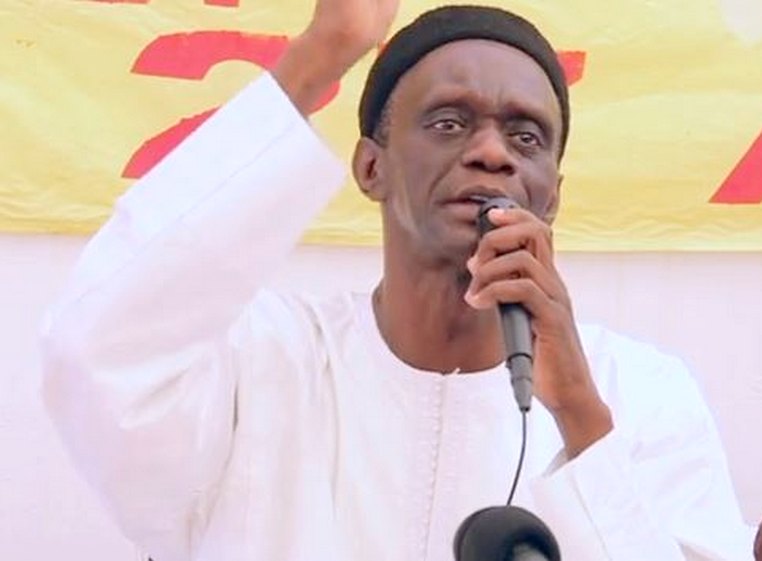
Mame Mactar Gueye: Amnistie Sénégal Fails to Resolve Violence
Summary
- Senegal's amnesty law, adopted in March 2024, continues to generate significant controversy.
- Mame Mactar Gueye, Vice-President of NGO Jamra, stated the law has not adequately resolved the 2021-2024 political violence.
- Gueye expressed his refusal of "l'effacement de tout," meaning the complete erasure of past events.
- His comments were made on Tuesday during the RFM's Pencoo program.
Senegal's Amnesty Law Sparks Continued Controversy
His insistence on refusing the "erasure of everything" powerfully underscores the critical importance of confronting difficult truths and acknowledging past wrongs, rather than attempting to bypass or gloss over them through legislative means.
Senegal's amnesty legislation, formally adopted in March 2024, continues to generate considerable public debate and disagreement across the nation. This legal measure, initially presented as a means to address certain past events, has instead become a focal point for ongoing discussion regarding national reconciliation, justice, and accountability. The controversy surrounding the law highlights deep divisions within society concerning how to best navigate the aftermath of recent political unrest. Among those actively weighing in on the contentious legal framework is Mame Mactar Gueye, who serves as the Vice-President of the prominent non-governmental organization Jamra.
Gueye recently shared his perspective on the matter during an appearance on the RFM's popular Pencoo program, which aired on Tuesday. His candid remarks underscore the persistent divisions surrounding the amnesty, highlighting significant concerns that the law may not achieve its stated objectives or adequately satisfy the public's widespread desire for a comprehensive and equitable resolution to the political turmoil that has affected the country. His intervention adds a significant and respected voice to the chorus of critics who question both the efficacy and the fundamental fairness of the legislative action, suggesting it falls short of truly healing national wounds.
Mame Mactar Gueye Rejects 'Erasure of Everything'
During his broadcast appearance, Mame Mactar Gueye specifically directed his comments towards the intense political violence that gripped Senegal between 2021 and 2024. He articulated a strong and unequivocal belief that the amnesty law, as it has been enacted, has not provided an appropriate or satisfactory resolution for this particularly difficult and sensitive chapter in the nation's contemporary history. His critique centers on the perception that the law, rather than fostering genuine accountability and understanding, instead attempts to sidestep these crucial elements.
Gueye firmly expressed his profound opposition to what he termed "l'effacement de tout," a phrase that translates to the complete erasure of past events and their profound consequences. He argued passionately that simply moving past these significant incidents without proper acknowledgment, thorough investigation, or meaningful resolution would be detrimental to the country's long-term stability and social cohesion. For Gueye, the legislation falls significantly short of adequately addressing the profound impact of the political unrest, leaving many critical questions unanswered and numerous grievances unaddressed, thereby failing to properly "settle" this painful and complex period in a just manner.
The Unresolved Legacy of Political Violence
The ongoing controversy surrounding the March 2024 amnesty law, as powerfully highlighted by influential figures like Mame Mactar Gueye, points to deeper societal concerns about the pursuit of justice and the preservation of historical memory within Senegal. The period of political violence from 2021 to 2024 represents a profoundly significant and painful episode for a substantial number of citizens, and consequently, the effectiveness of any legislative attempt to definitively close this chapter is under intense public and expert scrutiny. The Vice-President of Jamra's comments reflect a broader sentiment that true national reconciliation and healing require more than just a legal decree; they demand a more thorough and empathetic process.
His insistence on refusing the "erasure of everything" powerfully underscores the critical importance of confronting difficult truths and acknowledging past wrongs, rather than attempting to bypass or gloss over them through legislative means. The law's perceived inability, in Gueye's considered view, to adequately resolve this "douloureuse période" (painful period) strongly suggests that for many, the deep wounds inflicted by political conflict remain open and unaddressed. This perspective fundamentally challenges the notion that an amnesty alone can bring genuine closure, emphasizing instead the pressing need for a more comprehensive, transparent, and participatory approach to healing and ensuring accountability for past actions.
Source
How does this affect you?
Get an AI analysis of this article grounded in your jurisdictions, practice areas, and any policy documents you've uploaded to Wansom.
Finish Reading the Full Story and the Expert Analysis.
Get the latest legal & regulatory intelligence in Senegal
Wansom is AI and can make mistakes.