
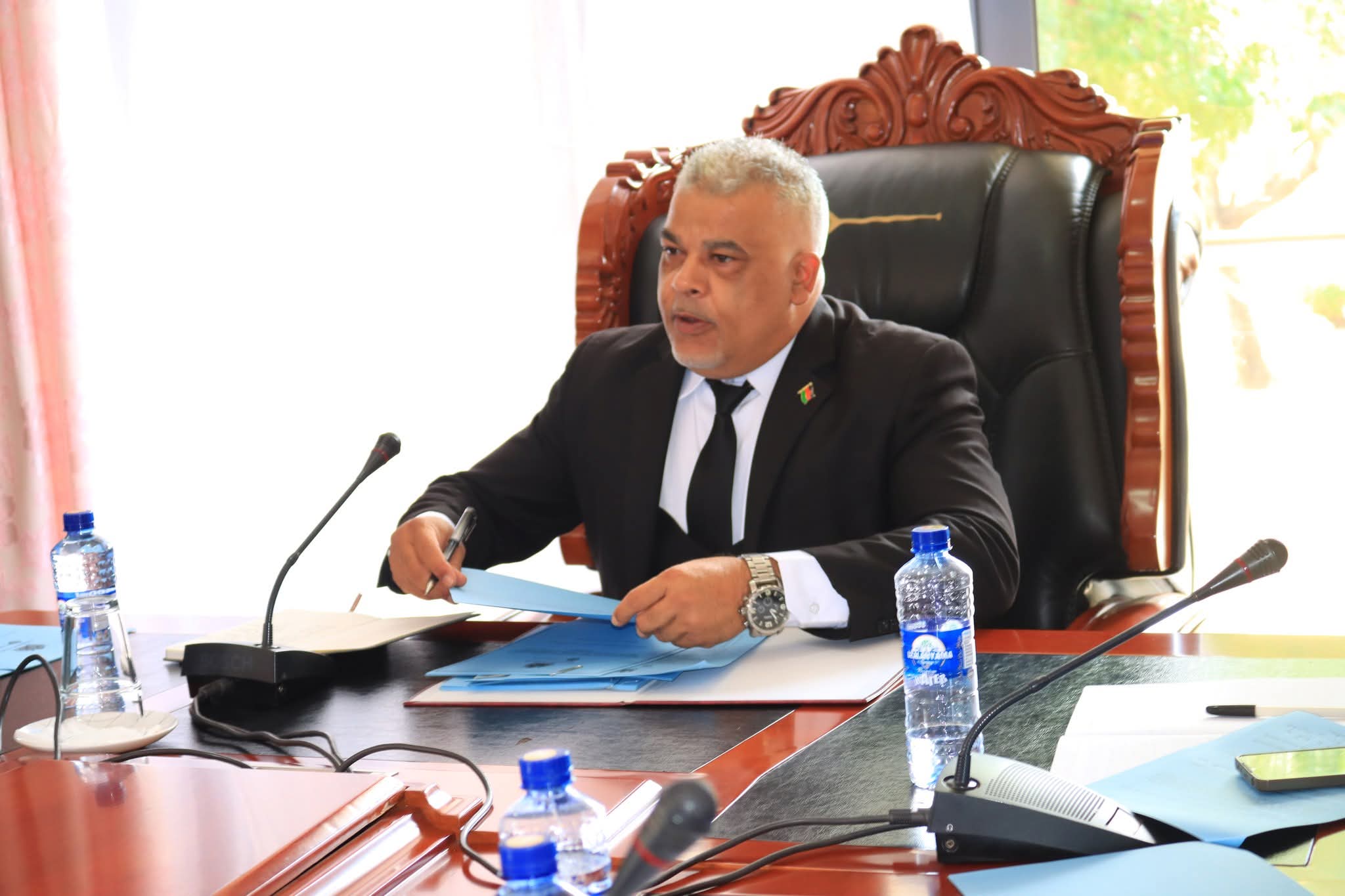
Malawi High Court: Halts Speaker Inquiry Into State Bodies
Summary
- Malawi's High Court issued an interim order on September 4, 2026, temporarily stopping Parliament from launching public inquiries.
- The order specifically bars Speaker Sameer Suleman and Parliament from forming ad hoc committees to probe several state institutions.
- The targeted 'troubled state bodies' include the Immigration and Citizenship Services Department, ESCOM, EGENCO, Power Market Limited, and Blantyre Water Board.
- This judicial intervention pauses legislative oversight efforts into key public sector organizations.
- The ruling establishes a precedent for judicial review of parliamentary oversight functions in Malawi.
High Court Halts Parliamentary Probe
This ruling establishes a precedent for judicial intervention in parliamentary oversight functions in Malawi, particularly concerning inquiries into state institutions.
Malawi's High Court has issued an interim order that temporarily prevents the country's Parliament from initiating public inquiries into several state institutions. The judicial directive, issued on September 4, 2026, specifically bars Speaker Sameer Suleman and the legislative body from establishing or operationalizing any joint ad hoc committees intended to investigate these entities. This significant legal development effectively places a hold on a planned parliamentary oversight function targeting what have been described as 'troubled state bodies'.
Entities Under Scrutiny
The parliamentary inquiries, now subject to the court's temporary injunction, were slated to probe a range of critical state institutions. Among the entities specifically named in the High Court's order are the Immigration and Citizenship Services Department, the Electricity Supply Corporation of Malawi (ESCOM), and the Electricity Generation Company (EGENCO). These organizations play vital roles in national administration and infrastructure, making any investigation into their operations a matter of significant public interest.
Further state bodies that were to be subjected to the parliamentary probe include Power Market Limited and the Blantyre Water Board. The collective description of these institutions as 'troubled state bodies' in the context of the proposed inquiry suggests concerns over their performance, governance, or financial health. The Malawi state bodies probe halted by the court's order therefore affects a broad spectrum of public services and administrative functions.
Legal and Procedural Context
The issuance of an interim order by the High Court signifies a preliminary judicial assessment that there are sufficient grounds to pause an action until a full hearing can take place. Such orders are typically granted to prevent potential irreparable harm or to maintain the status quo while legal arguments are prepared and considered. In this instance, the Speaker Sameer Suleman court order indicates a judicial review of parliamentary actions, a crucial aspect of Malawi administrative law oversight.
While Parliament holds inherent powers of oversight, the judiciary retains the authority to ensure that legislative processes adhere to constitutional and legal frameworks. This ruling establishes a precedent for judicial intervention in parliamentary oversight functions in Malawi, particularly concerning inquiries into state institutions. Lawyers advising state bodies or facing parliamentary scrutiny should be aware of the potential to challenge the legality or procedural validity of such inquiries in the High Court.
Implications for Governance
The temporary halt to the parliamentary inquiries carries significant implications for the balance of power within Malawi's governance structure. It highlights the judiciary's role as a check on legislative authority, even when Parliament is exercising its mandate to ensure accountability of public institutions. The ESCOM EGENCO inquiry injunction, alongside those for other state bodies, underscores the potential for legal challenges to shape the scope and method of parliamentary oversight.
This development could influence how future parliamentary committees are constituted and how their mandates are defined, potentially leading to more rigorous legal scrutiny of their procedural foundations. The High Court's decision reinforces the principle that even legislative actions, when challenged, are subject to judicial review, ensuring adherence to the rule of law across all branches of government.
Practical Implications
This ruling establishes a precedent for judicial intervention in parliamentary oversight functions in Malawi, particularly concerning inquiries into state institutions. Lawyers advising state bodies or facing parliamentary scrutiny should be aware of the potential to challenge the legality or procedural validity of such inquiries in the High Court.
Source
How does this affect you?
Get an AI analysis of this article grounded in your jurisdictions, practice areas, and any policy documents you've uploaded to Wansom.
Finish Reading the Full Story and the Expert Analysis.
Get the latest legal & regulatory intelligence in Malawi
Wansom is AI and can make mistakes.