
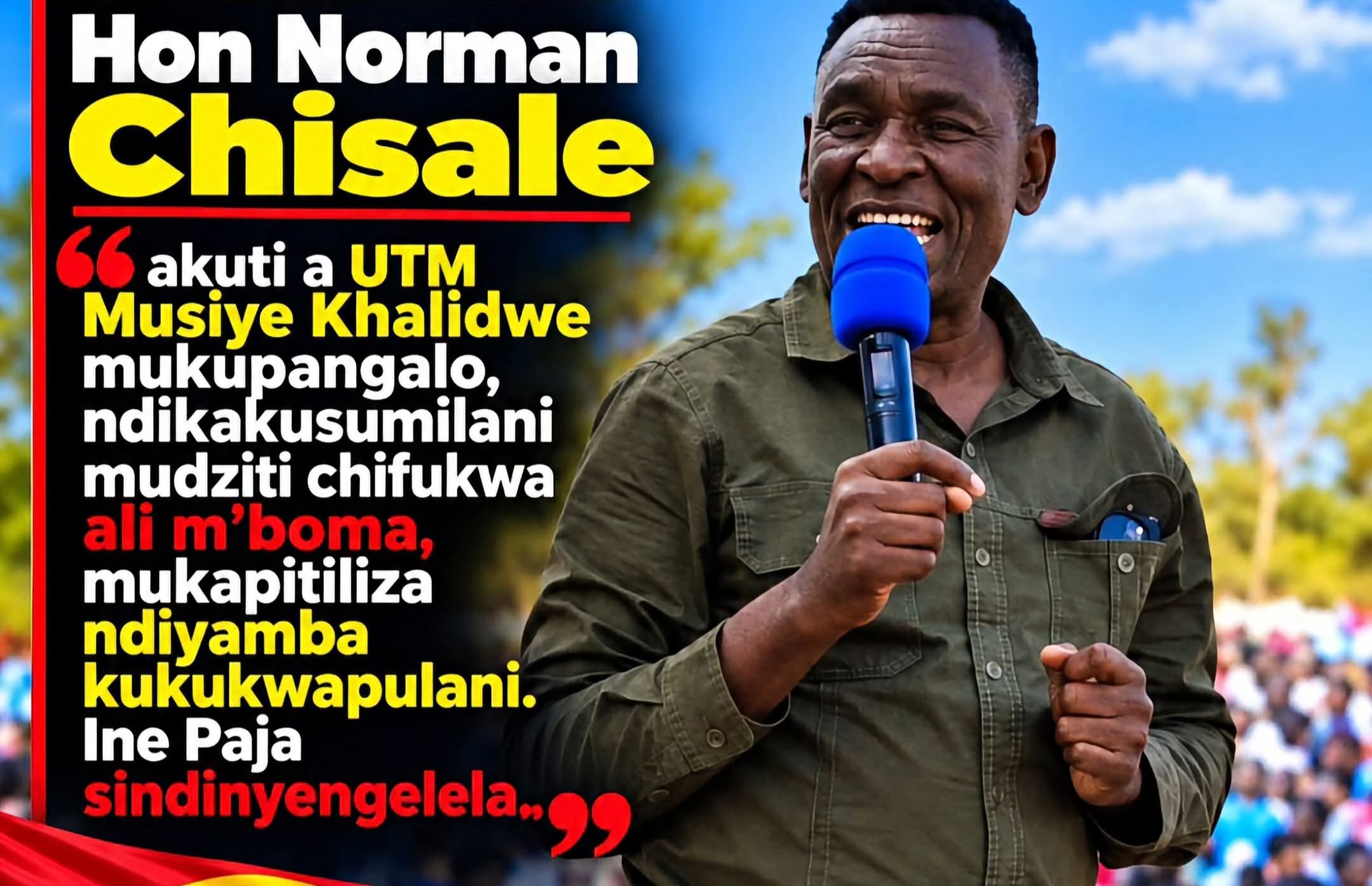
Malawi: Ntata Challenges Chisale Over Whipping Threat, Fitness Questioned
Summary
- Malawi's Deputy Minister of Homeland Security, Norman Chisale, is accused of threatening violence against opposition UTM supporters.
- Legal experts contend that Chisale's alleged remarks expose him as constitutionally unfit for his office.
- The criticism highlights a perceived contradiction between the ministry's mandate to protect and the Deputy Minister's alleged threats.
- The incident raises significant concerns about ministerial conduct and accountability within the Malawian government.
Allegations of Threatening Behavior
This incident highlights potential grounds for constitutional challenges regarding the fitness for office of public officials in Malawi who issue threats of violence, setting a precedent for legal scrutiny of ministerial conduct and accountability.
Norman Chisale, who holds the position of Deputy Minister of Homeland Security with specific responsibility for Operations within the Malawian government, has recently become the subject of serious allegations. He stands accused of issuing threats of violence directed at members of the opposition UTM party. These remarks, reportedly warning of potential aggression, have sparked significant concern across the political landscape, particularly given the sensitive nature of his ministerial portfolio.
The gravity of these alleged threats is underscored by the fact that they emanate from a senior official within the ministry tasked with ensuring national security and public protection. Such statements from a figure responsible for maintaining peace and order are particularly alarming, raising questions about the appropriate conduct expected of those in positions of power and the potential for misuse of authority.
The incident drew sharp criticism, notably from an individual identified as Ntata, who publicly challenged the Deputy Minister's stance. Ntata reportedly articulated a fundamental principle, stating that 'Homeland Security is supposed to protect, not threaten,' directly contrasting the ministry's core mandate with the alleged actions of its deputy. This public rebuke highlights the perceived incongruity between Chisale's alleged remarks and the foundational duties of his office, particularly concerning the safety and rights of all Malawian citizens, including political opposition.
Constitutional Fitness Under Scrutiny
Following the emergence of these allegations, Malawi legal experts have weighed in, asserting that the Deputy Minister's remarks could render him constitutionally unfit for office. This assessment hinges on the principle that public officials, especially those in critical security roles, are expected to uphold the constitution and act in a manner that fosters peace and protects all citizens, irrespective of their political affiliation. Threats of violence, particularly against opposition groups, are seen as a direct contravention of these fundamental duties.
The role of a Deputy Minister of Homeland Security involves safeguarding the nation and its people, ensuring law and order, and promoting a secure environment. When an official in such a position is accused of threatening violence, it raises profound questions about their capacity to fulfill these constitutional obligations. The experts' view suggests that such conduct undermines the very fabric of democratic governance and the rule of law in Malawi, potentially creating a precedent for legal challenges regarding ministerial conduct.
This incident highlights potential grounds for constitutional challenges regarding the fitness for office of public officials in Malawi who issue threats of violence. The legal community's strong reaction underscores the importance of accountability for ministerial conduct and sets a precedent for rigorous scrutiny of those entrusted with public power, particularly when their actions appear to contradict their sworn duties.
Broader Implications for Governance
The controversy surrounding Norman Chisale's alleged threats against opposition UTM supporters extends beyond individual accountability, touching upon broader implications for democratic processes and political stability in Malawi. When a high-ranking government official, especially one associated with national security, is accused of inciting violence, it can have a chilling effect on political discourse and the ability of opposition parties to operate freely and safely.
Such incidents risk eroding public trust in government institutions and the impartiality of state security apparatus. The perception that state power could be used to intimidate or harm political opponents undermines the principles of a fair and democratic society, where diverse political views are meant to be expressed without fear of retribution. The focus on Malawi Deputy Minister constitutional fitness in this context is crucial for maintaining the integrity of public service.
Ultimately, this situation underscores the critical need for robust mechanisms of oversight and accountability for all public officials. The legal experts' swift condemnation of the alleged threats and their emphasis on constitutional fitness serve as a vital reminder that ministerial conduct must always align with the highest standards of integrity and respect for democratic norms, ensuring that the government truly serves and protects all its citizens.
Practical Implications
This incident highlights potential grounds for constitutional challenges regarding the fitness for office of public officials in Malawi who issue threats of violence, setting a precedent for legal scrutiny of ministerial conduct and accountability.
Source
How does this affect you?
Get an AI analysis of this article grounded in your jurisdictions, practice areas, and any policy documents you've uploaded to Wansom.
Finish Reading the Full Story and the Expert Analysis.
Get the latest legal & regulatory intelligence in Malawi
Wansom is AI and can make mistakes.