
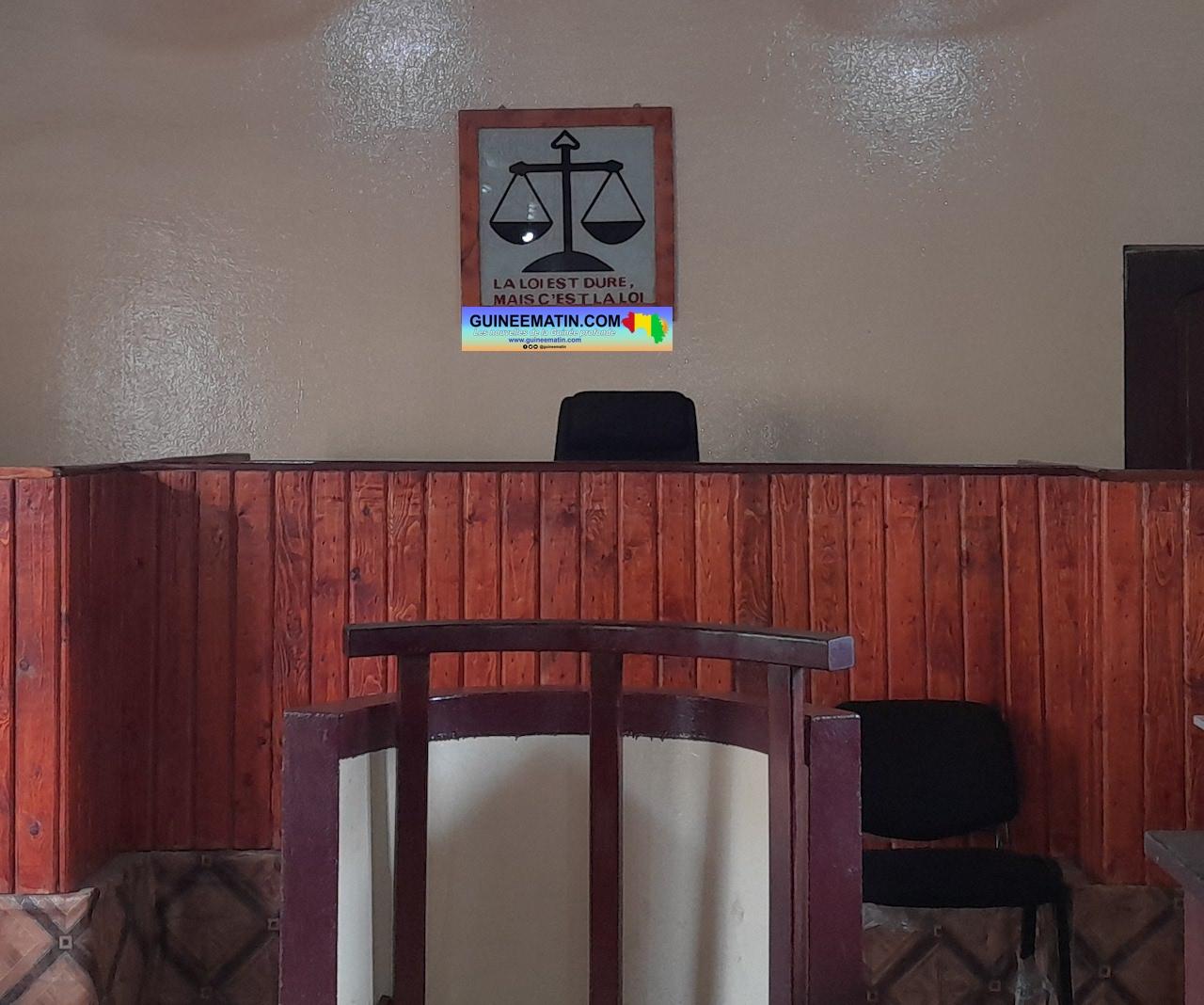
Mafanco Criminal Court: Moussa Soumah Testifies in Homicide Trial
Moussa Soumah appeared before the Tribunal criminel de Mafanco in Guinea on Tuesday, November 24, 2026, facing charges of involuntary homicide, sequestration, and possession of Indian hemp, in connection with the death of Ramatoulaye Diallo.
This ongoing trial highlights the complex nature of criminal proceedings in Guinea, particularly when multiple serious charges are involved, such as those stemming from domestic incidents that escalate to tragic outcomes. The case underscores the judiciary's role in meticulously examining the circumstances surrounding a death, distinguishing between intentional and unintentional acts, and addressing ancillary offenses like drug possession. It also brings to light the defendant's right to present their version of events, even when admitting to certain facts, which is a critical component of due process within the Guinean legal framework.
The legal context for these charges is primarily found within the Guinean Penal Code. Involuntary homicide (homicide involontaire) typically pertains to deaths caused by negligence, imprudence, or a failure to observe regulations, without the specific intent to kill. Sequestration involves the unlawful detention of an individual. The charge of possessing "chanvre indien" (cannabis) falls under Guinea's specific drug laws, which impose penalties for illicit substance offenses. The Tribunal criminel de Mafanco is a criminal court likely designated to handle more serious felonies, indicating the gravity with which these charges are viewed by the state. The defendant's testimony and admissions are crucial elements that the court will weigh in determining culpability and sentencing.
Key parties in this matter include Moussa Soumah, the accused individual; Ramatoulaye Diallo, the deceased victim; and the Tribunal criminel de Mafanco, the court presiding over the trial. The public prosecutor (ministère public) would be responsible for presenting the state's case and seeking justice. Guineematin.com served as the source reporting on the court proceedings. The excerpt explicitly states that Moussa Soumah did not deny the accusations, but it does not report any final verdict or outcome of the trial.
Practitioners in criminal law in Guinea should closely monitor the progression of this case, particularly how the court differentiates between the various charges and assesses the defendant's admissions in the context of intent and culpability. Defense attorneys must meticulously prepare strategies for cases involving multiple, interconnected charges, focusing on the nuances of each offense. Businesses and individuals should be acutely aware of the strict laws against drug possession and the severe legal consequences that can arise from domestic disputes, even those not initially intended to be fatal. The outcome of this matter is not yet reported, and its resolution will provide valuable insight into the application of Guinean criminal jurisprudence.
How does this affect you?
Get an AI analysis of this article grounded in your jurisdictions, practice areas, and any policy documents you've uploaded to Wansom.
Finish Reading the Full Story and the Expert Analysis.
Get the latest legal & regulatory intelligence in Guinea
Wansom is AI and can make mistakes.