
Aboubacar Sidy Diallo: Menaces Mort Jugement Devant le Tribunal
Summary
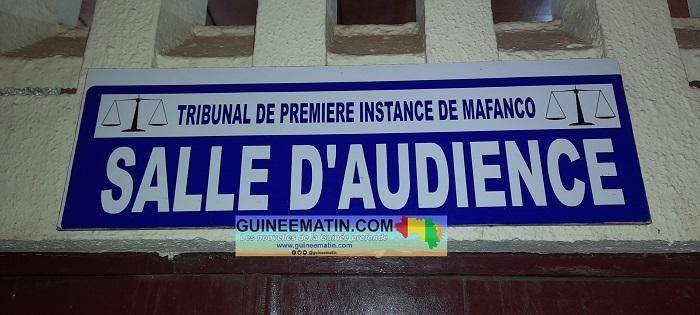
- Aboubacar Sidy Diallo appeared before the tribunal de première instance de Mafanco on November 17, 2026.
- He is accused of issuing death threats against his sister, Issatou Diallo.
- Issatou Diallo is participating in the proceedings as a partie civile.
- The hearing primarily focused on the public prosecutor's formal requisitions.
- The prosecutor stated that Mr. Diallo "listened to no one and started insulting her."
The Court Appearance
The ongoing Aboubacar Sidy Diallo menaces mort jugement represents more than just a family dispute; it underscores the legal system's commitment to addressing serious allegations of menaces de mort Guinée.
On Tuesday, November 17, 2026, a significant criminal proceeding unfolded at the tribunal de première instance de Mafanco, where Aboubacar Sidy Diallo faced charges related to menaces de mort. The defendant appeared before the court to answer allegations that he had issued death threats against his own sister, Issatou Diallo. This particular hearing was primarily dedicated to the formal presentation of the public prosecutor's requisitions, marking a crucial stage in the judicial process.
The case highlights a deeply personal conflict brought into the public legal arena. Issatou Diallo, the alleged victim, has formally constituted herself as a partie civile, a legal status in Guinean law that allows victims to participate directly in criminal proceedings and seek damages. Her decision to pursue legal action underscores the gravity with which these threats are being treated within the family and by the justice system. The prosecution's stance, as indicated by their focus on requisitions, suggests a clear intent to press forward with the charges against Aboubacar Sidy Diallo.
Legal Context in Guinea
The prosecution of menaces de mort in Guinée falls squarely under the purview of droit pénal Guinée, which criminalizes actions that instill fear of harm or death. Such offenses are taken seriously, as they undermine public order and personal security. The tribunal de première instance de Mafanco, like other courts of its kind, is responsible for adjudicating a wide range of criminal matters, including those involving interpersonal violence and threats.
The role of the partie civile, as exemplified by Issatou Diallo in this case, is a fundamental aspect of the Guinean legal system. It empowers victims not only to seek justice for the criminal act but also to claim civil reparations for any harm suffered. This dual function ensures that the legal process addresses both the punitive and restorative aspects of criminal behavior, particularly in cases where personal relationships are involved. The public prosecutor's involvement further emphasizes the state's interest in upholding the law and protecting its citizens from such serious threats.
Significance of the Proceedings
The ongoing Aboubacar Sidy Diallo menaces mort jugement represents more than just a family dispute; it underscores the legal system's commitment to addressing serious allegations of menaces de mort Guinée. The public prosecutor's comments, noting that the defendant "listened to no one and started insulting her," paint a picture of defiance and aggression that the court is now tasked with evaluating. This statement, made during the requisitions, provides insight into the prosecution's view of the defendant's conduct and the circumstances surrounding the alleged threats.
The outcome of this trial at the tribunal de première instance de Mafanco will be significant, not only for Aboubacar Sidy Diallo and Issatou Diallo but also as a demonstration of how the Guinean legal system handles such sensitive cases. It highlights the importance of legal recourse for individuals facing threats, even from close family members, and reinforces the principle that no one is above the law. The proceedings serve as a reminder of the serious consequences associated with issuing death threats under droit pénal Guinée.
Practical Implications
This article reports on a specific criminal trial in Guinea concerning death threats. It does not introduce new legal precedents, statutory changes, or compliance obligations, and therefore has no direct actionable legal implication for lawyers or compliance officers beyond general awareness of ongoing criminal proceedings.
Source
How does this affect you?
Get an AI analysis of this article grounded in your jurisdictions, practice areas, and any policy documents you've uploaded to Wansom.
Finish Reading the Full Story and the Expert Analysis.
Get the latest legal & regulatory intelligence in Guinea
Wansom is AI and can make mistakes.