
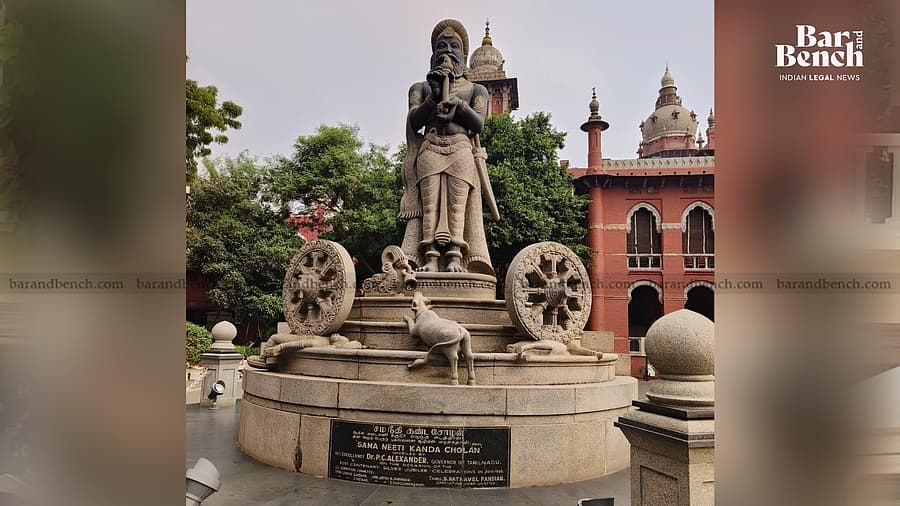
Madras High Court: Preaching Religion Without Permission Can Cancel OCI
The Madras High Court in India recently held that preaching one's religion without prior permission from the Central government is sufficient grounds for cancelling a foreign national's Overseas Citizen of India (OCI) registration, even if no religious conversions take place. Justice D Bharatha Chakravarthy, in the case of John Daniel Vs UOI, dismissed a petition filed by American citizen John Daniel challenging the cancellation of his OCI registration by the Foreigners Regional Registration Officer (FRRO), Chennai, on September 4. The Court clarified that missionary activities are not limited to religious conversions and that OCI cardholders are required to obtain prior permission even to preach or spread their religion, stating, "It is not only for conversion, but even to be a missionary preaching his religion, it is only a prior permission that is mandated." Daniel's OCI registration, granted in February 2015, was cancelled based on allegations by the Central government that he was undertaking missionary activities in Tamil Nadu and Andhra Pradesh without the requisite permission, including conducting religious meetings, preaching in interior villages, and encouraging conversions to Christianity, despite Daniel maintaining his visits were primarily to meet his 92-year-old mother and other relatives. The outcome of the specific challenge to the cancellation is that his petition was dismissed, thereby upholding the cancellation of his OCI status.
This ruling is highly significant for foreign nationals holding OCI status in India, particularly those involved in any form of religious activity. It signals a stricter interpretation of the regulations governing OCI cardholders, emphasizing that the mere act of preaching or spreading one's religion, irrespective of whether conversions occur, constitutes a 'missionary activity' requiring explicit prior government approval. This clarification has profound implications for individuals and religious organizations, as it broadens the scope of activities that fall under regulatory scrutiny and underscores the government's authority to control the activities of foreign nationals, even those with long-term residency status. It highlights a potential shift towards more stringent enforcement of existing provisions related to religious propagation by non-citizens.
The legal context for this decision lies within the framework of the Citizenship Act, 1955, which governs the Overseas Citizenship of India (OCI) scheme, and its associated rules and regulations. OCI status, while granting many benefits akin to Indian citizens, is not full citizenship and comes with specific restrictions, including the requirement for prior permission for certain activities. The Foreigners Regional Registration Officer (FRRO) is the administrative authority responsible for enforcing these regulations. The Madras High Court, as a High Court in India, exercises its writ jurisdiction under Article 226 of the Constitution of India to review administrative actions, such as the cancellation of OCI registration. This judgment sets a precedent within its jurisdiction and provides crucial guidance for other courts and administrative bodies interpreting similar provisions.
The key parties involved in this matter were the Madras High Court, specifically Justice D Bharatha Chakravarthy, the American citizen John Daniel, the Union of India (UOI), and the Foreigners Regional Registration Officer (FRRO), Chennai.
Practitioners advising foreign nationals with OCI status, especially those affiliated with religious or charitable organizations, must meticulously review the regulations concerning 'missionary activities' and the explicit requirement for prior government permission. It is crucial to advise clients that even seemingly innocuous acts of religious preaching or sharing one's faith can be construed as missionary activities requiring explicit approval from the Central government. Businesses or organizations employing or sponsoring OCI cardholders for any form of religious outreach should ensure strict compliance with these permissions to avoid cancellation of OCI status and potential legal repercussions. The ruling highlights the imperative for proactive compliance and careful interpretation of regulatory guidelines by OCI cardholders and their legal counsel.
How does this affect you?
Get an AI analysis of this article grounded in your jurisdictions, practice areas, and any policy documents you've uploaded to Wansom.
Finish Reading the Full Story and the Expert Analysis.
Wansom is AI and can make mistakes.