
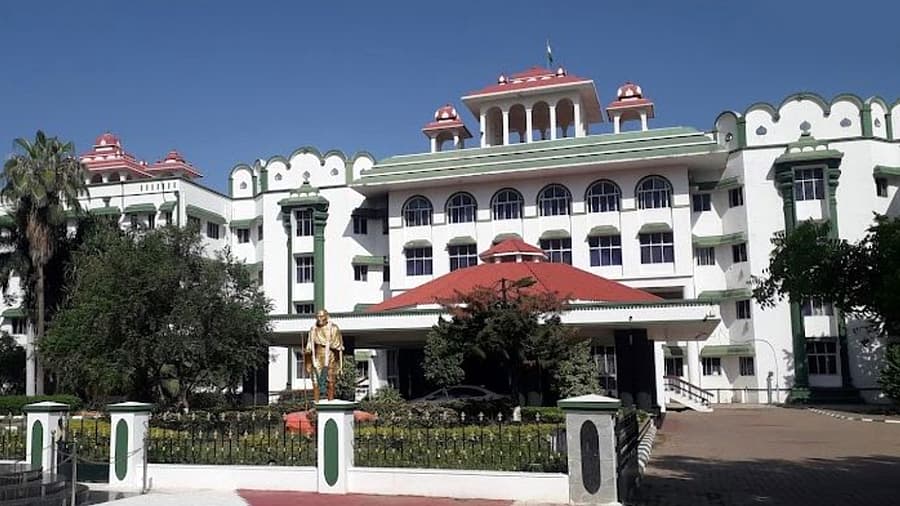
Madras High Court: PIL Not Substitute For Criminal Complaint
Summary
- The Madras High Court ruled that a letter to the Chief Minister’s Cell or a Public Interest Litigation (PIL) cannot replace the formal procedure for filing a criminal complaint.
- The ruling was made by Justices CV Karthikeyan and R Sakthivel while dismissing a PIL seeking a CBI probe into the disappearance of two idols from the Arulmighu Kalatheeswarar Abirami Temple in Dindigul.
- The court emphasized that individuals must first lodge a proper complaint with the appropriate investigating agency.
- If no action is taken, the complainant can then approach the jurisdictional Magistrate or competent court under the Bharatiya Nagarik Suraksha Sanhita, 2023 (BNSS).
- The September 8 order clarified that the petitioner is free to pursue the matter through a properly filed criminal complaint.
Court Clarifies Criminal Complaint Procedure
The court firmly stated that informal communications, such as letters to the Chief Minister, or broad public interest litigations, cannot bypass this structured legal framework.
The Madras High Court recently issued a definitive ruling, asserting that neither a letter addressed to the Chief Minister's Cell nor the subsequent filing of a Public Interest Litigation (PIL) can serve as a substitute for the legally mandated process of initiating a criminal complaint. This significant clarification came from a Division Bench comprising Justices CV Karthikeyan and R Sakthivel, who underscored the necessity of adhering to established legal protocols for reporting alleged offenses.
The court's pronouncement was made while dismissing a PIL in the case of Raja SM Vs State. The petitioner had sought a Central Bureau of Investigation (CBI) inquiry into the alleged disappearance of two specific idols, the Karudalvar idol and the Bala Durgai Amman idol, from the historic Arulmighu Kalatheeswarar Abirami Temple, also known as the Abirami Amman Temple, located in Dindigul. The September 8 order emphasized that while the petitioner retains the right to pursue the matter, it must be done through a properly filed criminal complaint.
Mandatory Legal Steps for Alleged Offenses
In its ruling, the Madras High Court meticulously outlined the correct sequence for individuals alleging a criminal offense. The court stressed that the initial and indispensable step involves lodging a formal complaint with the appropriate investigating agency. This foundational requirement ensures that law enforcement bodies are properly engaged and given the opportunity to act on the reported information.
Should the investigating agency fail to take action following the initial complaint, the aggrieved party is then empowered to escalate the matter. The court clarified that the next recourse involves approaching the jurisdictional Magistrate or other competent court to seek further relief. This procedural pathway is explicitly provided for under the provisions of the Bharatiya Nagarik Suraksha Sanhita, 2023 (BNSS), which governs criminal procedure in India. The bench firmly stated that informal communications, such as letters to the Chief Minister, or broad public interest litigations, cannot bypass this structured legal framework.
Implications for Legal Recourse
This judgment from the Madras High Court reinforces the principle that all individuals, including petitioners in public interest matters, must follow the prescribed legal channels when seeking to initiate criminal proceedings. The court's observation that 'the procedure known to law has to be followed by the petitioner and by everybody else' highlights the universal applicability of these rules, preventing circumvention of due process.
The ruling serves as a crucial reminder for legal practitioners and the public alike that a Madras High Court PIL is not a substitute for a criminal complaint. It clarifies that merely sending a letter to the Chief Minister's Cell and subsequently filing a public interest litigation will not effectively advance the cause of a petitioner seeking action on alleged criminal acts. This decision solidifies the mandatory nature of the established criminal complaint procedure, ensuring that all allegations are addressed through the appropriate investigative and judicial mechanisms.
Practical Implications
Lawyers must advise clients that Public Interest Litigations or informal letters to authorities like the Chief Minister's Cell cannot bypass the prescribed legal procedure for initiating criminal complaints. This ruling clarifies the mandatory sequence of legal recourse, emphasizing the need to first lodge a formal complaint with the appropriate agency and then, if necessary, approach the jurisdictional Magistrate or court under the Bharatiya Nagarik Suraksha Sanhita, 2023.
Source
How does this affect you?
Get an AI analysis of this article grounded in your jurisdictions, practice areas, and any policy documents you've uploaded to Wansom.
Finish Reading the Full Story and the Expert Analysis.
Get the latest legal & regulatory intelligence in India
Wansom is AI and can make mistakes.