
Madras High Court: Orders DVAC to Register FIR in Tamil Nadu Library Scam
Summary
- The Madras High Court has ordered the DVAC to register an FIR, suspend officials, and freeze bank accounts over alleged procurement of AI-generated and plagiarized books in Tamil Nadu public libraries.
- This directive stems from a contempt petition alleging non-compliance with prior court orders from June 2024 regarding book procurement irregularities in the S. Krishnan v. Secretary to Government case.
- The court noted that a financial crime involving crores of rupees could not have occurred without the active involvement of government servants.
- Specific examples of fraudulent books include a work falsely attributed to economist Jean Drèze and others to poet Subramania Bharati.
- The court ruled that stocking public libraries with bogus books violates the Tamil Nadu Public Libraries Act, 1948, and citizens' right to accurate information under Article 19(1)(a).
Judicial Intervention in Library Procurement
The Madras High Court emphasized that the presence of bogus books, false content, and works by fictitious authors in public libraries constitutes a direct violation of the statutory obligations outlined in the Tamil Nadu Public Libraries Act, 1948.
The Madras High Court issued a significant directive on November 10, 2026, ordering the Directorate of Vigilance and Anti-Corruption (DVAC) to register a First Information Report (FIR) concerning alleged widespread irregularities in the procurement of books for public libraries across Tamil Nadu. This order also mandates the suspension of implicated officials and the freezing of their bank accounts. The court's action stems from a contempt petition, filed by Ramasubbu, which highlighted a failure to comply with previous judicial instructions.
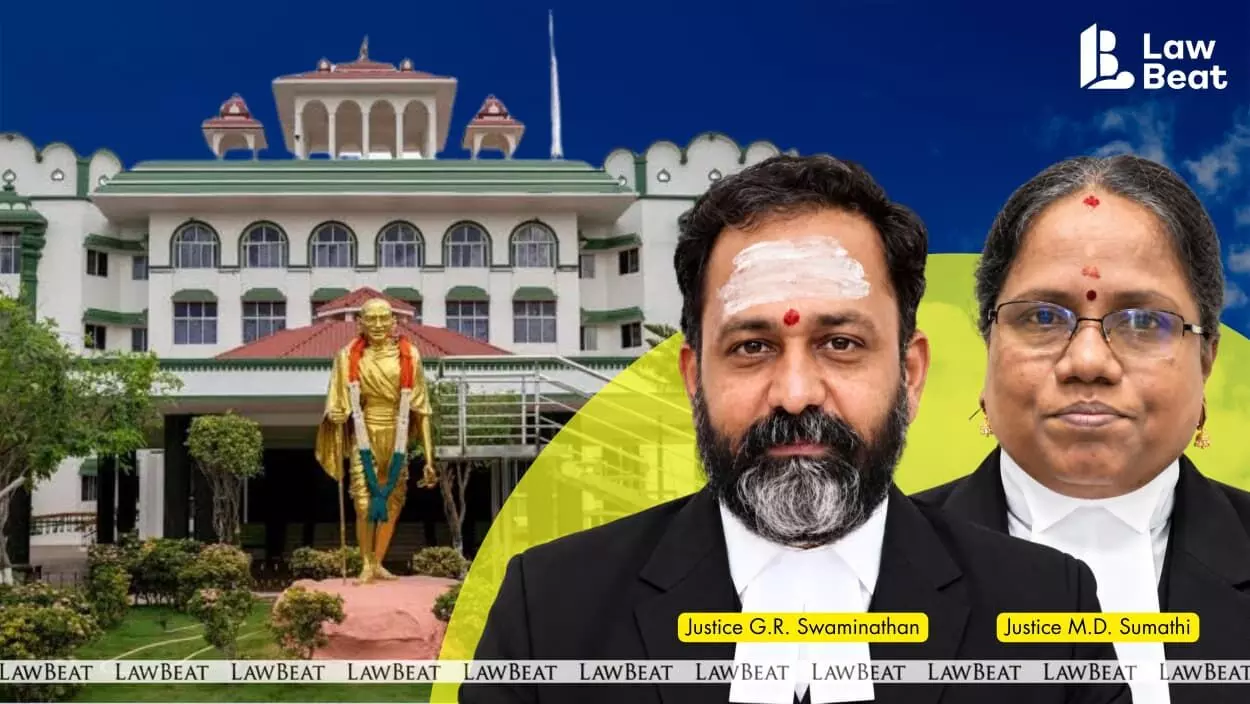
The High Court, specifically a division bench comprising Justices G.R. Swaminathan and M.D. Sumathi, underscored the gravity of the situation, noting that a financial crime involving "crores of rupees" could not have occurred without the direct involvement of government personnel. The court also observed the shifting political landscape during the various stages of the case, from the initial writ petition filed under the AIADMK government, its disposal during the DMK's tenure, to the current scandal unfolding under a TVK-led coalition, remarking pointedly that "Actors change, actions do not."
Public attention was sharply drawn to the issue on the eve of Diwali, following writer Perumal Murugan's social media post expressing profound distress over what he termed a "colossal fraud" related to book acquisitions for the Periyar Arivulagam in Coimbatore. This public outcry prompted an acknowledgment from the government that the system had been severely exploited. In response, Ms. Jayanthi, I.A.S., was relieved of her duties as Director of Public Libraries on November 8, and the DVAC initiated its inquiry, leading to the cancellation of all existing book procurement orders.
Persistent Irregularities and Prior Directives
The recent judicial intervention is not an isolated event but follows a history of concerns regarding Tamil Nadu library book procurement irregularities. The contempt petition specifically alleged non-compliance with directions issued by the Madras High Court on June 19, 2024, in the case of S. Krishnan v. Secretary to Government, Department of Higher Education. The court found these earlier directives to have been "brazenly and egregiously breached," necessitating the current stringent measures.
In the Krishnan case, the court had identified several problematic practices within the book procurement process. These included the re-publication of older works under new titles and different authors' names, the repeated purchase of books that had already been nationalized, and a clear violation of the standing rule prohibiting the acquisition of the same book within a five-year period. These findings pointed to systemic flaws and potential malfeasance.
Following these revelations, the court had previously instructed the State Government to establish a committee tasked with investigating the allegations, producing a comprehensive report detailing unfair practices, and taking appropriate action against any officials found responsible. Furthermore, to enhance transparency and prevent future abuses, the court had mandated the creation of a dedicated website to display proposed book purchases, allowing both publishers and the general public to raise objections or provide feedback.
The Scope of the Current Scandal
The current contempt proceedings brought to light fresh and extensive allegations of large-scale irregularities, particularly concerning the procurement of books for the Periyar Arivulagam in Coimbatore. These new revelations, amplified by writer Perumal Murugan's public statements, highlighted the depth of the Madras High Court book scam order's underlying issues.
Concrete examples of fraudulent content have emerged, including a book titled "Democracy and People's Right in the Contemporary World," discovered in the Kalaignar Centenary Library in Madurai, which was falsely attributed to the renowned economist Jean Drèze. Drèze himself publicly denounced this publication as fake. The court also referenced works falsely attributed to the revered Tamil poet Subramania Bharati, popularly known as Bharathiyar, lamenting that such publications continue to occupy public library shelves, causing the poet to "turn in his grave."
These instances underscore the core issue of AI-generated plagiarized books procurement. The court observed that stocking public libraries with bogus books, content that is demonstrably false, and works attributed to fictitious authors represents a severe breach of public trust and statutory duties.
Legal and Constitutional Ramifications
The Madras High Court emphasized that the presence of bogus books, false content, and works by fictitious authors in public libraries constitutes a direct violation of the statutory obligations outlined in the Tamil Nadu Public Libraries Act, 1948. Beyond this, the court asserted that such practices also infringe upon the fundamental right of citizens to receive accurate and quality information, a right implicitly protected under Article 19(1)(a) of the Indian Constitution.
In its ruling, the court explicitly categorized AI-generated and plagiarized books as publications of "doubtful taste." It unequivocally stated that such materials are unsuitable for procurement by public libraries, thereby setting a clear standard for the quality and authenticity of content that should be made available to the public. This ruling highlights the increased scrutiny on procurement processes and accountability of officials.
Practical Implications
Lawyers advising government departments or entities involved in public procurement in Tamil Nadu should note the Madras High Court's stringent stance on irregularities, particularly those involving fraudulent content like AI-generated or plagiarized books. This ruling underscores the severe legal consequences, including FIRs, official suspensions, and asset freezes, for non-compliance with court directives and statutory obligations under the Tamil Nadu Public Libraries Act, 1948, highlighting increased scrutiny on procurement processes and accountability of officials.
Source
How does this affect you?
Get an AI analysis of this article grounded in your jurisdictions, practice areas, and any policy documents you've uploaded to Wansom.
Finish Reading the Full Story and the Expert Analysis.
Get the latest legal & regulatory intelligence in India
Wansom is AI and can make mistakes.