
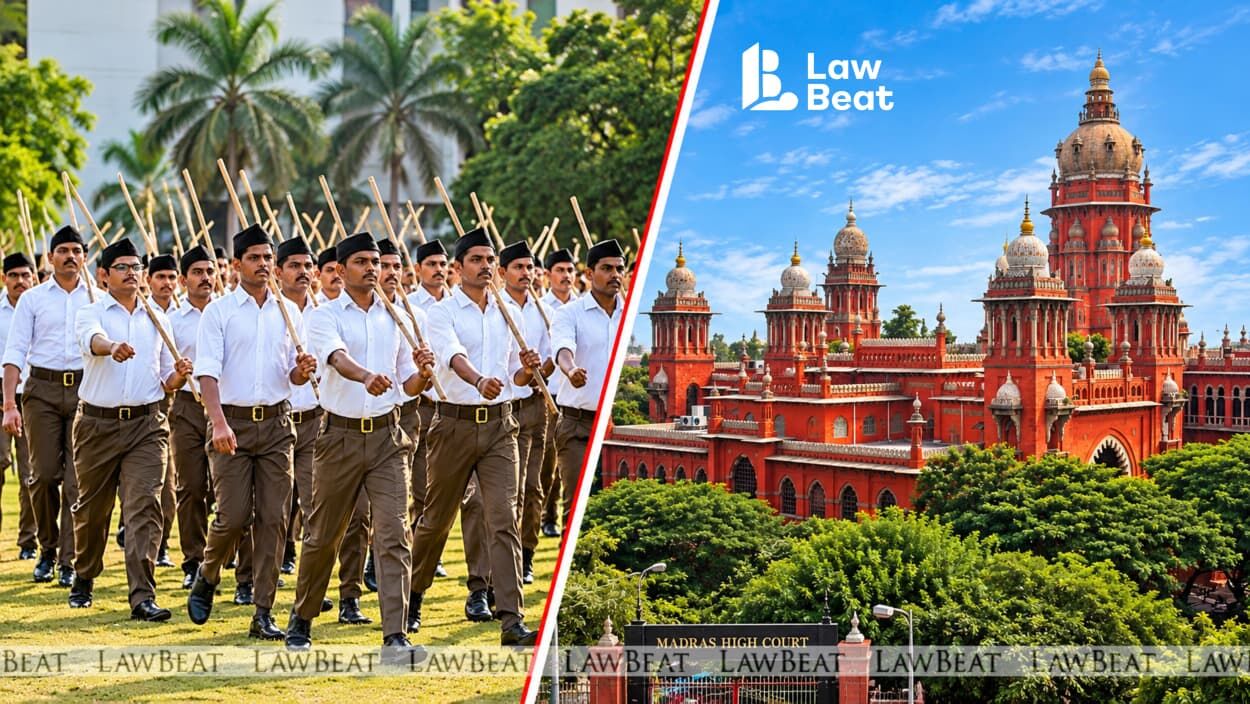
Madras HC: Police Rebuked for Invalid RSS Route March Denial Grounds
Summary
- The Madras High Court criticized Tamil Nadu Police for repeatedly using previously rejected grounds to deny RSS route marches.
- Police cited the presence of mosques and alleged minority unease as reasons, which earlier court orders had deemed invalid.
- Justice V Lakshminarayanan expressed "agony" over these claims and cautioned police against unfairly implicating the Muslim community.
- Neither the RSS nor State authorities fully complied with the March 2024 guidelines, leading to incomplete applications and continued judicial disputes.
- The court directed the RSS to file a detailed affidavit with specific plans, deferring the marches to late October and early November.
Judicial Rebuke Over Procession Denials
The court expressed profound disappointment that neither the Rashtriya Swayamsevak Sangh nor the State authorities had fully complied with these comprehensive directives, leading to a continuation of the very litigation the guidelines aimed to prevent.
The Madras High Court recently issued a sharp rebuke to the Tamil Nadu Police, criticizing their persistent reliance on previously rejected justifications for denying permission for Rashtriya Swayamsevak Sangh (RSS) route marches. During the dictation of his order, Justice V Lakshminarayanan conveyed his profound "agony" at the police's suggestion that the presence of mosques along proposed routes or an alleged unease among minority communities constituted valid grounds for refusal. He underscored that such reasoning had already been dismissed in earlier judicial pronouncements.
This judicial intervention arose from a petition challenging the police's refusal to sanction numerous RSS marches, which are traditionally organized around the group's annual Vijayadashami celebrations. While the RSS had sought approval for processions in 128 locations across Tamil Nadu, the police indicated willingness to permit them in only 58. The court noted with concern that the police had once again presented largely the same arguments that had been invalidated in previous years, despite clear precedents.
Further exacerbating the court's displeasure, the police also referenced incidents involving the banned Popular Front of India (PFI) as a basis for opposing the marches. Justice Lakshminarayanan directly questioned whether any actual objections had been raised by members of the Muslim community, pointedly remarking, "Don’t give Muslims a bad name." This highlights the court's skepticism regarding the police's broad and unsubstantiated claims of minority apprehension as a Madras HC RSS route march denial ground.
Established Legal Framework for Public Assemblies
The recurring nature of this dispute prompted the court to revisit the established legal framework governing public assemblies. The High Court had previously granted permission for RSS processions in September 2022, a decision subsequently upheld when the Supreme Court dismissed the State's challenge on April 11, 2023. Despite these definitive rulings, similar conflicts have continued to burden the judiciary annually, consuming valuable court time.
Justice G Jayachandran had earlier delivered a significant ruling, explicitly clarifying the limited circumstances under which permission for such gatherings could be denied. His judgment unequivocally stated that the mere presence of religious structures like mosques or churches on a route, the potential for traffic congestion, or the existence of groups holding opposing ideologies do not provide legitimate grounds for refusal. Justice Jayachandran had characterized such objections as "lame," setting a clear precedent for the Tamil Nadu Police regarding valid Madras HC RSS route march denial grounds.
To address this persistent cycle of litigation, Justice Jayachandran issued comprehensive guidelines on March 11, 2024, specifically designed to streamline the process for granting permissions for public processions and prevent repeated judicial intervention. These guidelines were intended to provide a clear roadmap for both organizers and authorities, ensuring transparency and adherence to legal principles in the exercise of freedom of assembly India.
Court's Frustration and Future Directives
The court expressed profound disappointment that neither the Rashtriya Swayamsevak Sangh nor the State authorities had fully complied with these comprehensive directives, leading to a continuation of the very litigation the guidelines aimed to prevent. Justice Lakshminarayanan observed that the faith the court had placed in both parties appeared "entirely misplaced," given their failure to adhere to the established protocols.
Specifically, the court identified deficiencies in the RSS applications, noting the absence of crucial details such as proposed alternative routes and the names of individuals responsible for organizing the processions and public meetings. This lack of complete information contributed to the impasse. The judge emphasized that a considerable amount of judicial time had been expended on disputes that should have been resolved through adherence to existing regulations, stressing the imperative for both organizers and police to follow the guidelines rather than repeatedly seeking judicial intervention on the same issues.
To resolve the immediate matter, the court directed the RSS to submit a detailed affidavit. This document must include specific proposed routes, the estimated number of participants, and comprehensive details of local organizers, all in strict accordance with the March 2024 guidelines. Furthermore, the organization must provide an undertaking to rigorously adhere to all conditions stipulated by the High Court. The marches, initially scheduled for October 18, have been deferred, with processions in the northern districts now slated for October 25 and those in the southern districts for November 1. Following the affidavit submission, the Advocate General is tasked with obtaining instructions from the Director General of Police, while local RSS organizers are to provide the necessary particulars to their respective Superintendents of Police. The case is scheduled for its next hearing on October 16.
Practical Implications
Lawyers advising organizations planning public processions in Tamil Nadu must ensure strict adherence to the Madras High Court's March 2024 guidelines, particularly regarding application completeness and alternative routes, to avoid repeated litigation and ensure successful permission grants. This ruling also reinforces the limited grounds on which police can deny such permissions, challenging vague claims of minority unease or the presence of religious structures.
Source
How does this affect you?
Get an AI analysis of this article grounded in your jurisdictions, practice areas, and any policy documents you've uploaded to Wansom.
Finish Reading the Full Story and the Expert Analysis.
Get the latest legal & regulatory intelligence in India
Wansom is AI and can make mistakes.