
Madras High Court: Accepts Petition Challenging Christian Convert Reservation in Tamil Nadu
Summary
- The Madras High Court has admitted a petition challenging the constitutional validity of reservation benefits for Christian converts and specific Christian communities in Tamil Nadu.
- The petition, filed by G. Kodeeswaran, disputes their inclusion in Backward Class and Most Backward Class lists under the Tamil Nadu Government Servants (Conditions of Service) Act, 2016.
- The court emphasized that Other Backward Class status is not permanent and requires the state to justify inclusion or retention with objective data, as per Article 16(4).
- Kodeeswaran argues that these inclusions dilute the reservation pool and contradict findings from earlier Backward Classes Commissions that either declined or rejected such classifications.
- The challenge highlights concerns that the existing framework could allow individuals from forward communities to gain OBC status through conversion, impacting the fairness of the reservation system.
High Court Admits Challenge to Reservation Policy
The court underscored that a community's Other Backward Class status is neither inherent nor perpetual, asserting that the state bears the responsibility to substantiate any inclusion or continued retention on the reservation roster when its classification faces scrutiny.
The Madras High Court has recently accepted a writ petition that questions the constitutional legitimacy of specific provisions granting Backward Class (BC) and Most Backward Class (MBC) reservation benefits to certain Christian communities and converts within Tamil Nadu. This challenge specifically targets entries found in Schedule I of the Tamil Nadu Government Servants (Conditions of Service) Act, 2016, prompting the court to acknowledge that the matter raises significant concerns regarding the state's existing reservation framework.
The petitioner, G. Kodeeswaran, a member of the Kallar community, sought an urgent interim application, which the court granted, citing the ongoing recruitment processes for the Tamil Nadu Public Service Commission's Combined Civil Services Examination IV (Group IV Services). Kodeeswaran's petition directly disputes the inclusion of various Christian groups, including Christian Nadars, Christian Shanars, and Christian Gramanis, within the Backward Classes list. Furthermore, it contests the provisions that allow individuals converting to Christianity from communities such as Meenavar, Parvatharajakulam, Pattanavar, Sembadavar, and Mukkuvar, to claim Most Backward Class status.
Judicial Scrutiny on Reservation Criteria
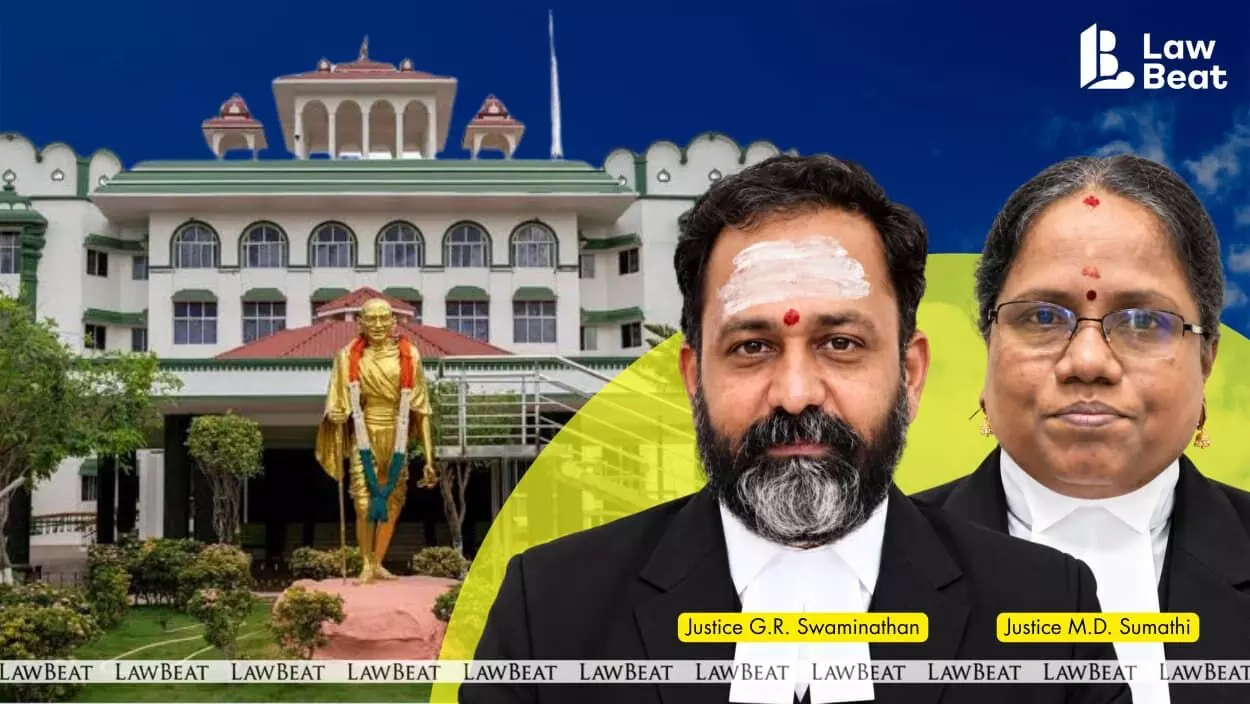
In its observations, the division bench, comprising Justices G.R. Swaminathan and M.D. Sumathi, underscored that a community's Other Backward Class (OBC) status is neither inherent nor perpetual, asserting that the state bears the responsibility to substantiate any inclusion or continued retention on the reservation roster when its classification faces scrutiny. The court explicitly questioned whether the mere enjoyment of reservation privileges for several decades automatically validates the original constitutional justification for such inclusion, answering this query in the negative.
This judicial stance highlights the stringent requirements under Article 16(4) of the Constitution, which mandates that any classification for reservation must be supported by objective and quantifiable data demonstrating social and educational backwardness. The court's remarks signal a critical examination of how communities are designated for reservation benefits, emphasizing that such classifications must withstand constitutional challenges and be continually justified by the state.
Contested Historical Inclusions
Kodeeswaran's petition argues that the inclusion of these Christian communities and converts lacks the necessary objective data to establish their social and educational backwardness. He referenced historical reports from the State's Backward Classes Commissions to bolster his claim. Specifically, the First Backward Classes Commission, led by A.N. Sattanathan, reportedly declined to consider the claims of Christian communities for inclusion in its 1970 report.
Further, the petitioner pointed to the Second Backward Classes Commission, chaired by J.A. Ambashankar, which explicitly rejected the inclusion of Christian converts from Backward Classes in its 1985 report, categorizing "Christian (Converts from B.C.)" under Code 902, indicating ineligibility. Despite these findings, Kodeeswaran alleges that the state subsequently included converts to Christianity from Hindu Backward Class communities through G.O.Ms.No.558 on February 24, 1986. Similarly, Christian Nadars, Shanars, and Gramanis were included via G.O.Ms.No.2029 on August 5, 1983. The petition also raises concerns about the inclusion of Church of South India (CSI) members in the Backward Classes list, suggesting that the current framework could potentially allow even individuals from forward communities to claim OBC status through baptism and CSI membership, a point the petitioner's counsel asserted could extend even to a Brahmin convert.
Impact on Affirmative Action
The core contention of the petitioner is that the continued inclusion of these groups dilutes the reservation pool intended for genuinely backward classes. By allowing communities without demonstrable social and educational backwardness, or those whose inclusion was historically questioned by expert commissions, to access these benefits, the system's efficacy in uplifting its intended beneficiaries is compromised.
This challenge to the Madras HC Christian convert reservation in Tamil Nadu underscores a broader debate about the integrity and fairness of affirmative action policies. The outcome of this G. Kodeeswaran petition will have significant implications for the Tamil Nadu Government Servants Act, 2016, and could necessitate a re-evaluation of the criteria for OBC status and MBC reservation for Christian converts, ensuring that such classifications align with constitutional mandates and objective data.
Practical Implications
This ruling signals a potential re-evaluation of reservation policies in Tamil Nadu, particularly concerning the inclusion of Christian converts. Lawyers advising on public employment, recruitment, or affirmative action policies in the state should monitor this case closely, as its outcome could alter eligibility criteria for reserved categories and necessitate a review of existing compliance frameworks under the Tamil Nadu Government Servants (Conditions of Service) Act, 2016. It also emphasizes the judicial scrutiny on the data-backed justification for OBC/MBC inclusions.
Source
How does this affect you?
Get an AI analysis of this article grounded in your jurisdictions, practice areas, and any policy documents you've uploaded to Wansom.
Finish Reading the Full Story and the Expert Analysis.
Get the latest legal & regulatory intelligence in India
Wansom is AI and can make mistakes.