
Madagascar High Constitutional Court: Validates 2025 Coup After Rajoelina Exile
Summary
- Madagascar is marking one year since the September 25, 2025 protests that led to Andry Rajoelina's flight into exile.
- The military unit Capsat intervened on October 12, 2025, protecting protestors and enabling them to seize a key public square, directly causing Rajoelina's departure.
- Colonel Michael Randrianirina, commander of the Capsat military unit, subsequently assumed the presidency, a move validated by the Haute Cour Constitutionnelle outside constitutional norms.
- Key demands of the 2025 protests included addressing water and electricity outages and upholding democratic principles.
- The role of "invisible actors," including influencers and potential foreign support, remains a subject of speculation, with some actors later engaging with Russia.
What Happened
The nation's High Constitutional Court swiftly endorsed this seizure of power, despite its occurrence outside the established constitutional framework it was mandated to uphold.
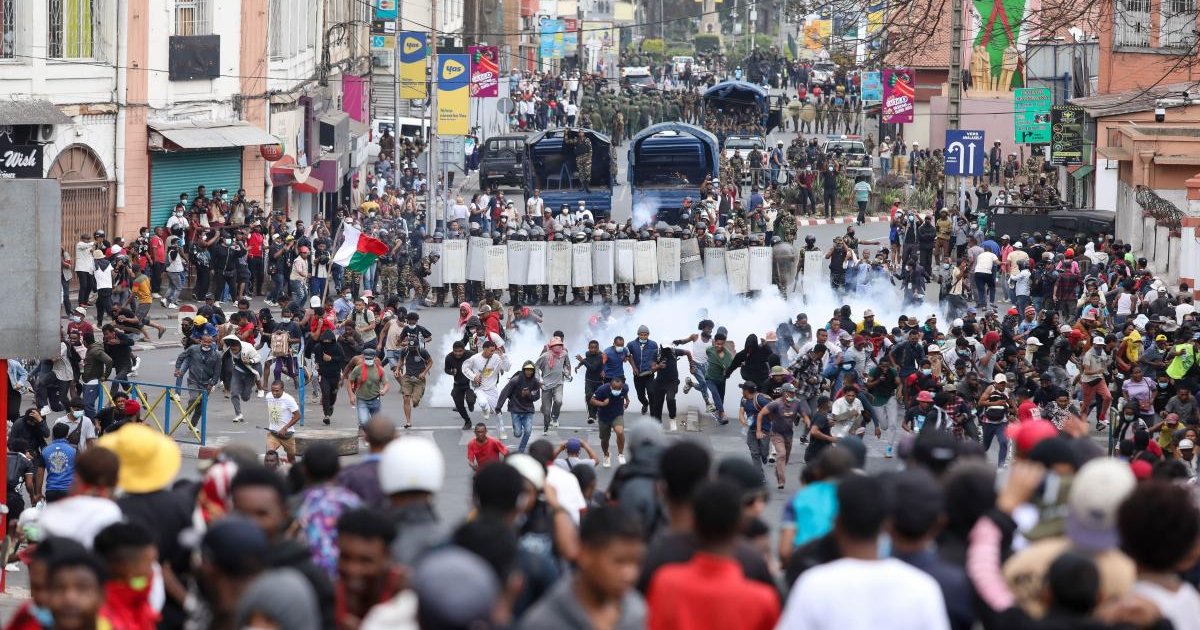
The first anniversary of September 25, 2025, marks a pivotal moment in Madagascar's recent political history, as it was the day that ignited a series of demonstrations culminating in the departure of former leader Andry Rajoelina into exile. The initial call for these protests originated from three municipal councilors in Antananarivo: Alban Rakotoarisoa, Clémence Raharinirina, and Lily Rafaralahy. Their appeal for public assembly on September 25, 2025, set the stage for the unfolding crisis.
Tensions escalated rapidly following the preventative arrest of Rakotoarisoa and Raharinirina, coupled with the deployment of military roadblocks intended to suppress the burgeoning protests. These measures, however, had the opposite effect, fueling daily confrontations between state security forces and young Malagasy Gen-Z activists, who reportedly drew inspiration from their Nepalese counterparts. Despite the initial fervor, a brutal crackdown by gendarmes caused the movement to stagnate for several weeks.
A decisive turning point occurred on Saturday, October 12, when soldiers from the Capsat military unit departed their barracks to provide protection for the demonstrators. This intervention allowed the protestors to successfully occupy the strategically significant Place du 13-mai, directly leading to Andry Rajoelina's flight from the country. He was subsequently exfiltrated by the French army from Sainte-Marie the following day. Capitalizing on their critical role in shifting the crisis's momentum, Colonel Michael Randrianirina, commander of the Capsat military unit, then assumed leadership of the state.
Legal and Political Ramifications
The immediate aftermath of the military takeover saw the nation's High Constitutional Court (Haute Cour Constitutionnelle) swiftly endorse this seizure of power, despite its occurrence outside the established constitutional framework it was mandated to uphold. This validation by the highest judicial body raised significant questions regarding the legitimacy of the new leadership and the rule of law in Madagascar, particularly given the court's constitutional duty to safeguard the very framework that was circumvented.
The events of late 2025 were not solely driven by visible actors. Speculation has arisen concerning the influence of less overt forces, including various influencers who are believed to have played a role in mobilizing the Gen-Z youth. Unanswered questions persist regarding the sources of their mobilization, funding, and technical support, including allegations of "troll factories" or "robots" that Rajoelina himself had previously denounced. The extent of their collaboration with specific Malagasy political factions also remains unclear.
Unanswered Questions and External Influence
While official answers to these inquiries are scarce, observations made post-crisis have highlighted suddenly cordial relations between Russia and several of these previously opaque actors. Some were notably invited to participate in training programs focused on Russian democracy, suggesting a potential external dimension to the political shifts. Curiously, a foreign pseudo-influencer who had been prominent at the outset of the "Refondation" period reportedly became less active after his hair regrew.
Within the complex array of individuals and groups claiming credit for Rajoelina's downfall, the Gen-Z movement appears to have been significantly marginalized. The initial unified movement fractured into numerous distinct currents, united primarily by age, with each faction attempting to leverage the collective image of "kingmakers." While some young individuals secured technical advisor positions in various government cabinets, the meritocratic basis for these appointments has been questioned. Official spokespersons for the Gen-Z movement were seemingly sidelined by political maneuvering, as politicians reportedly favored more compliant and malleable young individuals over the movement's more assertive leaders.
Legacy and Unmet Demands
The core grievances that officially fueled the September and October 2025 protests were twofold: persistent water and electricity outages, and a demand for democracy, which protestors felt had been undermined by the repression of demonstrations and the arrest of leaders. One year after the initial September 25, 2025, protest, the extent to which these fundamental demands have been addressed remains a critical assessment point.
Addressing the long-standing issues faced by Jirama, the state-owned utility company responsible for water and electricity, is acknowledged to be a protracted process. It is considered unrealistic to expect the "Refondation" government to resolve these deep-seated problems within a matter of weeks or even months. The company's challenges are attributed to a confluence of multiple factors, indicating that a return to normalcy, if achievable, would require a substantial timeframe, despite any propaganda from the current "Refondation" administration.
Practical Implications
Lawyers and compliance officers operating in Madagascar must closely monitor the legal and political stability of the current government, given the High Constitutional Court's controversial validation of the 2025 military takeover outside constitutional norms, which could impact the legitimacy of future legislation and regulatory frameworks and introduce significant political risk.
Source
How does this affect you?
Get an AI analysis of this article grounded in your jurisdictions, practice areas, and any policy documents you've uploaded to Wansom.
Finish Reading the Full Story and the Expert Analysis.
Get the latest legal & regulatory intelligence in Madagascar
Wansom is AI and can make mistakes.