
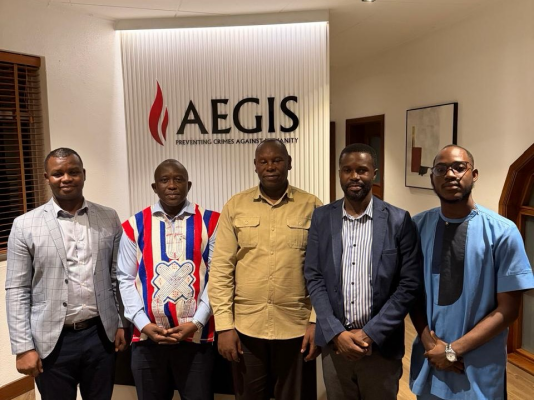
Liberia War and Economic Crimes Court: Rwanda Visit Advances Justice
Summary
- A high-level Liberian delegation visited Rwanda starting October 2 to seek support for establishing its War and Economic Crimes Court and National Anti-Corruption Court.
- The delegation, led by Cllr. Professor Jallah A. Barbu, engaged Rwandan institutions on transitional justice, reconciliation, and accountability.
- Liberia aims to learn from Rwanda's experience while developing solutions specific to its own history and circumstances.
- Discussions also included fostering media partnerships between Liberian and Rwandan journalists to support public education.
- The initiative addresses the long-standing demand for justice and accountability for atrocities committed during Liberia's civil conflicts.
Liberian Delegation Seeks Rwandan Expertise for Justice Initiatives
For thousands of Liberians, the establishment of a War and Economic Crimes Court represents a crucial, long-awaited opportunity to address the profound atrocities committed during the nation's brutal civil conflicts.
A high-level Liberian delegation recently concluded a significant visit to Rwanda, commencing their engagements on October 2. The primary objective of this OWECC-Liberia Rwanda visit was to gather insights, technical assistance, and forge strategic alliances to aid Liberia's ongoing efforts to establish and operationalize its proposed War and Economic Crimes Court (WECC) and a National Anti-Corruption Court (NACC). This initiative underscores Liberia's commitment to advancing its transitional justice process.
The delegation comprised key representatives from the Office for the Establishment of War and Economic Crimes Court for Liberia (OWECC-Liberia), the Press Union of Liberia (PUL), and the Liberia National Police (LNP). It was notably led by Cllr. Professor Jallah A. Barbu, who serves as the Executive Director of OWECC-Liberia; Julius Kanubah, the President of the Press Union of Liberia; and Ezekiel E. Fayia, a Superintendent with the Liberia National Police. Other members included Simeon J. Lomah, Head of Information and Communications Technology at OWECC-Liberia; Edmond S. Kamei, Assistant Director for Operations at OWECC-Liberia; and Patrick Niyongabo, who acted as an escort and adviser to the delegation.
Throughout their time in Rwanda, the Liberian contingent engaged with various Rwandan institutions specializing in transitional justice, law enforcement, academic research, civil society initiatives, and media operations. Discussions took place across multiple Rwandan cities, including Kigali, Musanze, and Rubavu, with further visits planned for Kibuye and Nyamata before their return to Liberia. These comprehensive interactions focused on a broad spectrum of issues pertinent to post-conflict recovery and justice.
Liberia's Quest for Accountability and Reconciliation
For thousands of Liberians, the establishment of a War and Economic Crimes Court represents a crucial, long-awaited opportunity to address the profound atrocities committed during the nation's brutal civil conflicts. This judicial undertaking is viewed as more than a legal formality; it is a pathway to confronting historical injustices, holding perpetrators accountable, and offering victims and survivors a greater sense of resolution and acknowledgment. The pursuit of accountability for past atrocities remains a central pillar of Liberia's national reconciliation efforts.
The proposed War and Economic Crimes Court, alongside the National Anti-Corruption Court, is integral to Liberia's broader transitional justice process. These institutions are designed to tackle not only war-related crimes but also economic offenses, reflecting a comprehensive approach to addressing past wrongs. The initiative signals a determined move by Liberia to learn from other nations' experiences in navigating complex post-conflict environments and pursuing justice.
Strategic Partnerships and Lessons from Rwanda's Experience
The OWECC-Liberia Rwanda visit provided a unique platform for the Liberian delegation to explore various approaches to transitional justice, reconciliation, and national healing. Discussions delved into critical areas such as memorialization, the digitalization of records, and robust support mechanisms for victims and survivors of Liberia’s armed conflicts. These conversations extended beyond mere judicial structures, encompassing how victims can access justice, how survivor experiences are acknowledged, how evidence is preserved, and how society can collectively confront the aftermath of violence while upholding accountability.
During their engagements with Rwandan transitional justice actors, Cllr. Professor Jallah A. Barbu and Julius Kanubah underscored the vital importance of cross-cultural learning, technical assistance, and the development of institutional capacity to strengthen Liberia’s transitional justice process. While drawing valuable insights from Rwanda's experience in confronting its own violent past, the Liberian delegation acknowledged the necessity of developing solutions tailored to Liberia's distinct history, institutional framework, and national circumstances.
Beyond the judicial sphere, the delegation also explored avenues for enhancing cooperation between Liberian and Rwandan media organizations. Julius Kanubah expressed optimism that discussions with the Rwanda Journalists Association (ARJ) and the Rwanda Media Commission (RMC) would culminate in a memorandum of understanding. This anticipated partnership aims to foster professional exchange, facilitate knowledge-sharing, and build stronger media solidarity, which is crucial for public education and meaningful national participation in Liberia's transitional justice journey.
Practical Implications
Lawyers and compliance officers should closely monitor the progress of Liberia's War and Economic Crimes Court establishment, as it signals a significant shift towards accountability for past atrocities and economic crimes, potentially leading to new legal frameworks, investigations, and litigation that could impact clients with historical or current ties to Liberia.
Source
How does this affect you?
Get an AI analysis of this article grounded in your jurisdictions, practice areas, and any policy documents you've uploaded to Wansom.
Finish Reading the Full Story and the Expert Analysis.
Get the latest legal & regulatory intelligence in Liberia
Wansom is AI and can make mistakes.