
Liberia Executive Order 169: Establishes Permanent Railway Regulator
Summary
- Liberian President Joseph Nyuma Boakai issued Executive Order No. 169 on October 22, 2026, to establish a permanent railway regulator.
- The order renews the interim Liaison Office for the Establishment of the Liberia National Railway Authority (LNRA) and sets a 90-day transition period after the LNRA law is passed.
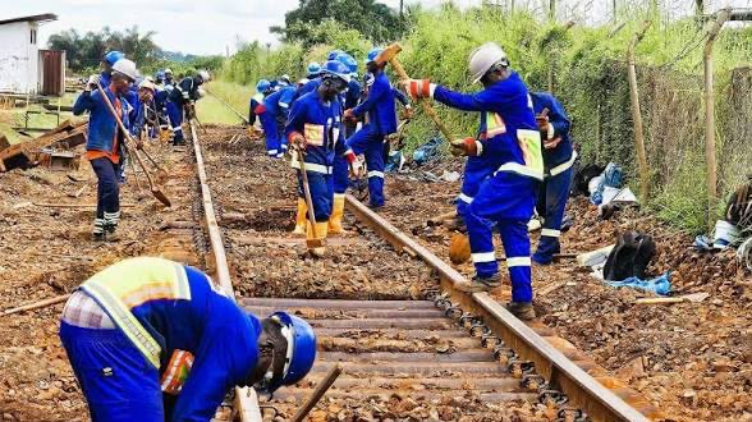
- The Nimba-Buchanan railway is a critical West African iron ore export route, currently used by ArcelorMittal Liberia and soon to be shared with Ivanhoe Atlantic.
- The Liaison Office is tasked with finalizing the draft LNRA Act, conducting studies, and preparing regulatory frameworks, but cannot enact rules until the law is legislated.
- This regulatory initiative is vital for managing over $3 billion in expected mining investments and ensuring fair access to the Liberia Guinea rail corridor.
What Happened
The establishment of the Liberia National Railway Authority is designed to fill a critical regulatory void, ensuring equitable access and efficient operation of this vital infrastructure.
Liberian President Joseph Nyuma Boakai has issued Executive Order No. 169, a significant directive signed on October 22, 2026, aimed at establishing a permanent railway regulator for the nation. This order outlines the process for the existing interim railway office to conclude its operations and transfer responsibilities to a legally constituted railway authority. The move comes as two major global mining corporations prepare to utilize Liberia's sole primary rail line for iron ore exports.
Executive Order 169 specifically renews the mandate of the Liaison Office for the Establishment of the Liberia National Railway Authority (LNRA). For the first time, it also introduces a clear timeline for the office's eventual closure. Once the Legislature enacts a law formally creating the Liberia National Railway Authority, the Liaison Office will have a 90-day period to transfer all its records, studies, personnel, and equipment before it is officially dissolved. This executive action marks a crucial step in formalizing the regulatory oversight of the country's vital railway infrastructure.
Legal and Commercial Context
The railway corridor connecting the Nimba mountains to the port of Buchanan is rapidly gaining prominence as one of West Africa's most critical conduits for iron ore exports, serving steel mills in Europe, Asia, and the United States with ore originating from Liberia and, in the near future, from neighboring Guinea. This regulatory development coincides with the Liberia International Mining and Energy Conference and Exhibition (LIMEC 2026) held in Monrovia, an event organized by the Ministry of Mines and Energy, the Liberia Chamber of Mines, and AME Trade Ltd. The conference agenda includes discussions on iron ore expansion and the proposed Liberia Guinea rail corridor, with current and planned projects anticipated to attract over $3 billion in new investments.
The railway is currently operated by ArcelorMittal Liberia, a subsidiary of the world's second-largest steel producer. In January, ArcelorMittal and the Liberian government extended their mineral development agreement until 2050, with an option for a further 25-year renewal. As part of this agreement, ArcelorMittal committed $200 million for the extension and reserved rail capacity, while undertaking a $1.8 billion expansion project designed to boost its annual shipments from approximately 5 million tonnes to 20 million tonnes. President Boakai indicated that, under this deal, the railway would transition to independent operation by October 2030.
Another key player, Ivanhoe Atlantic, a company associated with mining billionaire Robert Friedland, secured legislative ratification in December 2025 for its $1.8 billion rail access and concession agreement. This agreement enables Ivanhoe to transport high-grade ore from its Kon Kweni mines in Guinea across the border and down the Liberian line to Buchanan. This initiative represents the inaugural project executed under a 2019 treaty between Liberia and Guinea, with Liberia projected to accrue more than $1 billion in rail access fees over the project's lifespan. Until now, the absence of an independent body to arbitrate such arrangements has been a notable gap, a void the Liberia National Railway Authority is specifically designed to address.
Regulatory Framework and Future Steps
Executive Order 169 places the Liaison Office under the direct oversight of the Minister of State for Presidential Affairs and assigns it several critical preparatory tasks. These include completing a U.S. Trade and Development Agency-funded study assessing the condition and capacity of the Tokadeh–Buchanan corridor. Furthermore, the office is mandated to finalize a draft Liberia National Railway Authority Act in collaboration with the Law Reform Commission, which will then be submitted to the Legislature through the Ministry of State.
Beyond legislative drafting, the Liaison Office is responsible for developing staffing plans, budgets, and funding models for the future authority, exploring options such as public-private partnerships. It must also prepare draft safety and regulatory rules for the railway sector. Continuous engagement with mining companies, local communities, ECOWAS, and neighboring countries on regional rail development forms another key part of its ongoing responsibilities. However, the executive order explicitly limits the Liaison Office's powers, prohibiting it from adopting any regulations or commitments that legally require the passage of the LNRA Act. Any rules drafted by the office will only become effective once the legislative Act is formally in force, ensuring that the transition is lawful and avoids extending executive powers beyond the designated period.
Why It Matters
The strategic importance of the Nimba-Buchanan railway extends far beyond Liberia's borders, positioning it as a pivotal asset for West African trade and resource management. The establishment of the Liberia National Railway Authority is designed to fill a critical regulatory void, ensuring equitable access and efficient operation of this vital infrastructure. This new regulatory body will be instrumental in overseeing the complex agreements between the Liberian government and major mining entities like ArcelorMittal Liberia and Ivanhoe Atlantic, thereby fostering a stable and predictable environment for significant foreign investment.
This development is crucial for managing the substantial economic implications, including the projected $3 billion in new investments and over $1 billion in rail access fees for Liberia. The formalization of Liberia mining rail regulation through the LNRA will provide a robust framework for safety standards, operational compliance, and future expansion, particularly for the Liberia Guinea rail corridor. The careful, phased approach outlined in Executive Order 169 underscores Liberia's commitment to developing its infrastructure and resource sector responsibly, with long-term benefits for regional economic integration and sustainable development.
Practical Implications
Lawyers and compliance officers for mining companies operating in Liberia, particularly those utilizing the Nimba-Buchanan railway corridor, must closely monitor the legislative process for the Liberia National Railway Authority (LNRA) Act. The eventual establishment of the LNRA will introduce new regulatory frameworks, safety standards, and potential public-private partnership models that will directly impact operational compliance, access agreements, and future investment strategies in the region.
Source
How does this affect you?
Get an AI analysis of this article grounded in your jurisdictions, practice areas, and any policy documents you've uploaded to Wansom.
Finish Reading the Full Story and the Expert Analysis.
Get the latest legal & regulatory intelligence in Liberia
Wansom is AI and can make mistakes.