
PUL: Challenges Liberia Civil Service Confidentiality Agreement
Summary
- The Press Union of Liberia (PUL) accused the Boakai administration of undermining the Freedom of Information (FOI) Act with a new civil service confidentiality agreement.
- PUL President Julius Kanubah demanded the immediate rescission of the non-disclosure policy, arguing it "upends the FOI Act entirely" and reintroduces state secrecy.
- The Independent Information Commission (IIC), mandated to enforce the FOI Act, has also opposed the new confidentiality agreement.
- Existing challenges to FOI implementation include 78 of 103 agencies lacking information officers, poor response rates to requests, and the IIC being chronically underfunded.
- The PUL emphasized that the government's actions must align with its stated commitment to accountability and transparency.
Challenge to Civil Service Confidentiality Agreement
He argued that this policy undermines the legislative branch's lawmaking functions and strips the Independent Information Commission (IIC), the state body legally mandated to enforce the FOI Act, of its statutory authority.
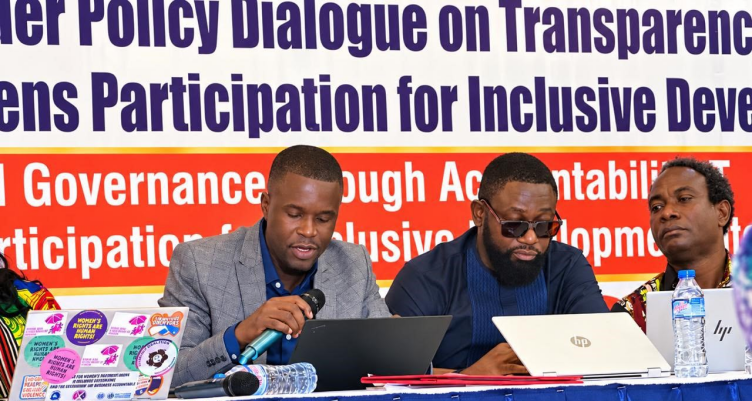
The President of the Press Union of Liberia (PUL), Julius Kanubah, has publicly accused President Joseph Boakai's administration of systematically undermining the nation's Freedom of Information (FOI) Act and broader open-data practices. Speaking at a policy dialogue hosted by the Governance Commission on October 23, Kanubah specifically demanded the immediate withdrawal of a new confidentiality agreement being imposed on all civil servants. This event, held at the EJS Ministerial Complex in Congo Town, was part of a two-day forum marking October as the Month of Good Governance, under the theme of promoting accountability, transparency, and citizen participation.
The PUL was invited to address the implementation of the Freedom of Information Act and open-data practices across government. Kanubah emphasized the urgency of the topic, not merely from the PUL's expertise, but due to what he described as a deeply troubling reality. He highlighted that the new Confidentiality and Non-Disclosure Agreement, which the Executive is reportedly forcing upon civil servants through the Civil Service Agency (CSA) under Dr. Josiah Joekai, is at the core of the PUL's grievances. This move, according to Kanubah, represents a significant step backward for transparency in Liberia.
Legal and Regulatory Implications
Kanubah asserted that the new non-disclosure policy does not merely erode democratic gains but fundamentally "upends the FOI Act entirely." He argued that this policy undermines the legislative branch's lawmaking functions and strips the Independent Information Commission (IIC), the state body legally mandated to enforce the FOI Act, of its statutory authority. Furthermore, the PUL president contended that the agreement effectively reintroduces state secrecy and recriminalizes the disclosure of public information by government employees, directly conflicting with the principles of the Liberia Freedom of Information Act.
Crucially, the Independent Information Commission itself has voiced opposition to this policy. As a foundational stakeholder instrumental in the enactment of the FOI Act and the establishment of the IIC, the Press Union of Liberia expressed profound dismay at what it perceives as the Boakai administration's decision to weaponize confidentiality agreements against the public interest. The PUL has therefore issued a categorical call for the Boakai administration to unconditionally rescind this policy, urging the government to align its actions with its stated commitment to accountability and transparency.
Broader Transparency Challenges
The controversy surrounding the civil service confidentiality agreement challenge emerges amidst a backdrop of long-standing structural, financial, and institutional obstacles hindering the effective implementation of the FOI Act, which was passed over 15 years ago. Kanubah pointed to a recent audit by the IIC, which revealed that a significant majority—78 out of 103 ministries and agencies assessed—had failed to appoint designated Public Information Officers, a critical component for information dissemination. Moreover, under a USAID-supported initiative, 104 FOI requests were filed, yet fewer than five received responses within the stipulated 90-day period, underscoring systemic issues with information access.
The Independent Information Commission, tasked with upholding the Liberia Freedom of Information Act, is itself chronically underfunded. Kanubah recounted instances where the Commission faced eviction due to unpaid rent and was forced to operate from a basement without electricity. Other persistent problems include poor record-keeping, a prevalent administrative culture of secrecy, inconsistent political will, and low public awareness of the law, particularly among rural communities, women, and marginalized groups. These issues collectively impede Liberia's progress toward robust open data practices and governmental transparency.
Why It Matters
The Press Union of Liberia's accusation against the Boakai administration and its challenge to the new civil service confidentiality agreement highlights a critical juncture for governance in Liberia. The imposition of such an agreement, particularly when juxtaposed with the existing weaknesses in FOI implementation and the IIC's struggles, raises serious concerns about the government's commitment to its stated goals of accountability and transparency. The move is seen as directly contradicting the spirit of the Liberia Freedom of Information Act and potentially stifling the flow of public information.
Kanubah also criticized the Governance Commission's perceived silence on the matter, stating that the GC cannot afford to remain passive while landmark transparency laws are undermined. While commending the Commission for organizing the dialogue and President Boakai for declaring October as the Month of Good Governance, the PUL's stance underscores that rhetoric must be matched by concrete actions. The outcome of this challenge will significantly impact the future of open governance and the public's right to information in Liberia.
Practical Implications
Lawyers and compliance officers in Liberia should closely monitor the legal status and potential challenges to the new civil service confidentiality agreement, as its enforceability could significantly impact the Freedom of Information Act and the legal obligations surrounding public information disclosure by government employees and agencies.
Source
How does this affect you?
Get an AI analysis of this article grounded in your jurisdictions, practice areas, and any policy documents you've uploaded to Wansom.
Finish Reading the Full Story and the Expert Analysis.
Get the latest legal & regulatory intelligence in Liberia
Wansom is AI and can make mistakes.