
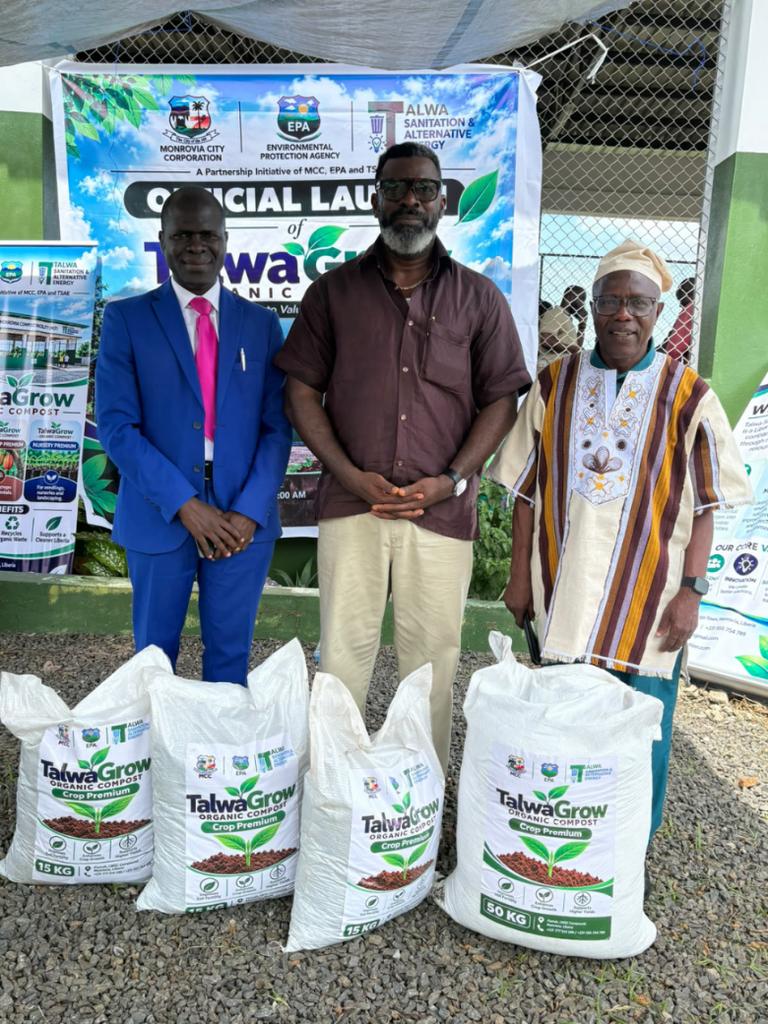
Liberia EPA: TalwaGrow Compost Lab Results Show No Toxic Metals
Summary
- Liberia EPA lab tests confirmed no detectable toxic heavy metals in TalwaGrow Organic Compost samples.
- The product was formally launched at the Fiamah facility in Monrovia, demonstrating Liberia's Solid Waste Management Policy in action.
- The EPA advised operators to increase the compost's nitrogen content for improved quality, emphasizing continuous laboratory testing.
- Key partners include MCC, LWSC, Novasphere, and Talwa Sanitation & Alternative Energy, all contributing to the initiative.
- The project highlights the importance of regulatory oversight and adherence to safety standards for waste-derived products.
Key Findings on TalwaGrow Compost
The necessity for ongoing laboratory testing and adherence to EPA recommendations, as demonstrated by the TalwaGrow project, is paramount for any products derived from waste.
The Liberia Environmental Protection Agency (EPA) recently announced that laboratory analyses of TalwaGrow Organic Compost samples revealed no detectable levels of toxic heavy metals. Dr. Emmanuel King Urey Yarkpawolo, the EPA's Executive Director, shared these encouraging Liberia EPA TalwaGrow compost lab results during the formal launch of the product at the Monrovia Fiamah composting facility. This finding is critical for a product intended to enhance agricultural productivity across the nation.
Dr. Yarkpawolo specified that the EPA laboratory conducted tests on two distinct compost samples. These samples were derived from common market vegetable waste, including stems from cassava leaf, palava sauce, and potato greens, combined with sawdust and water. The comprehensive testing specifically screened for lead, cadmium, and arsenic, all of which are recognized as potentially harmful toxic metals. The results confirmed that concentrations of these Dr. Yarkpawolo TalwaGrow toxic metals were below the established detection limits in both samples, indicating an absence of contamination from the tested substances.
Despite the positive initial findings, the EPA also identified an area for improvement to further enhance the compost's quality. Operators of the facility have been advised to increase the nitrogen content of the product. This can be achieved by incorporating more nitrogen-rich organic materials, such as leafy green waste, into the composting process. Dr. Yarkpawolo underscored that these findings highlight the critical importance of continuous laboratory testing as an integral and permanent component of the production process, ensuring both safety and ongoing product refinement.
Regulatory Oversight and Sustainable Production
The launch of TalwaGrow Organic Compost at the Liberia Environmental Protection Agency Fiamah facility exemplifies the practical application of Liberia's Solid Waste Management Policy. This initiative transforms everyday environmental challenges into opportunities for community betterment, soil health, and private-sector engagement. The EPA, with crucial backing from Novasphere, played a foundational role in establishing the composting facility, designed to convert organic waste into a valuable agricultural resource.
The process involves taking vegetable scraps and other biodegradable materials, which would typically be discarded, and processing them into compost. This not only enriches soil conditions and supports crop growth but also significantly reduces the volume of waste requiring disposal. The EPA's involvement extends beyond facility establishment, encompassing vital environmental regulatory oversight and comprehensive laboratory assessment to ensure product integrity and public safety.
Lawyers advising clients in Liberia's waste management, agriculture, or product manufacturing sectors should note the EPA's active regulatory oversight, particularly regarding product safety and environmental compliance. The necessity for ongoing laboratory testing and adherence to EPA recommendations, as demonstrated by the TalwaGrow project, is paramount for any products derived from waste. This ensures they meet safety standards and helps clients avoid potential liabilities related to environmental contamination or product misrepresentation, reinforcing the importance of Talwa Sanitation & Alternative Energy compliance with these guidelines.
Collaborative Efforts and Future Vision
The success of the TalwaGrow initiative is deeply rooted in a collaborative partnership involving several key entities. The Monrovia City Corporation (MCC) provides administrative management for the composting facility, while the Liberia Water and Sewer Corporation (LWSC) hosts the operation within its Fiamah compound. The Liberia Environmental Protection Agency maintains its role in regulatory oversight and crucial laboratory assessment, ensuring the product's quality.
Talwa Sanitation & Alternative Energy, under the leadership of CEO Mr. Samuel T. Duo, is responsible for operating the facility and bringing the TalwaGrow product to market. Novasphere's support was instrumental in the establishment of this significant investment. Dr. Yarkpawolo emphasized that this collaborative framework is essential for the project's continued success, highlighting how a well-managed facility can bolster sanitation services, generate opportunities for Liberian businesses, and return valuable organic matter to the nation's soils.
Dr. Yarkpawolo urged all partners to uphold stringent waste separation practices, preventing unsuitable materials from entering the compost stream. He also called for the diligent implementation of all recommendations issued by the EPA laboratory. This commitment to care and quality control is vital to ensure TalwaGrow becomes a consistently reliable product for Liberian farmers, building upon the positive momentum generated by its official launch.
Practical Implications
Lawyers advising clients in Liberia's waste management, agriculture, or product manufacturing sectors should note the EPA's active regulatory oversight, particularly regarding product safety and environmental compliance. This case highlights the necessity for ongoing laboratory testing and adherence to EPA recommendations for any products derived from waste, to ensure they meet safety standards and avoid potential liabilities related to environmental contamination or product misrepresentation.
Source
How does this affect you?
Get an AI analysis of this article grounded in your jurisdictions, practice areas, and any policy documents you've uploaded to Wansom.
Wansom is AI and can make mistakes.