
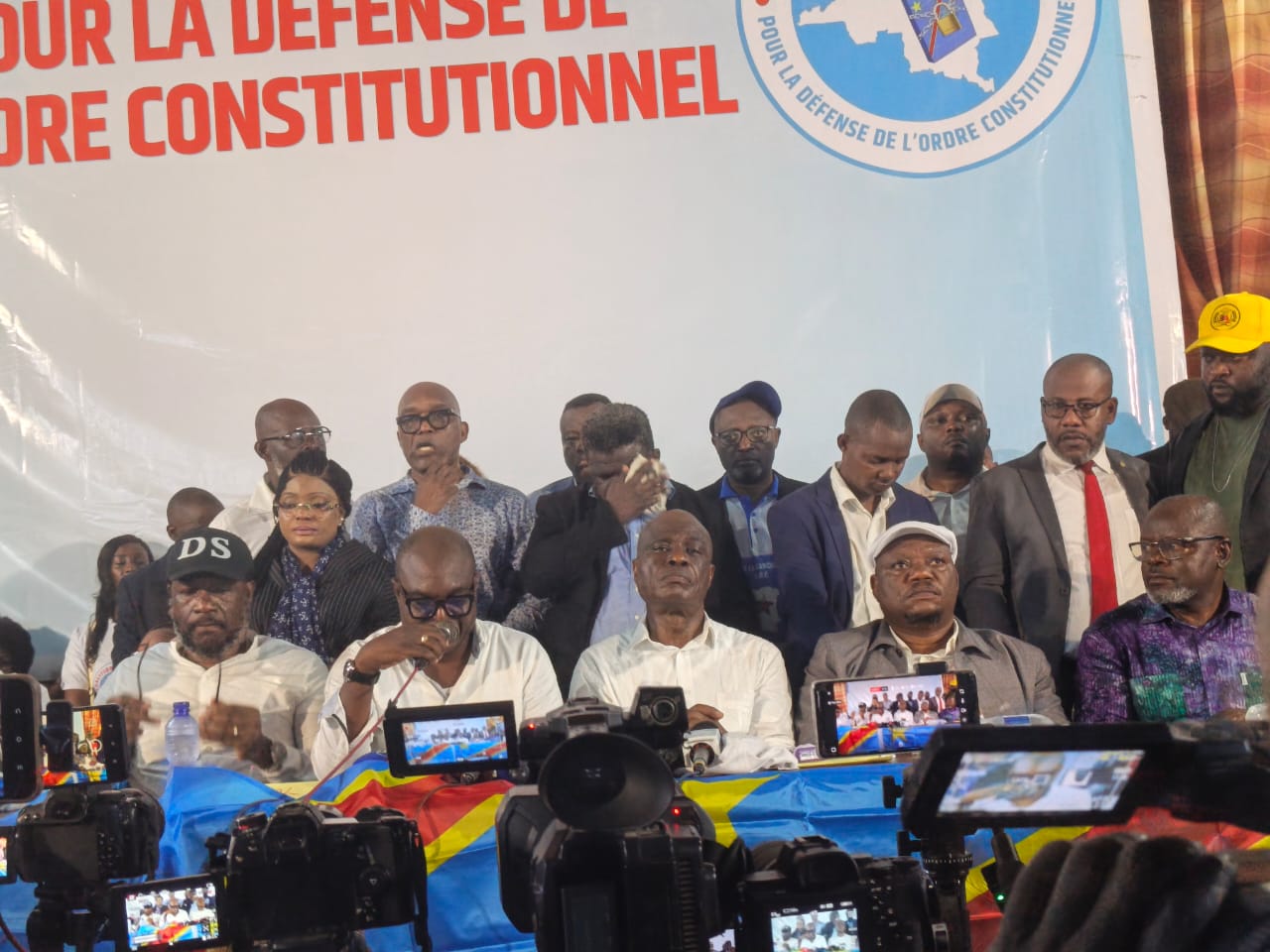
La C64 appelle à manifester le 15 septembre contre le projet de changement de la Constitution
Summary
- The C64 opposition coalition has called for a protest on September 15 in Kinshasa against proposed constitutional changes in the Democratic Republic of Congo.
- Franklin Tshiamala, representing the C64, stated that the government prioritizes constitutional reform over critical issues like insecurity, Ebola, unemployment, and corruption.
- The protest aims to oppose what the C64 describes as an attempt to establish "power for life" through constitutional amendments.
- C64 has urged national deputies to act in the public's interest, warning of accountability if they fail to do so.
- This mobilization signals significant political opposition to the DRC's constitutional reform efforts, potentially impacting legal and political stability.
Opposition Mobilizes Against Constitutional Changes
The robust DRC political opposition C64 to proposed amendments indicates that any attempts to alter the constitution will likely face considerable public and political resistance, potentially impacting the country's overall stability.
The C64, a prominent coalition representing various opposition factions in the Democratic Republic of Congo, has issued a public call for a mass demonstration in Kinshasa. The protest, scheduled for September 15, aims to voice strong disapproval of proposed amendments to the nation's constitution. Participants are expected to gather outside the Palais du Peuple, the seat of the national legislature, marking a significant move by the `DRC political opposition C64` against the government's reform agenda. This announcement was made on Thursday, September 3, following a preparatory meeting of the coalition.
Franklin Tshiamala, who serves as the Secretary General for the LGD party—an opposition group led by Matata Ponyo—delivered the C64's message. Speaking on behalf of the coalition's conference of presidents, Tshiamala urged Congolese citizens to mobilize against what he characterized as the government's misplaced priorities. He highlighted a stark contrast between the administration's focus on constitutional reform and the pressing challenges faced by the populace.
Tshiamala specifically pointed to a range of critical national issues that, in the C64's view, should take precedence over any constitutional modification. These include the ongoing security crisis in the eastern regions of the DRC, the tragic loss of life due to the Ebola epidemic, widespread unemployment, and pervasive corruption and embezzlement of public funds. The `C64 Kinshasa constitution protest` aims to draw attention to these grievances, asserting that the government's current agenda fails to address the immediate suffering and needs of its citizens.
Legal and Political Context of Opposition
The `DRC constitutional reform opposition` spearheaded by the C64 frames the proposed changes as an attempt to consolidate power indefinitely. Franklin Tshiamala explicitly warned against what the coalition perceives as a governmental drive to establish "power for life," suggesting that the amendments are designed to entrench the current leadership rather than serve the broader national interest. This accusation underscores the profound distrust between segments of the political opposition and the ruling administration regarding the integrity of the country's foundational legal document.
Beyond mobilizing public support, the C64 has also directed an appeal to the national deputies, urging them to fulfill their legislative duties in alignment with the population's best interests. Tshiamala issued a clear caution, indicating that demonstrators would be prepared to hold these elected representatives accountable should they be perceived as deviating from their mandate. This direct challenge to the legislative body highlights the C64's intent to exert pressure at multiple levels, from street protests to parliamentary influence, in its `Congo constitution amendment opposition`.
The planned `C64 protest DRC constitutional change` is therefore not merely a public demonstration but a strategic effort to influence the political discourse and legislative process. By gathering before the Palais du Peuple, the C64 intends to make its stance unequivocally clear on the future of the Constitution, signaling a robust and organized resistance to any perceived attempts to undermine democratic principles or extend political terms through legal manipulation.
Implications for Stability and Governance
This significant mobilization by the C64 signals a deepening political divide within the Democratic Republic of Congo regarding the nation's constitutional framework. The robust `DRC political opposition C64` to proposed amendments indicates that any attempts to alter the constitution will likely face considerable public and political resistance, potentially impacting the country's overall stability. Such widespread opposition can complicate the legislative agenda, making it challenging for the government to push through reforms without significant concessions or further unrest.
For legal professionals and businesses operating within the DRC, these developments are crucial to monitor. The prospect of a major `C64 protest DRC constitutional change` and the underlying political tensions could introduce an element of legal and political uncertainty. The C64's explicit warning to national deputies about accountability also suggests a heightened scrutiny of legislative actions, which could influence future legal stability and the predictability of regulatory environments.
The C64's assertion that the government prioritizes constitutional changes over critical issues like insecurity, Ebola, unemployment, and corruption resonates with a significant portion of the populace. This divergence in perceived national priorities could fuel further discontent, potentially leading to more widespread demonstrations and a more volatile political landscape. Understanding the strength and motivations behind this `DRC constitutional reform opposition` is essential for assessing the risk environment and navigating the evolving legal and political terrain in the Congo.
Practical Implications
This signals significant political opposition to proposed constitutional amendments in the DRC. Lawyers should monitor these developments for potential impacts on legal stability, future legislative processes, and the risk landscape for clients operating in the country.
Source
How does this affect you?
Get an AI analysis of this article grounded in your jurisdictions, practice areas, and any policy documents you've uploaded to Wansom.
Finish Reading the Full Story and the Expert Analysis.
Wansom is AI and can make mistakes.