
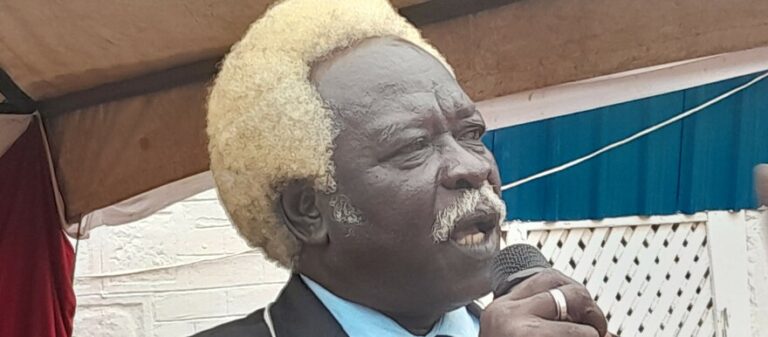
Kornelio Kon: Juba Airport Travel Ban Imposed, President's OK Needed
Summary
- Presidential aspirant Kornelio Kon Ngon was prevented from boarding a domestic flight from Juba to Wau by security officials.
- Officials at Juba International Airport demanded he obtain permission from President Salva Kiir’s office, but provided no formal written order.
- Kon, a NAPP candidate, was traveling to attend his sister's memorial prayers and meet supporters ahead of the December 2026 elections.
- His party spokesperson, Gabriel Alazir, stated the restriction was from the 'highest authority' and questioned unequal treatment of political parties.
- The incident raises concerns about freedom of movement and political campaigning in South Sudan, contrasting with a separate directive by President Kiir on foreign travel for officials.
Presidential Aspirant Barred from Domestic Travel
The incident highlights a significant risk to freedom of movement and political campaigning ahead of the December 2026 elections, necessitating proactive legal strategies to challenge such actions or navigate the political landscape.
Kornelio Kon Ngon, a prominent presidential aspirant representing a faction of the National Alliance of Political Parties (NAPP) and a former third deputy speaker of parliament, faced an unexpected travel impediment on Tuesday. Security officials at Juba International Airport prevented him from boarding a flight destined for Wau, located in Western Bahr el Ghazal State. Kon had purchased a ticket costing 3.2 million South Sudanese pounds and possessed a valid boarding pass for his journey.
The security personnel did not offer any written explanation for their actions, instead instructing Kon to obtain permission directly from President Salva Kiir’s office. Kon expressed his bewilderment at this demand, stating, "How can I get permission from the office of the president when I am not working in the office of the president? You take permission from your workplace but I don’t work there." He further noted that no formal order restricting his movement had been communicated to him, leading him to question whether he was under house arrest.
Kon clarified that his travel was domestic, not international, and that his primary purpose for visiting Wau was to attend memorial prayers for his deceased sister. He also mentioned that his family and home are situated in Wau. He described the incident as a clear indication of restrictions on both political and personal freedoms, arguing that such measures are incompatible with the ongoing preparations for the December 22, 2026, elections.
Freedom of Movement and Electoral Preparations
The incident involving Kornelio Kon Ngon has ignited concerns regarding South Sudan freedom of movement, particularly for political figures, as the nation gears up for its 2026 elections. Gabriel Alazir, spokesperson for Kon’s NAPP faction, corroborated the account, stating that a security officer informed Kon the restriction originated from the country's "highest authority." Alazir emphasized that Kon's travel plans included not only family matters but also meetings with alliance members and supporters, crucial activities for election preparations.
Alazir called upon authorities to clarify the circumstances surrounding the Juba airport travel ban, asserting that NAPP political parties South Sudan require unhindered movement to effectively organize and prepare for the upcoming electoral cycle. He highlighted the apparent disparity in treatment, citing a recent visit by Sudan People’s Liberation Movement (SPLM) Secretary-General Akol Paul Kordit to Torit, which proceeded without any official obstruction. Alazir noted that his faction was unaware of any formal directive restricting domestic travel for politicians, making Kon's situation particularly perplexing.
This domestic travel restriction occurs amidst a separate, broader directive from President Salva Kiir, reiterated on Saturday, requiring government officials and members of the organized forces to obtain his approval before traveling abroad. This three-month measure, which applies to constitutional office holders, military personnel, and police officers, was re-emphasized by Kiir following his recent visits to Kenya and South Africa. While distinct from Kon's domestic travel issue, it underscores a broader context of tightened control over movement for various public figures.
Implications for South Sudan's Political Landscape
The arbitrary nature of the Kornelio Kon Juba airport travel ban raises significant questions about the democratic environment in South Sudan. Kon himself asserted that the incident confirms the absence of democracy and suggests the country is operating under military rule. The demand for President Salva Kiir travel permission for a domestic journey, without any formal order or explanation, creates an atmosphere of uncertainty and potential intimidation for political actors.
This situation carries substantial implications for the integrity and fairness of the December 2026 elections. The ability of candidates and political parties to move freely within the country, engage with constituents, and organize campaigns is fundamental to a democratic process. When such basic freedoms are curtailed without due process, it undermines the credibility of the electoral preparations and the broader political landscape.
The incident highlights a significant risk to freedom of movement and political campaigning ahead of the December 2026 elections, necessitating proactive legal strategies to challenge such actions or navigate the political landscape. The lack of transparency and the reliance on unwritten 'orders' from the 'highest authority' create a challenging environment for any opposition or independent political activity, potentially stifling dissent and limiting the choices available to voters.
Practical Implications
Lawyers advising political parties or candidates in South Sudan should be aware of the potential for arbitrary restrictions on domestic travel, even without formal orders, as exemplified by the Kornelio Kon incident. This highlights a significant risk to freedom of movement and political campaigning ahead of the December 2026 elections, necessitating proactive legal strategies to challenge such actions or navigate the political landscape.
Source
How does this affect you?
Get an AI analysis of this article grounded in your jurisdictions, practice areas, and any policy documents you've uploaded to Wansom.
Finish Reading the Full Story and the Expert Analysis.
Get the latest legal & regulatory intelligence in South Sudan
Wansom is AI and can make mistakes.