
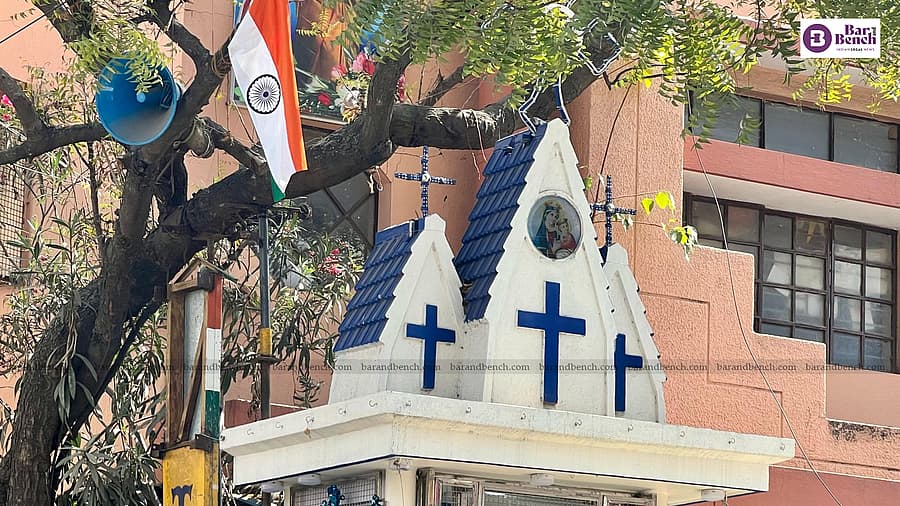
Supreme Court: Knanaya Catholics Endogamy Challenge to Kerala HC Ruling
Summary
- The Knanaya Catholic community has appealed to the Supreme Court against a Kerala High Court verdict that invalidated its endogamy rule and denied it separate religious denomination status.
- The Supreme Court adjourned the hearing until January, declining to issue notice on the plea.
- The Court noted that the upcoming nine-judge Sabarimala reference case verdict, expected before December 18, may significantly influence the current matter.
- Senior Advocate Aryama Sundaram argued that the Sabarimala outcome would clarify constitutional questions relevant to the Knanaya Catholic endogamy Supreme Court challenge.
- Senior Advocate Abhishek Manu Singhvi urged the bench to issue notice, highlighting the petition's filing in June.
Legal Challenge to Endogamy
This case, Jose Mathew v Metropolitan Archbishop, carries significant implications for how religious denominations are recognized and how their internal practices, such as endogamy, are treated under Indian law.
The Knanaya Catholic community has escalated its legal battle to the Supreme Court, challenging a Kerala High Court ruling that invalidated its long-standing practice of endogamy. This traditional rule, which mandates marriage within the community, has been a cornerstone of their identity for centuries. The High Court's judgment, delivered on March 23, not only struck down this endogamous practice but also declined to recognize the Knanaya Catholics as a distinct religious denomination. This dual blow to the community's self-governance and identity has prompted the appeal to the nation's highest court.
The specific case, titled Jose Mathew & Anr v. The Metropolitan Archbishop & Ors., represents a significant moment for religious communities seeking to uphold their internal customs against judicial scrutiny. The community's appeal seeks to overturn the Kerala High Court endogamy verdict, which they argue infringes upon their religious freedom and right to maintain their unique cultural and religious practices. The outcome of this Supreme Court challenge will be closely watched by other religious groups and legal scholars interested in the intersection of religious community personal law and constitutional rights.
Supreme Court's Deliberation and Sabarimala Link
During a recent hearing, a Supreme Court bench comprising Justices BV Nagarathna, R Mahadevan, and Sanjeev Sachdeva considered the appeal from the Knanaya Catholic community. The Court, however, opted to adjourn the proceedings until the first week of January, notably without issuing formal notice on the plea. This decision signals the Court's cautious approach, particularly given its observation regarding a forthcoming landmark judgment.
The bench highlighted that the nine-judge Constitution Bench's verdict in the Sabarimala reference case is anticipated before the Supreme Court's winter recess, scheduled to begin on December 18. This impending ruling is expected to have a substantial bearing on the present matter concerning the Knanaya Catholics endogamy Supreme Court challenge. Senior Advocate Aryama Sundaram, representing one of the petitioners, underscored this connection during the hearing, submitting that the Sabarimala outcome would clarify several constitutional questions pertinent to the current dispute. Sundaram also urged the bench to maintain the status quo that existed prior to the trial court's intervention, a plea that was not immediately acted upon. Justice Nagarathna expressed optimism about the Sabarimala judgment's timely release, remarking, "Hopefully before vacations it will come."
Arguments and Broader Implications
The legal arguments presented before the Supreme Court underscore the complex interplay between religious autonomy and judicial oversight. While Senior Advocate Aryama Sundaram emphasized the constitutional questions that the Sabarimala reference case would address, Senior Advocate Abhishek Manu Singhvi, appearing in a connected matter, pressed the bench to issue notice, pointing out that the petition had been filed back in June. Despite this urgency, the Court decided to await the Sabarimala verdict, indicating its potential to shape the legal framework for religious community personal law.
This case, Jose Mathew v Metropolitan Archbishop, carries significant implications for how religious denominations are recognized and how their internal practices, such as endogamy, are treated under Indian law. The Supreme Court's eventual ruling will not only determine the fate of the Knanaya Catholic community's endogamy rule but could also establish precedents for the state's role in regulating the customs of religious groups. The interaction with the Sabarimala reference case impact is particularly crucial, as it is expected to provide clarity on the scope of religious freedom and the limits of judicial intervention in matters of faith.
Practical Implications
Lawyers advising religious organizations or involved in constitutional law and personal law matters should closely monitor the Supreme Court's decision in this case, particularly its interaction with the forthcoming Sabarimala reference verdict. This ruling could establish significant precedents regarding the state's intervention in religious community rules, the recognition of religious denominations, and the scope of religious freedom in India.
Source
How does this affect you?
Get an AI analysis of this article grounded in your jurisdictions, practice areas, and any policy documents you've uploaded to Wansom.
Finish Reading the Full Story and the Expert Analysis.
Get the latest legal & regulatory intelligence in India
Wansom is AI and can make mistakes.