
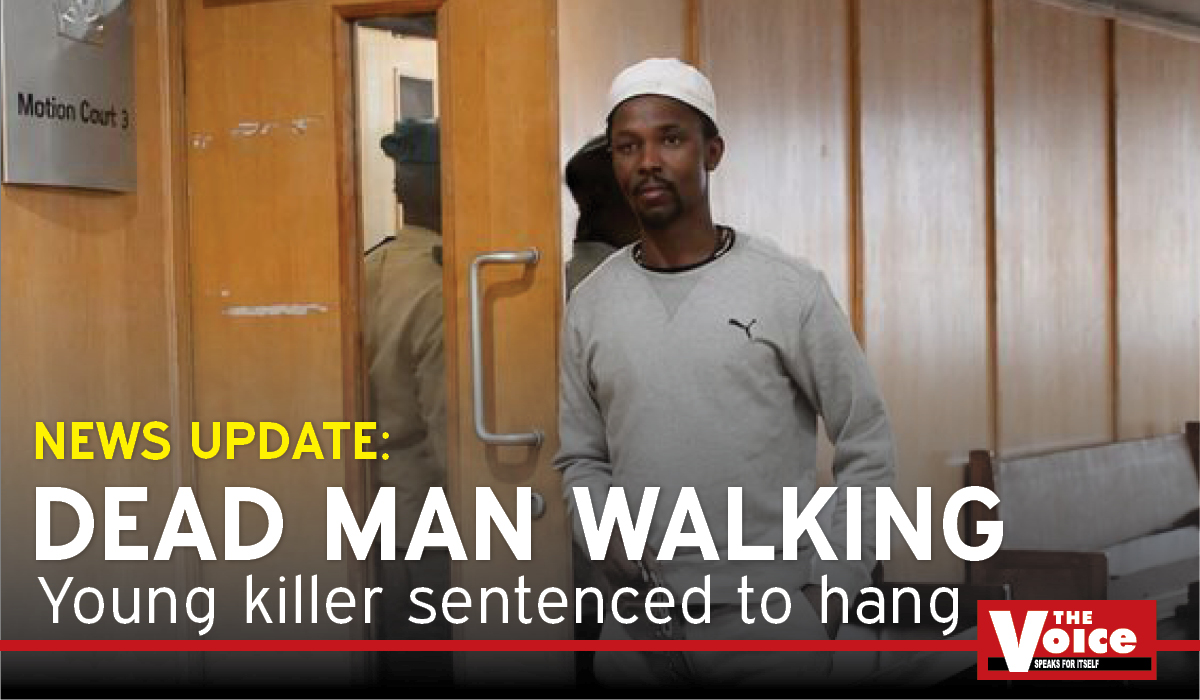
Francistown High Court: Kitso Makati Death Sentence Botswana Imposed
Summary
- Kitso Makati, 35, was sentenced to death by the Francistown High Court on Wednesday, September 4, 2026.
- He had reportedly been dreading this severe outcome for four months.
- The court's judgment specified that he would "hang by his neck until he dies."
- His only remaining avenues for reprieve are a successful appeal or a Presidential pardon.
- This case highlights Botswana's continued application of capital punishment for grave offenses.
What Happened
The recent Francistown High Court death sentence against Kitso Makati serves as a profound and somber reminder of Botswana's unwavering commitment to capital punishment.
On Wednesday, September 4, 2026, the Francistown High Court delivered a definitive judgment in the case of Kitso Makati, imposing the ultimate penalty for his actions. The 35-year-old individual received a death sentence, a pronouncement he had reportedly been dreading for the preceding four months. The court's order specified that Kitso Makati would "hang by [his] neck until [he] die[s]," a stark and unequivocal declaration of capital punishment in Botswana.
The formal sentencing by the Francistown High Court marks a critical juncture in Makati's legal proceedings. This decision places him among the individuals in Botswana facing execution, absent any successful legal challenge or executive clemency. The gravity of the court's words, delivered after a period of considerable anticipation, highlights the finality and seriousness of the judicial process in capital cases.
Legal Context of Capital Punishment
Botswana maintains capital punishment as a legal penalty for certain severe crimes, a stance that distinguishes it from many other nations globally. The sentence handed down by the Francistown High Court to Kitso Makati exemplifies the continued application of this ultimate sanction within the country's legal framework. For individuals subjected to such a judgment, the legal system provides two primary avenues for potential reprieve: a formal appeal to a higher court or a petition for a Presidential pardon.
The process of a death penalty appeal in Botswana typically involves a review of the trial proceedings by the Court of Appeal, scrutinizing legal errors or procedural irregularities that may have occurred. Should an appeal prove unsuccessful, the final recourse rests with the President, who holds the constitutional power to grant a pardon, commute a sentence, or grant a reprieve. The existence of these provisions, while offering a glimmer of hope, does not diminish the immediate and profound impact of a death sentence, such as the one recently imposed on Kitso Makati. The nation's adherence to capital punishment means that such judgments, when upheld, lead to execution.
Implications of the Ruling
The recent Francistown High Court death sentence against Kitso Makati serves as a profound and somber reminder of Botswana's unwavering commitment to capital punishment. This judgment, following what is implicitly a murder conviction, reinforces the severe penalties that can be imposed for grave offenses within the jurisdiction. For criminal lawyers operating in Botswana, this case underscores the critical importance of advising clients on the potential for capital punishment in cases involving serious crimes, emphasizing the high stakes involved in such legal battles.
Beyond the immediate legal implications for Kitso Makati, this ruling also draws attention from human rights advocates, both domestically and internationally. These groups often monitor death penalty cases closely, scrutinizing the fairness of trials, the conditions of detention, and the overall adherence to international human rights standards. The progression of any death penalty appeal in Botswana, including that which Kitso Makati may pursue, will undoubtedly be observed for its potential impact on the broader jurisprudence surrounding capital punishment in the region. The finality of the sentence, if upheld, highlights the ongoing debate and the stark reality of judicial outcomes in countries that retain the death penalty.
Practical Implications
This case serves as a stark reminder of the continued application of capital punishment in Botswana, which criminal lawyers should note when advising clients on the potential penalties for severe offenses. Human rights advocates may also monitor the appeal process for implications on death penalty jurisprudence in the region.
Source
How does this affect you?
Get an AI analysis of this article grounded in your jurisdictions, practice areas, and any policy documents you've uploaded to Wansom.
Finish Reading the Full Story and the Expert Analysis.
Wansom is AI and can make mistakes.