
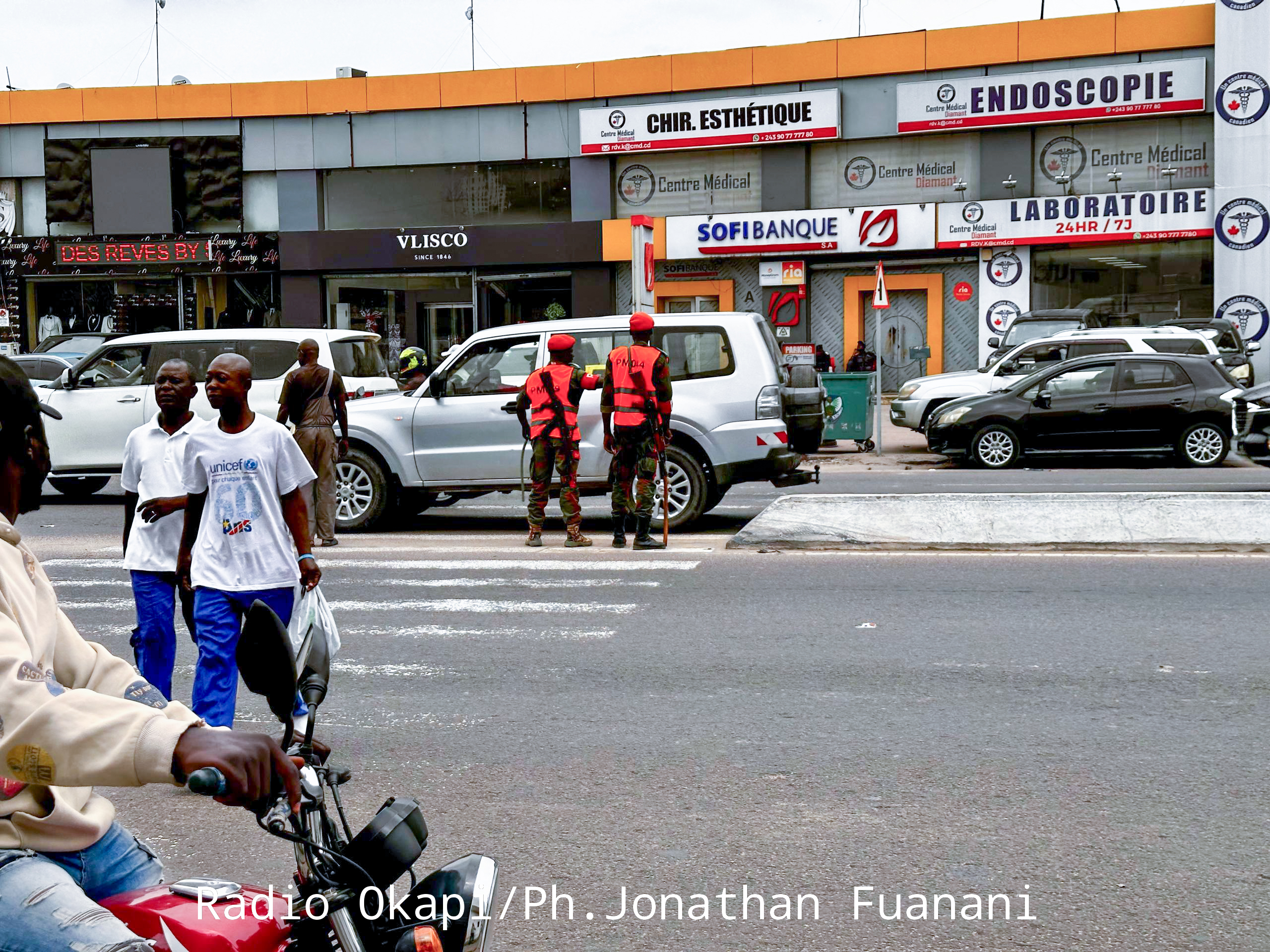
Kinshasa Ministry Transport Agents: Extortion Scheme Targets Motorists
Summary
- Individuals claiming to represent Kinshasa's provincial Ministry of Transport are accused of extorting money from motorists and motorcyclists.
- These alleged agents violently stop moving vehicles, often in civilian clothes, and demand cash fines ranging from 20,000 to 50,000 Congolese francs.
- Payments are collected without official receipts, indicating an illegal operation that diverts funds from the public treasury.
- The dangerous tactics, including physically grabbing moving vehicles, have led to accident risks and endangered the lives of road users.
- Citizens and victims are demanding immediate intervention from urban authorities and traffic police to halt these illicit practices and ensure public safety.
Allegations of Extortion in Kinshasa
The consistent failure to issue official receipts, often referred to as "amendes sans quittance," serves as a clear indicator of the unofficial and illegal nature of these demands.
For several weeks, individuals claiming affiliation with the provincial Ministry of Transport have been accused of orchestrating a widespread extortion scheme targeting motorists and motorcyclists throughout Kinshasa. These incidents are particularly concentrated along key urban arteries, including the heavily trafficked Boulevard du 30 Juin, where alleged perpetrators are reportedly stopping vehicles in motion and demanding immediate cash payments outside of official channels. This pattern of behavior has raised significant alarm among the public and road safety advocates.
Eyewitness accounts, gathered as recently as Tuesday, September 8th, detail a consistent and aggressive modus operandi. Drivers and passengers describe being abruptly halted by these individuals, who are often dressed in civilian clothes rather than official uniforms, and lack proper identification. The sums demanded vary, with reports indicating amounts typically ranging from 20,000 to 50,000 Congolese francs. Crucially, these payments are reportedly collected exclusively in cash, with no official receipt or any form of documentation provided, a practice that strongly suggests an illicit operation designed to bypass legitimate financial oversight and public treasury contributions.
Dangerous Tactics and Public Outcry
The methods employed by these alleged agents pose severe and immediate safety risks to unsuspecting road users. Witnesses recount instances where individuals suddenly emerge onto the roadway, physically grabbing the handlebars of moving motorcycles or the steering wheels of vehicles to force them to an abrupt stop. Such dangerous maneuvers have been directly linked to passengers falling from bikes and drivers being compelled to execute sudden, sharp swerves to avoid collisions, thereby creating a high potential for serious accidents and injuries.
Public reaction to these unauthorized checkpoints has been one of profound alarm and exasperation. Road users and direct victims have vocally condemned both the explicit endangerment of lives and the complete absence of administrative regulation governing these activities. A taxi-moto driver shared a harrowing experience, describing how he and his client narrowly escaped a fatal collision with a bus after his handlebars were suddenly seized. He underscored that the perpetrators' sole objective appears to be financial gain, as they release drivers immediately upon receiving payment, without any official record or explanation for the alleged infraction.
Broader Implications and Calls for Action
Beyond the immediate physical dangers, these activities are widely perceived as fueling an extensive, illicit network of extortion. All funds collected through these coercive stops are reportedly diverted, completely bypassing the public treasury. This systematic siphoning of money not only deprives the government of legitimate revenue essential for public services but also significantly erodes public trust in official institutions and law enforcement. The consistent failure to issue official receipts, often referred to as "amendes sans quittance," serves as a clear indicator of the unofficial and illegal nature of these demands.
Citizens, including a capital resident named Carole, have expressed deep frustration, questioning the apparent lack of decisive intervention from authorities. There is a strong, unified call for urban authorities and the traffic police to take immediate action to address these dangerous methods of interception. The community demands clarity regarding the legitimate status and operational protocols of any authorized transport agents, urging for prompt regulation of these controls and robust measures to ensure public safety before a tragic incident inevitably occurs.
Practical Implications
Compliance officers and legal counsel advising clients with operations or personnel in Kinshasa should be aware of the heightened risk of illegal extortion by individuals posing as Ministry of Transport agents. This necessitates reviewing internal policies for handling such demands and advising on potential legal challenges or official complaints against these practices.
Source
How does this affect you?
Get an AI analysis of this article grounded in your jurisdictions, practice areas, and any policy documents you've uploaded to Wansom.
Finish Reading the Full Story and the Expert Analysis.
Wansom is AI and can make mistakes.