
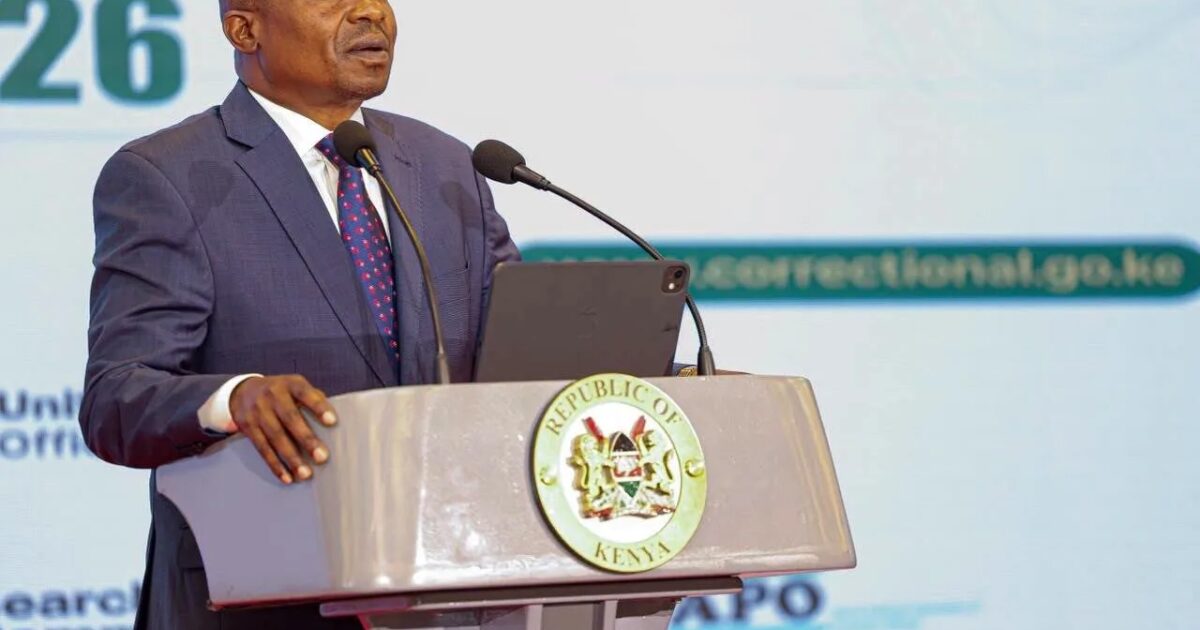
Kindiki: Calls for Swift AI Adoption in Kenya Correctional Services
Summary
- Deputy President Kithure Kindiki called for accelerated AI and digital technology adoption in Kenya's correctional services.
- The initiative aims to improve efficiency, service delivery, and rehabilitation programs within correctional institutions.
- Kindiki stressed that technology use must uphold human dignity, protect personal information, and prevent discrimination.
- Digital transformation must align with national policies like the National Digital Master Plan and AI Strategy.
- The Deputy President also urged expanded rehabilitation programs and environmentally sustainable practices.
A Push for Digital Transformation in Kenya's Prisons
Crucially, while advocating for accelerated technological uptake, Deputy President Kindiki issued a stern warning against the misuse of digital tools.
Deputy President Kithure Kindiki has called for the swift integration of artificial intelligence (AI) and other advanced digital technologies within the State Department for Correctional Services. This significant directive was delivered during the official inauguration of the fourth Correctional Service Week, held in Nairobi, Kenya, on Tuesday. The core objective of this technological drive is to elevate operational efficiency, enhance service delivery, and bolster rehabilitation programs across all correctional institutions.
Kindiki specifically identified AI, data analytics, and secure digital communication as pivotal tools. He articulated that these innovations are essential for refining operational planning, pinpointing deficiencies in service provision, and optimizing the deployment of finite resources. The Deputy President underscored the substantial opportunities these technologies present for strengthening the support systems for individuals under correctional supervision, marking a clear intent for Kindiki AI adoption Kenya correctional services.
Legal and Ethical Imperatives for Technology Use
Crucially, while advocating for accelerated technological uptake, Deputy President Kindiki issued a stern warning against the misuse of digital tools. He insisted that any digital transformation within correctional facilities must be firmly rooted in legal principles, consistently uphold human dignity, and meticulously safeguard the rights of those under correctional supervision. This includes robust provisions for the protection of personal information and stringent measures to prevent discrimination, ensuring that the benefits of technology do not compromise fundamental human rights technology Kenya prisons.
Furthermore, Kindiki emphasized the necessity of aligning these digital initiatives with established national policy frameworks. He specifically referenced the National Digital Master Plan 2022–2032, the National E-Commerce Strategy 2023, and the National Artificial Intelligence Strategy 2025–2030. This strategic alignment is designed to guarantee that advancements in Kenya State Department Correctional Services AI are fully consistent with broader national priorities, rigorous cybersecurity protocols, and comprehensive data-protection standards, addressing concerns around AI data protection correctional institutions Kenya.
Expanding Rehabilitation and Green Initiatives
Beyond the technological mandate, Deputy President Kindiki challenged the State Department to augment its digital investments with an expansion of rehabilitation and reintegration programs. He outlined a diverse array of essential initiatives, including comprehensive education, vocational training, psychosocial support, restorative justice practices, active family involvement, and community-based alternatives to incarceration. The overarching aim is to transform correctional institutions into dynamic hubs for skills development, innovation, and sustainable production, thereby equipping inmates with practical competencies crucial for successful reintegration into society upon release.
In a complementary call, Kindiki also urged the adoption of environmentally sustainable practices within correctional facilities, reflecting the theme of this year's Correctional Service Week: 'Transforming Correctional Services through Technology and Green Solutions'. He encouraged the integration of climate-friendly approaches such as renewable energy sources, water harvesting and conservation, efficient waste management systems, climate-smart agriculture, tree planting, and the development of environmentally responsible infrastructure. Specific recommendations included fostering productive farms, enhancing irrigation and agricultural mechanization, promoting waste-recycling, and expanding the use of clean energy, all contributing to improved productivity and resource stewardship.
Broader Implications for Kenya's Justice System
The directive from Deputy President Kithure Kindiki for accelerated AI adoption in Kenya's correctional services represents a pivotal moment for the nation's justice system. This strategic push, articulated in Nairobi, is designed not only to enhance operational efficiencies but also to embed a framework that prioritizes human rights and robust data protection within correctional institutions. The explicit requirement to align with national digital strategies, including the Kenya National Digital Master Plan AI and the National Artificial Intelligence Strategy, underscores a holistic and responsible approach to technological integration.
This dual focus on advanced technology and expanded rehabilitation programs, coupled with green initiatives, paints a picture of correctional facilities that are both technologically progressive and deeply committed to social responsibility. Such developments highlight an increasing imperative for legal and compliance professionals to closely monitor the evolving landscape of AI data protection in correctional institutions Kenya. This oversight is crucial to ensure that the implementation of these technologies adheres to the highest standards of privacy, non-discrimination, and digital rights for all individuals under state supervision, shaping future legal advice concerning these critical areas.
Practical Implications
Lawyers and compliance officers should monitor the development and implementation of AI and digital technologies within Kenya's correctional services for potential new data protection regulations, human rights safeguards, and compliance requirements that may affect individuals under correctional supervision or entities providing services to these institutions. This could lead to new areas of legal advice concerning privacy, discrimination, and digital rights within the justice system.
Source
How does this affect you?
Get an AI analysis of this article grounded in your jurisdictions, practice areas, and any policy documents you've uploaded to Wansom.
Finish Reading the Full Story and the Expert Analysis.
Get the latest legal & regulatory intelligence in Kenya
Wansom is AI and can make mistakes.