
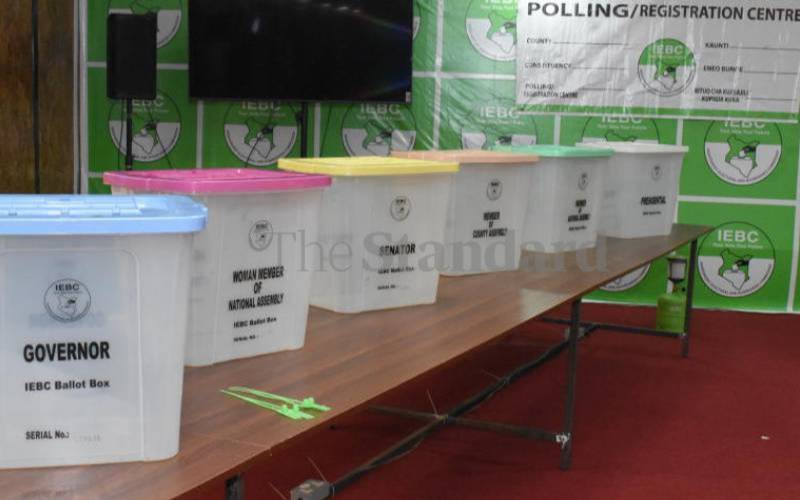
IEBC: Ballot Paper Security Lawsuit Kenya Challenges Integrity
Summary
- Kenya's Independent Electoral and Boundaries Commission (IEBC) faces new court battles over ballot paper security and campaign financing.
- The National Reconstruction Alliance Party (NRA) filed a lawsuit alleging the IEBC removed security features from ballot papers.
- The NRA's lawsuit specifically targets the Ethekon-Edung-led commission for these alleged removals.
- A separate legal challenge concerns the capping of campaign finance, adding to the IEBC's legal disputes.
- These cases are significant for establishing precedents on election integrity and regulatory compliance in Kenya.
Recent Legal Challenges Against Kenya's Electoral Body
For legal professionals, especially those advising political parties or engaged in election litigation, these cases demand close monitoring.
The Independent Electoral and Boundaries Commission (IEBC), Kenya's primary electoral body, is currently facing a series of new legal battles that scrutinize fundamental aspects of the nation's election framework. These challenges, which represent significant Kenya election legal challenges, specifically target the integrity of ballot paper security features and the regulatory mechanisms governing campaign financing. The emergence of these IEBC court cases underscores ongoing scrutiny of the commission's operational procedures and its role in upholding democratic principles.
One prominent lawsuit has been initiated by the National Reconstruction Alliance Party (NRA). This party has brought a direct challenge against the IEBC, alleging serious irregularities concerning the security of ballot papers. Specifically, the NRA claims that the commission, under the leadership of Ethekon-Edung, has purportedly removed crucial security features from the ballot papers. This particular IEBC ballot paper security lawsuit Kenya highlights deep concerns about potential vulnerabilities in the electoral process and the safeguarding of votes.
Separately, the IEBC is also contending with another legal dispute focused on campaign finance regulations. While the specific details of this second case are not yet fully elaborated in the public domain, its existence points to a broader examination of how political campaigns are funded and the extent to which spending limits are enforced. This IEBC campaign finance capping challenge suggests that stakeholders are keen to ensure fairness and transparency in electoral spending, preventing undue influence in political contests.
The Significance of Ballot Security and Campaign Finance Oversight
The allegations raised in the IEBC ballot paper security lawsuit Kenya are particularly critical given the central role of ballot integrity in any credible election. Security features on ballot papers are designed to prevent counterfeiting, tampering, and other forms of electoral fraud, thereby ensuring that every vote cast is legitimate and accurately counted. Any perceived compromise of these features, as alleged in the Ethekon-Edung commission lawsuit, could severely undermine public confidence in the electoral outcome and the democratic process itself.
Beyond ballot security, the legal challenge concerning campaign finance capping is equally vital for maintaining a level playing field in Kenyan politics. Regulations on campaign financing aim to limit the influence of money in elections, promote transparency, and ensure that all political parties and candidates have a fair opportunity to compete, regardless of their financial backing. The outcome of this IEBC campaign finance capping challenge could redefine the parameters for political spending and accountability during election cycles.
These legal proceedings against the IEBC are not isolated incidents but rather form part of a recurring pattern of Kenya election legal challenges that often precede or follow major electoral events. Such cases frequently test the robustness of electoral laws and the independence of the institutions tasked with their enforcement. The resolutions of these specific IEBC court cases will undoubtedly contribute to the evolving jurisprudence surrounding election management in the country.
Implications for Electoral Integrity and Legal Practice
The ongoing legal battles against the Independent Electoral and Boundaries Commission carry profound implications for the future of electoral integrity in Kenya. The resolution of the IEBC ballot paper security lawsuit Kenya, in particular, will either affirm the robustness of the commission's security protocols or necessitate significant reforms to restore public trust in the authenticity of ballot materials. Similarly, the outcome of the IEBC campaign finance capping challenge will establish important precedents for financial oversight in political campaigns, potentially influencing how parties raise and spend funds in future elections.
For legal professionals, especially those advising political parties or engaged in election litigation, these cases demand close monitoring. The decisions rendered by the courts in these IEBC court cases could establish critical precedents regarding election integrity, ballot security protocols, and campaign finance regulations in Kenya. Such precedents would be invaluable for understanding the legal landscape and strategizing for future electoral disputes. The Ethekon-Edung commission lawsuit, specifically, could set a benchmark for accountability regarding the handling of sensitive election materials.
Ultimately, the outcomes of these lawsuits will play a crucial role in shaping public perception of the IEBC's capacity to deliver free, fair, and transparent elections. They will also influence the broader framework of Kenya election legal challenges, potentially leading to legislative amendments or enhanced oversight mechanisms. The ongoing scrutiny highlights the continuous need for vigilance and legal engagement to safeguard democratic processes.
Practical Implications
Lawyers advising political parties or involved in election litigation should closely monitor the progress and outcomes of these lawsuits against the IEBC, as they could establish critical precedents regarding election integrity, ballot security protocols, and campaign finance regulations in Kenya.
Source
How does this affect you?
Get an AI analysis of this article grounded in your jurisdictions, practice areas, and any policy documents you've uploaded to Wansom.
Finish Reading the Full Story and the Expert Analysis.
Get the latest legal & regulatory intelligence in Kenya
Wansom is AI and can make mistakes.