
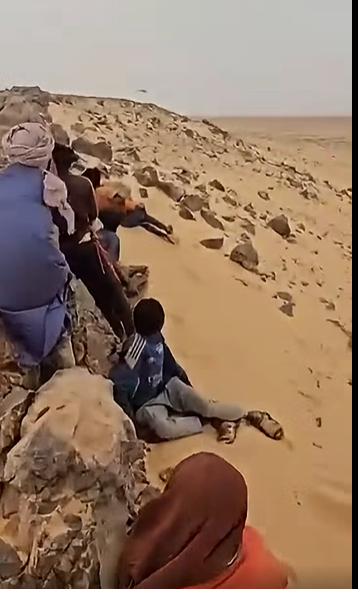
El Burhan: Sudan to Probe Egyptian Border Strikes After Miner Deaths
Summary
- Two Egyptian truck drivers were shot dead in Khartoum, and a third injured, an incident allegedly linked to revenge for Sudanese miners killed near the border.
- Sudanese Armed Forces Commander Lt Gen Abdelfattah El Burhan has ordered a fact-finding committee to investigate the deaths of Sudanese miners reportedly killed by Egyptian forces near the border.
- Egyptian authorities acknowledged conducting operations against illegal gold mining in the border area, stating they aimed to secure borders and protect national wealth.
- The UN Office for the Coordination of Humanitarian Affairs (OCHA) expressed grave concern over widespread airstrikes and drone attacks across Sudan, calling for compliance with international humanitarian law and accountability for civilian casualties.
- An Egyptian initiative has called for transparency from both governments regarding the circumstances and casualties of the border bombings.
Escalating Tensions and Fatalities
The establishment of a Sudanese fact-finding committee to investigate alleged Egyptian military actions against Sudanese miners holds significant implications for cross-border security operations and the application of international humanitarian law.
The recent shooting deaths of two Egyptian truck drivers in Khartoum have intensified an already volatile situation, following reports of Egyptian military actions that killed numerous Sudanese miners near the shared border. On Monday, a third Egyptian national sustained injuries during the market shooting in Khartoum. Egyptian Foreign Minister Badr Abdelatty promptly directed his country's ambassador to engage Sudanese authorities to ascertain the incident's specifics and facilitate the repatriation of the deceased.
Sources close to the police indicated the arrest of a 23-year-old suspect, found with a Kalashnikov rifle. This individual reportedly told investigators he sought retribution for his brother, who allegedly perished alongside Sudanese miners in a bombing near the border. While this motive remains unverified, the incident underscores the heightened animosity in the region. The Egyptian military has acknowledged conducting operations in the border vicinity, characterizing them as the third phase of a campaign against illicit gold extraction in the Eastern Desert. This campaign, involving both armed forces and civilian police, was initiated after warnings to what Egypt termed "criminal elements," with the stated objectives of securing Egypt's borders and safeguarding its national resources.
Reports concerning the casualties among Sudanese miners are conflicting, with the Emergency Lawyers group estimating at least 72 fatalities. In the aftermath, surviving miners and injured individuals were transported towards Port Sudan, where local resistance committees organized a blood donation drive for the wounded. The Egyptian military, while confirming its operations, urged the public to rely on official information and dismissed what it labeled as misleading rumors designed to damage relations between the two nations.
Official Investigations and International Concerns
In response to the escalating crisis and the reported deaths of Sudanese miners, Lieutenant General Abdelfattah El Burhan, who serves as both Commander of the Sudanese Armed Forces (SAF) and President of the Transitional Sovereignty Council, has mandated the formation of a fact-finding committee. This committee is tasked with thoroughly investigating the circumstances surrounding the deaths of Sudanese miners in the border area. This directive follows a similar inquiry initiated earlier this year, specifically after an alleged attack by Egyptian forces on June 17 and 18. The current investigation is crucial given the discrepancies in reported death tolls and the growing demands for transparency regarding the nature of the strikes.
The United Nations Office for the Coordination of Humanitarian Affairs (OCHA) has voiced profound alarm regarding the ongoing aerial bombardments and drone assaults across Sudan, highlighting the renewed dangers faced by civilians displaced by the conflict, even in areas previously considered safe havens. OCHA reported that dozens of individuals were killed in a Saturday bombing of traditional gold mining sites near the Egyptian border. Furthermore, the UN agency cited accounts of at least four civilian deaths, including a woman and three children, from strikes in Kadugli, South Kordofan, on the same day.
Other incidents documented by OCHA include a drone attack in West Kordofan on Friday, which reportedly killed at least 12 civilians and injured eight at a shelter for displaced families in En Nuhoud. Another assault in Ghubeish locality resulted in the deaths of five civilians, three of whom were children, in a residential area housing displaced persons. The UN also condemned drone attacks near a displacement camp in Wad El Mahi, Blue Nile State, on Friday, which reportedly claimed over 30 civilian lives. OCHA has unequivocally called for adherence to international humanitarian law, the protection of civilians and civilian infrastructure, and accountability for any severe violations. Echoing these sentiments, Shaimaa Sami, executive director of the Egyptian Madad Initiative, has urged both the Egyptian and Sudanese governments to clarify the bombing incidents and disclose the full extent of casualties.
Implications for Cross-Border Security and Accountability
The establishment of a Sudanese fact-finding committee to investigate alleged Egyptian military actions against Sudanese miners holds significant implications for cross-border security operations and the application of international humanitarian law. This Sudan investigation into Egyptian forces' conduct could set important precedents for accountability in situations where national security objectives intersect with civilian protection in border regions. The findings of the probe, particularly concerning the Sudanese miners deaths border, will be critical in determining the extent of civilian harm and potential breaches of international norms.
For legal and compliance professionals, monitoring the outcomes of the El Burhan probe Egyptian border strikes is essential. The investigation's conclusions could influence risk assessments for businesses and individuals operating in conflict-affected border zones, especially those involved in resource extraction. The broader context of cross-border security operations in the region, coupled with the UN's strong emphasis on international humanitarian law Sudan, underscores the need for clear guidelines and accountability mechanisms to prevent civilian casualties and ensure adherence to humanitarian principles. The tragic Khartoum Egyptian drivers shooting, allegedly motivated by revenge for the miners' deaths, further highlights the volatile nature of these tensions and the far-reaching consequences of unresolved conflicts in border areas.
Practical Implications
Lawyers and compliance officers should monitor the findings of the Sudanese fact-finding committee regarding alleged Egyptian military actions against Sudanese miners. This investigation could establish precedents for accountability under international humanitarian law in cross-border security operations and impact risk assessments for businesses and individuals operating in conflict-affected border regions, particularly those involved in resource extraction.
Source
How does this affect you?
Get an AI analysis of this article grounded in your jurisdictions, practice areas, and any policy documents you've uploaded to Wansom.
Finish Reading the Full Story and the Expert Analysis.
Get the latest legal & regulatory intelligence in Sudan
Wansom is AI and can make mistakes.