
Kevin Warsh Jackson Hole Interest Rates: Fed May Hold Despite Inflation
Summary
- Federal Reserve Chair Kevin Warsh stated that recent inflation reports show prices are running above the Fed's 2% target.
- U.S. markets closed higher for the week, reflecting optimism that the Federal Reserve will not raise interest rates next month.
- Geopolitical tensions, including new U.S. sanctions on Iran and trade tariffs with Canada, are contributing to persistent inflationary pressures.
- Consumer sentiment declined significantly in August, with concerns about gasoline prices and a weakening economy.
- Small businesses reported increased optimism but continue to face widespread supply chain disruptions.
What Happened at Jackson Hole
Despite Federal Reserve Chair Kevin Warsh's explicit acknowledgment of inflation running above target, the prevailing sentiment among market participants and experts is that the central bank will refrain from adjusting interest rates in the immediate future.
Federal Reserve Chair Kevin Warsh delivered his inaugural address at the annual Jackson Hole Symposium in Wyoming on Friday, immediately drawing market attention. During his speech, Warsh directly acknowledged that a series of recent inflation reports consistently indicate that "Inflation is running above our 2% target." He highlighted specific data points, noting that personal consumption expenditures (PCE) had increased by 0.2%, surpassing expectations. Furthermore, the year-over-year PCE inflation stood at 3.7% higher than twelve months prior, a figure somewhat mitigated by a slight decrease in gasoline prices. The six-month change in PCE was even more pronounced, registering at 4.1%.
Despite some consumer price index (CPI) reports over the summer exceeding forecasts, Warsh expressed reservations, stating they "do not tell me that the underlying trends have meaningfully improved." Hours following his address, U.S. markets concluded the week with gains, recovering some ground lost from recent bond market volatility. The Dow Jones Industrial Average rose by 282 points since the previous week, the S&P 500 added 37 points, and the Nasdaq climbed 222 points. This market rebound reflected a prevailing optimism on Wall Street that the Federal Reserve will opt to maintain current interest rates at its upcoming meeting next month.
Mounting Economic Headwinds
The Federal Reserve's deliberations on interest rates are complicated by a confluence of persistent economic pressures, extending beyond domestic inflation figures. Geopolitical tensions, particularly the ongoing Iran conflict, continue to exert upward pressure on energy prices. Now in its sixth month, the conflict has significantly disrupted shipping through the Strait of Hormuz, with an analysis by Goldman Sachs indicating that oil flows through this critical waterway are approximately two-thirds of pre-conflict levels. Consequently, Brent crude barrels were trading at roughly $89 by the close of Friday's trading.
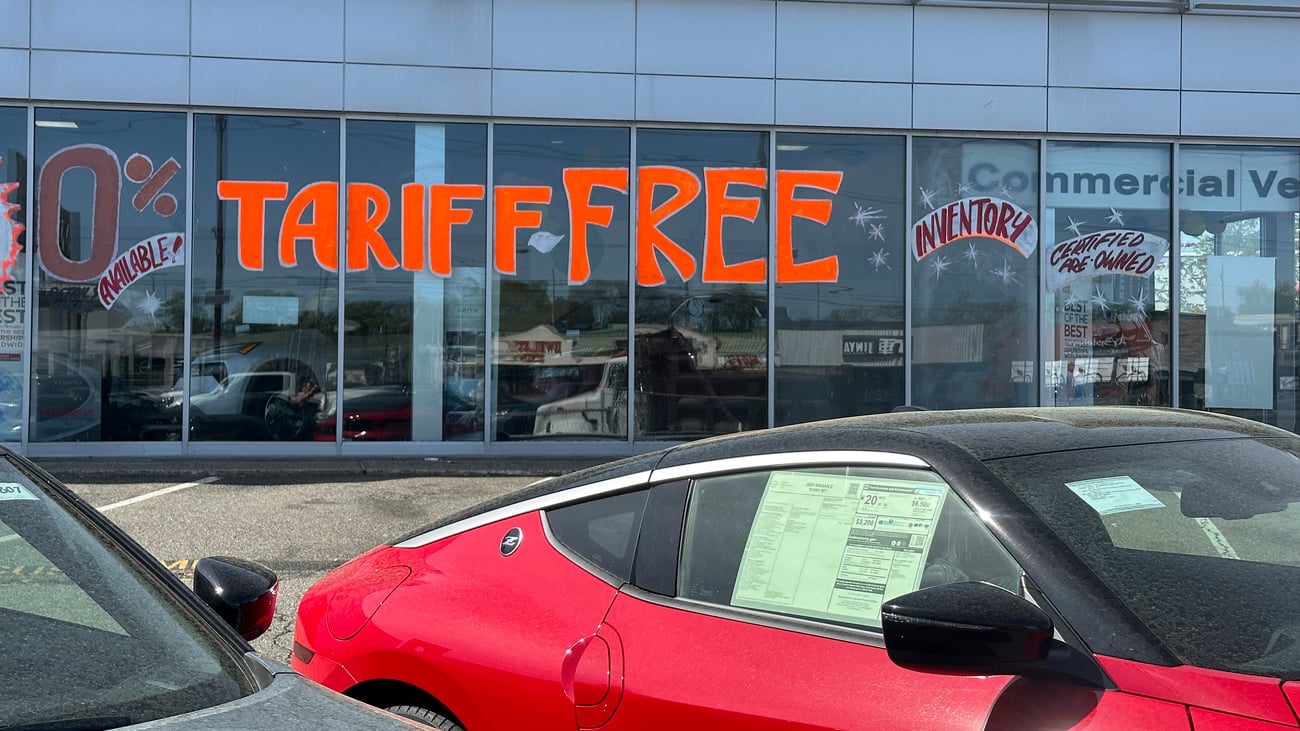
Adding to these global concerns, the White House this week intensified its economic campaign against Iran, announcing new secondary sanctions targeting entities and networks that facilitate Iran's efforts to "smuggle oil, evade sanctions and fund terror." Treasury Secretary Scott Bessent explicitly stated that China would not be exempt from these measures, raising the specter of a renewed trade war with Beijing, even as Chinese President Xi Jinping is slated to meet President Donald Trump next month. Concurrently, new trade disputes have emerged closer to home, with Trump imposing 50% tariffs on select Canadian imports, prompting retaliatory tariffs from Canada, further contributing to inflationary pressures that are unlikely to abate soon.
Shifting Consumer and Business Outlook
The cumulative effect of these economic uncertainties is clearly reflected in recent sentiment surveys, indicating a cautious outlook among both consumers and small businesses. The monthly University of Michigan survey revealed a notable decline in consumer sentiment for August, dropping approximately four points to 51.7. This figure represents a significant decrease of more than 11 points compared to a year ago, with both the "current conditions" and "expectations" segments experiencing similar monthly declines. Joanne Hsu, the survey's director, noted that consumers are "increasingly worried that prospects elsewhere in the economy could be weakening" and anticipate further increases in gasoline prices, driven by "ongoing policy uncertainty including the Iran conflict."
While the Conference Board's survey earlier in the week also showed a slight dip of nearly a point for August, its "expectations" segment fell by almost six points, contrasting with a somewhat more optimistic view of the "present situation" compared to July. In a more positive development, the National Federation of Independent Business (NFIB) reported increased optimism among small businesses in its quarterly index compared to April, largely fueled by improved earnings in the manufacturing and service sectors. However, this optimism is tempered by widespread operational challenges, as nearly two-thirds of respondents cited supply chain disruptions, a problem reported as prevalent by 84% of wholesalers.
The Fed's Interest Rate Dilemma
Despite Federal Reserve Chair Kevin Warsh's explicit acknowledgment of inflation running above target, the prevailing sentiment among market participants and experts is that the central bank will refrain from adjusting interest rates in the immediate future. Wall Street's positive reaction to Warsh's Jackson Hole speech, coupled with its sustained optimism, underscores this expectation. Jamie Cox, a managing partner at Harris Financial Group, articulated this view on Wednesday, stating that while "Inflation is annoyingly sticky right now," it is "not enough to move the Federal Reserve to hike" rates.
This perspective suggests that while the Fed is closely monitoring inflationary trends and the broader economic landscape, including geopolitical conflicts and supply chain issues, these factors are not yet deemed severe enough to warrant an immediate increase in borrowing costs. The market appears to be interpreting Warsh's concerns as a cautionary note rather than a signal for imminent policy tightening, maintaining hopes that the Federal Reserve will prioritize stability in its upcoming decisions regarding interest rates.
Source
Source: Original reporting via CN
How does this affect you?
Get an AI analysis of this article grounded in your jurisdictions, practice areas, and any policy documents you've uploaded to Wansom.
Finish Reading the Full Expert Analysis.
Wansom is AI and can make mistakes.