
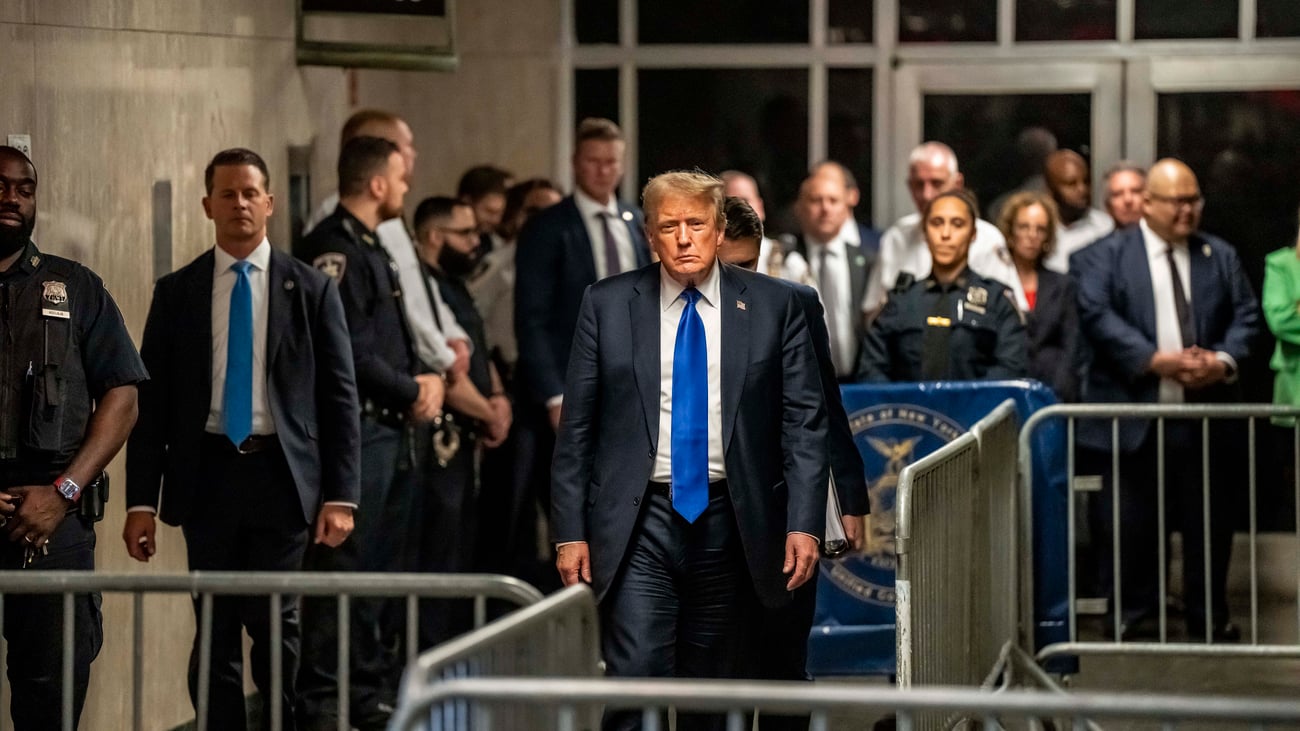
Judge Hellerstein: Trump Hush Money Case Federal Transfer Denied Post-Conviction
Summary
- A New York federal judge denied former President Donald Trump's motion to transfer his state criminal convictions in the "hush money" case to federal court.
- U.S. District Judge Alvin Hellerstein ruled that federal officer removal is not available after a defendant has been convicted, sentenced, and judgment entered in a criminal case.
- The judge reiterated that discussions and payments related to an alleged affair are not "official acts" covered by presidential immunity.
- Trump's convictions are for falsifying business records tied to a $130,000 payment to Stormy Daniels before the 2016 election.
- The ruling means Trump's appeal process for his falsifying business records conviction will continue within the New York state court system.
What Happened
The denial of the Trump hush money case federal transfer underscores critical limitations on the ability to remove state criminal proceedings to federal court, especially at advanced stages.
A federal judge in New York recently rejected former President Donald Trump's attempt to transfer his state criminal convictions in the "hush money" case to federal court. U.S. District Judge Alvin Hellerstein denied the motion, which sought to move the proceedings from New York state court to Manhattan federal court, thereby preventing Trump from pursuing his goal of overturning the convictions and reviving previously dismissed immunity claims.
Judge Hellerstein's decision centered on the procedural stage of the case, asserting that federal officer removal is not available once a defendant has been convicted, sentenced, had judgment entered, and noticed an appeal in a criminal matter. This ruling, which addressed a "hail Mary" motion, marks another unsuccessful bid by the former president to shift the legal battleground.
Legal Context and Immunity Claims
This recent denial by Judge Hellerstein is consistent with his previous rulings on the matter, including a 2023 decision to deny a pre-trial transfer motion. Throughout these proceedings, Trump has repeatedly argued that the actions leading to his conviction for falsifying business records were undertaken in his official capacity as president, thus entitling him to executive immunity. However, Judge Hellerstein has consistently rejected this defense, maintaining that discussions and payments related to an alleged affair with adult film actor Stormy Daniels, or its cover-up, do not fall within the "outer perimeter" of a president's official responsibilities.
The court specifically noted that such conduct cannot be construed as an official act, thereby precluding the application of presidential immunity. This stance reinforces the limited scope of what constitutes an "official act" for immunity purposes, particularly in the context of state criminal cases. The Second Circuit Court of Appeals had previously remanded the case to Judge Hellerstein in a November 2025 ruling, instructing him to consider whether Trump's conviction conflicted with the Supreme Court's 2024 decision on broad presidential immunity, a point Hellerstein has now addressed with this latest denial.
The Conviction and Its Aftermath
The underlying convictions stem from a 2024 jury finding that Donald Trump orchestrated a $130,000 payment to Stormy Daniels through his former personal attorney, Michael Cohen. This payment was made in the run-up to the 2016 presidential election, driven by Trump's concern that Daniels might disclose details of their 2006 sexual encounter at a politically inopportune moment. To conceal the true nature of these transactions, Trump disguised the repayments to Cohen as standard legal fees, with witnesses testifying that some of these illicit checks were signed by Trump from the Oval Office during his first presidential term.
Following the jury's verdict, New York Supreme Court Justice Juan Merchan sentenced Trump to an unconditional discharge on November 26, 2024, solidifying his status as a convicted felon in New York City while sparing him from immediate incarceration or probation. Trump's strategic aim in seeking a federal transfer was to open a new avenue for appeal, potentially allowing him to challenge the Manhattan district attorney's case before the Second Circuit and ultimately the U.S. Supreme Court, a path now closed by Judge Hellerstein's latest decision.
Why This Ruling Matters
The denial of the Trump hush money case federal transfer underscores critical limitations on the ability to remove state criminal proceedings to federal court, especially at advanced stages. Judge Alvin K. Hellerstein's consistent position, which he had telegraphed during oral arguments in February by stating there was "nothing for me to do" at that point, clarifies that post-conviction federal court transfer is generally unavailable. This ruling further solidifies the judicial interpretation that actions like orchestrating hush money payments are not considered "official acts" falling under the umbrella of presidential immunity, regardless of when they occurred or whether checks were signed from the Oval Office.
This outcome has significant implications for the scope of presidential immunity and the federal officer removal statute, reiterating that such defenses are not boundless. It confirms that state criminal cases, even those involving former federal officials, will remain in state jurisdiction when the alleged conduct falls outside the clear definition of official duties and when removal is sought after conviction and sentencing. The decision effectively means that the appeal process for Trump's falsifying business records conviction will proceed within the New York state court system.
Practical Implications
This ruling clarifies the limited scope for federal officer removal of state criminal cases, particularly post-conviction, and reiterates that actions like hush money payments are not considered 'official acts' for presidential immunity claims. Lawyers advising clients facing state criminal charges who might consider federal removal or immunity defenses, especially those involving conduct outside clear official duties, should note this precedent regarding the timing and applicability of such strategies.
Source
How does this affect you?
Get an AI analysis of this article grounded in your jurisdictions, practice areas, and any policy documents you've uploaded to Wansom.
Finish Reading the Full Expert Analysis.
Wansom is AI and can make mistakes.