
10th Circuit: Alters Probation Violation Sentencing, Vacates Moon Seals Term
Summary
- The en banc 10th Circuit Court of Appeals vacated Malachi Mathias Moon Seals' three-year prison sentence for a probation violation, remanding his case for resentencing.
- The court ruled that sentencing for federal probation violations should primarily focus on the new conduct constituting the violation, not a combination of the violation and the original offense.
- This decision overturns the previous two-step sentencing scheme established by the 2022 `United States v. Moore` precedent in the 10th Circuit.
- U.S. Circuit Judge Timothy Tymkovich authored the 23-page plurality opinion, which was joined by ten other judges.
- U.S. Circuit Judge Gregory Phillips filed a 58-page dissent, arguing the new ruling undermines uniformity and proportionality in federal sentencing.
Key Shift in 10th Circuit Probation Violation Sentencing
The en banc 10th Circuit Court of Appeals has significantly altered the landscape for federal probation violation guidelines, vacating a three-year prison sentence for Malachi Mathias Moon Seals and remanding his case for resentencing.
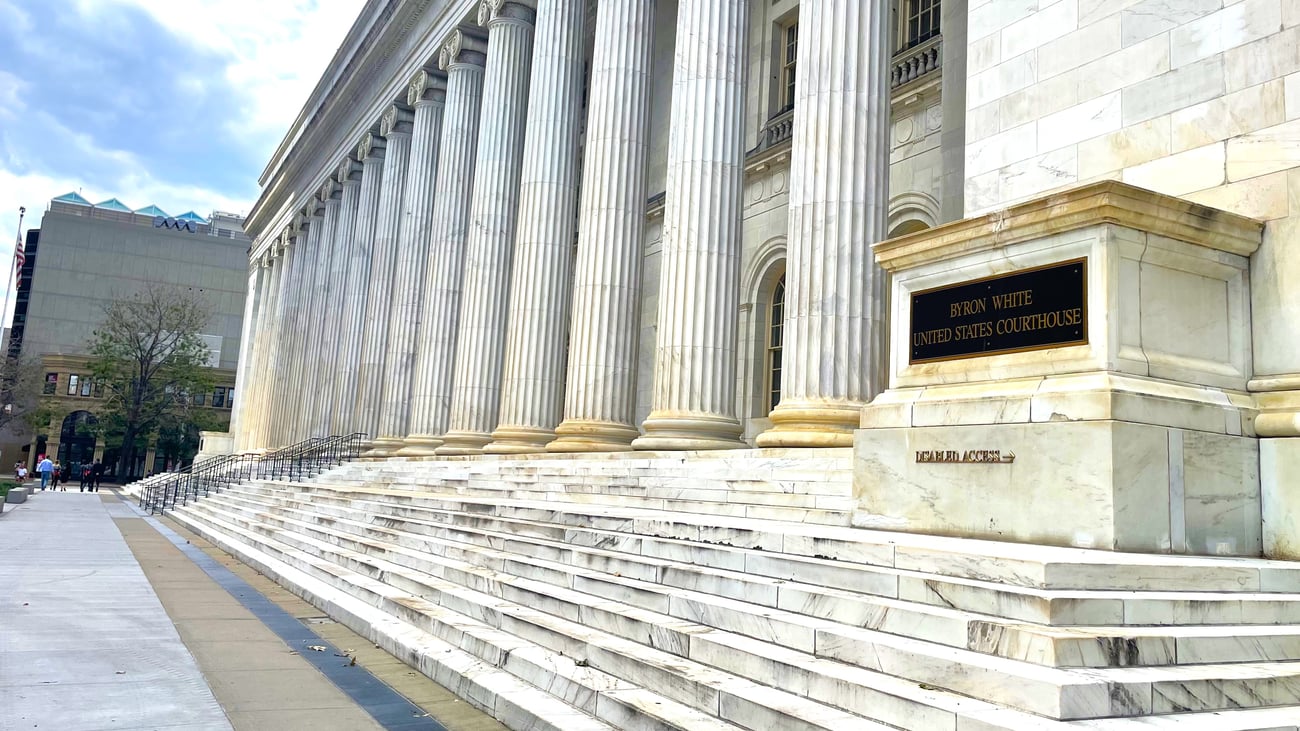
The en banc 10th Circuit Court of Appeals has significantly altered the landscape for federal probation violation guidelines, vacating a three-year prison sentence for Malachi Mathias Moon Seals and remanding his case for resentencing. This pivotal 11-1 decision, issued on Friday, clarifies that sentencing for probation violations should primarily focus on the new conduct constituting the violation, rather than a combination of the violation and the underlying original offense. The ruling, which emerged from the Byron White U.S. Courthouse in downtown Denver, Colorado, marks a crucial update to how federal courts within the circuit will approach such cases.
Moon Seals' journey to this landmark decision began after he received a five-year probation sentence for threatening federal officials and engaging in interstate communication of threats between November 2021 and January 2022. Despite admitting to sending vulgar messages to members of Congress and their families, which he described as therapeutic, Moon Seals maintained he had no intent to carry out the threats. However, days into his probation, he sent a new threat to a former CIA official, prompting U.S. District Judge Charlotte Sweeney to impose a 36-month prison term, noting his repeated chances to behave.
Overturning Prior Precedent
Moon Seals appealed his 36-month sentence, contending that the district court erred by resentencing him based on the original offense rather than solely the probation violation. Initially, a three-judge panel of the 10th Circuit affirmed the sentence, with U.S. Circuit Judge Gregory Phillips authoring that opinion. Subsequently, Moon Seals sought an en banc review, specifically challenging the two-step sentencing scheme derived from the 2022 10th Circuit case, `United States v. Moore`.
Under the `United States v. Moore` precedent, courts were directed to first consider sentencing guidelines for the original offense, then calculate an additional term for the probation violation. The en banc court, however, has now overturned this approach. In a 23-page plurality opinion penned by U.S. Circuit Judge Timothy Tymkovich, the court mandated that judges should sentence individuals "for the new conduct — the violation of probation." The original offense should only be considered when deciding whether to vary from the recommended sentence under the federal probation violation guidelines, a practice already adopted by other circuits. Ten circuit judges, including Chief U.S. Circuit Judge Jerome Holmes, Judges Harris Hartz, Scott Matheson, Robert Bacharach, Caroline McHugh, Nancy Moritz, Joel Carson, Allison Eid, Veronica Rossman, and Richard Federico, joined Judge Tymkovich's opinion, reflecting a broad consensus across appointees from multiple administrations.
Implications and Dissenting Concerns
This significant 10th Circuit probation violation sentencing change means that attorneys practicing in the circuit must immediately update their understanding of federal probation violation guidelines. The ruling shifts the primary focus of sentencing from the underlying crime to the specific new conduct that constitutes the violation, potentially leading to more proportionate sentences for clients accused of probation violations.
U.S. Circuit Judge Gregory Phillips, an Obama appointee, was the sole dissenter in the `Tymkovich probation opinion`, expressing his concerns in a 58-page dissent. He argued that the two-step scheme established in `United States v. Moore 10th Circuit` provided essential "uniformity and proportionality," aligning with the Sentencing Reform Act of 1984. Judge Phillips contended that the majority's decision, while limited to revocation-of-probation situations, risks returning the circuit to a "discretion-driven, disparity-ridden, hope-I-get-the-lenient-judge sentencing system," describing it as a "big, jagged chip of granite off this circuit’s previously smooth face of uniformity and proportionality for federal sentencings." The `Malachi Moon Seals vacated sentence` now necessitates a new sentencing hearing consistent with these clarified guidelines.
Practical Implications
Lawyers practicing in the 10th Circuit must immediately update their understanding of federal probation violation sentencing, as the en banc court has clarified that sentencing should focus primarily on the new conduct, not the underlying original offense. This shift from the `United States v. Moore` precedent provides new grounds for arguing for more proportionate sentences for clients accused of probation violations.
Source
How does this affect you?
Get an AI analysis of this article grounded in your jurisdictions, practice areas, and any policy documents you've uploaded to Wansom.
Finish Reading the Full Expert Analysis.
Wansom is AI and can make mistakes.