
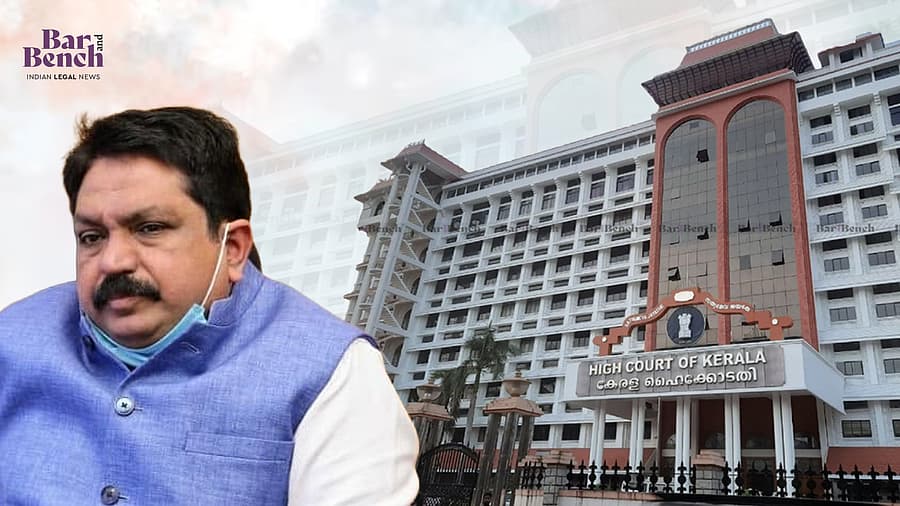
Kerala High Court: Suspends Tomin Thachankary Sentence in Assets Case
Summary
- The Kerala High Court suspended ex-DGP Tomin Thachankary's four-year jail sentence in a disproportionate assets case.
- Justice A Badharudeen issued the order on Thursday, pending Thachankary's appeal against his conviction.
- Thachankary was convicted on September 17 by the Kottayam Special Judge for acquiring assets worth over ₹64 lakh, with ₹30 lakh deemed disproportionate income.
- The trial court had sentenced him to four years imprisonment and imposed a fine of ₹30.84 lakh.
- This decision allows Thachankary to avoid immediate incarceration while his appeal is heard by the High Court.
High Court Grants Interim Relief
This procedural safeguard is vital for ensuring due process and allowing for a full review of a trial court's decision.
The Kerala High Court recently issued an order suspending the four-year prison sentence previously handed down to former Director General of Police (DGP) Tomin Thachankary. This decision, delivered by Justice A Badharudeen on Thursday, pertains to a disproportionate assets case identified as "Tomin J Thachakary v. State of Kerala". The suspension will remain in effect while the High Court considers Thachankary's primary appeal, which challenges his conviction.
The former DGP had submitted an application specifically requesting the suspension of his custodial sentence. The High Court had previously reserved its judgment on this application on September 24, following comprehensive arguments presented by Thachankary's legal team and counter-arguments from the state government. This interim measure allows Thachankary to avoid immediate incarceration as his legal challenge progresses through the appellate system.
Origins of the Disproportionate Assets Case
The legal proceedings against Thachankary originated from a complaint lodged by Bobby Kuruvila. This complaint alleged that during his tenure as a public servant, Thachankary had amassed various properties, including houses and flats, which were not commensurate with his declared income. Such accusations of financial impropriety against public officials are a serious matter under Indian law, often leading to extensive investigations.
A subsequent investigation conducted by the vigilance department corroborated aspects of the initial complaint. The probe revealed that between the years 2003 and 2007, Thachankary had acquired assets valued at over ₹64 lakh. Crucially, the investigation identified a disproportionate income amounting to approximately ₹30 lakh, which represented more than 50% of his known and legitimate earnings during that specific four-year period. These findings formed the basis for the charges brought against him.
Trial Court Conviction and Appellate Strategy
On September 17, the Kottayam Enquiry Commissioner and Special Judge (Vigilance), presiding over the case, delivered a verdict of conviction against Thachankary. Judge KV Rajaneesh sentenced the former police official to four years of imprisonment. In addition to the custodial sentence, a financial penalty of ₹30.84 lakh was imposed, reflecting the gravity of the financial misconduct found by the trial court.
Following this conviction, Thachankary promptly initiated a Kerala High Court criminal appeal, seeking to overturn the trial court's judgment. Concurrently with filing his main appeal, he also submitted a separate application requesting the suspension of his sentence. His appeal contends that the trial court's verdict was erroneous, laying the groundwork for a comprehensive legal challenge to the findings and penalties imposed. This dual approach is a common procedural step for individuals seeking to avoid immediate penal consequences while pursuing higher court review.
Implications for Legal Practice
This development offers a pertinent example for legal professionals advising clients involved in disproportionate assets cases across India, particularly within Kerala. The successful application for suspension of sentence pending appeal by a high-profile individual like ex-DGP Tomin Thachankary highlights a critical procedural avenue available to convicted persons. It demonstrates that even after an ex-DGP Tomin Thachankary conviction and sentencing, the High Court can grant interim relief, preventing immediate imprisonment while an appeal is pending.
Lawyers should recognize the importance of understanding and effectively utilizing appellate procedures for challenging convictions and mitigating immediate penalties. The case underscores that a conviction at the trial level does not necessarily lead to immediate incarceration if a robust appeal and a well-argued application for suspension of sentence are presented to the High Court. This procedural safeguard is vital for ensuring due process and allowing for a full review of a trial court's decision.
Practical Implications
Lawyers advising clients convicted in disproportionate assets cases in India, particularly in Kerala, should note the procedural avenue for seeking sentence suspension from the High Court during the pendency of an appeal, as demonstrated in this high-profile case. This development underscores the importance of understanding appellate procedures for challenging convictions and mitigating immediate penalties.
Source
How does this affect you?
Get an AI analysis of this article grounded in your jurisdictions, practice areas, and any policy documents you've uploaded to Wansom.
Finish Reading the Full Story and the Expert Analysis.
Get the latest legal & regulatory intelligence in India
Wansom is AI and can make mistakes.