
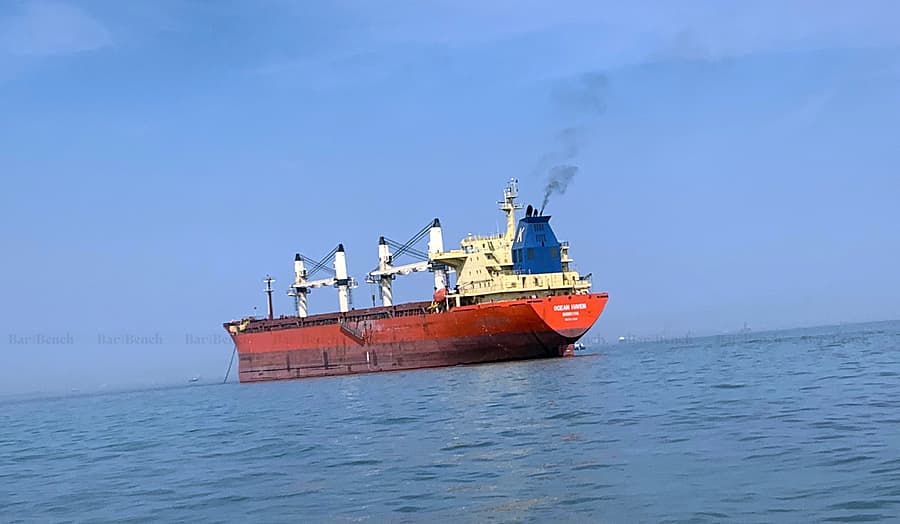
Kerala High Court: No Ship Arrest for Other Vessel's Crew Wages Under Common Management
Summary
- The Kerala High Court ruled that a ship cannot be arrested solely because it shares management with another vessel whose crew wages are outstanding.
- The court specified that such an arrest requires prima facie evidence of commonality of interest between shipowners and a clear intent to defraud a creditor.
- This decision came in a case where a manning agent sought to arrest the MT Ocean Faye to recover wages paid to crew members of three other vessels managed by the same entity.
- The ruling clarifies that common management does not automatically imply common ownership, thereby limiting the scope of "sister ship" arrests for contractual disputes.
- The Division Bench, comprising Chief Justice Soumen Sen and Justice Syam Kumar VM, dismissed the appeal filed by Light House Marine Service India Pvt Ltd.
The Court's Decision and Case Specifics
By requiring proof of both commonality of interest between owners and an intent to defraud, the Kerala High Court has provided a more stringent interpretation of the circumstances permitting the arrest of a vessel for the liabilities of another.
The Kerala High Court recently delivered a significant ruling, affirming that a vessel cannot be seized to satisfy the wage claims of crew members from a different ship, even if both are under the same management umbrella. This determination was made by a Division Bench, led by Chief Justice Soumen Sen and Justice Syam Kumar VM, in the case of Light House Marine Service India Pvt Ltd v Charter and Parties interested in the Vessel MT Ocean Faye & ors. The court's decision underscores a crucial distinction between operational management and legal ownership in maritime disputes.
The specific appeal before the court involved Light House Marine Service India Pvt Ltd, a company acting as a manning agent or crew supplier. This entity had sought to secure the arrest of the vessel MT Ocean Faye. Their objective was to recover wages they had disbursed to crew members who served on three distinct vessels, all of which were managed by Star Voyages Shipping Services LLC. The appellant's argument hinged on the shared management of these vessels.
However, the High Court ultimately dismissed the appeal. It clarified that a contractual disagreement between a crew-supplying agency and a ship manager regarding outstanding payments for crew services on certain vessels does not inherently justify the arrest of another vessel, simply because all involved ships share a common manager. The court emphasized that the appellant's role was strictly that of a crew supplier, not a bareboat or demise charterer, which would typically entail a different level of operational control and legal standing.
Legal Framework for Ship Arrests
Central to the High Court's judgment was a detailed examination of the conditions under which a ship may be arrested for debts related to another vessel. The bench stipulated that such an arrest could only be considered if there was prima facie evidence demonstrating a shared financial interest among the shipowners, coupled with a clear and discernible intent to defraud a creditor. This establishes a much higher bar than merely pointing to a common management structure.
The court explicitly rejected the notion that shared management automatically implies shared ownership. It highlighted that the operational control exercised by a management entity over multiple vessels does not necessarily translate into a common proprietary interest among the vessels' legal owners. This distinction is fundamental in admiralty law, particularly concerning the concept of "sister ship" arrests, where a vessel can be arrested for the liabilities of another vessel under the same beneficial ownership.
By requiring proof of both commonality of interest between owners and an intent to defraud, the Kerala High Court has provided a more stringent interpretation of the circumstances permitting the arrest of a vessel for the liabilities of another. This ruling reinforces the principle that maritime liens and arrest procedures are generally tied to the specific vessel incurring the debt, unless exceptional circumstances involving ownership and fraudulent intent are clearly established.
Implications for Maritime Debt Recovery
This ruling carries significant implications for various stakeholders within the Indian maritime sector, particularly for manning agents, shipping companies, and creditors involved in maritime disputes. It clarifies the strict boundaries for pursuing asset recovery through ship arrests, especially when dealing with claims for crew wages across different vessels. The judgment makes it clear that relying solely on the existence of a common management entity will no longer suffice as grounds for arresting a vessel to cover debts incurred by another.
For manning agents and other creditors, the decision means that strategies for debt recovery must now incorporate a more rigorous investigation into the ownership structures of vessels. The onus is now firmly on the claimant to demonstrate not just common management, but also a deeper commonality of interest between the actual shipowners and, critically, an intention to defraud. This will likely necessitate more complex legal and financial due diligence before initiating arrest proceedings.
Conversely, for shipping companies and vessel owners, this ruling offers a degree of protection against unwarranted arrests based solely on shared operational management. It reinforces the legal separation of assets, even when managed by the same entity, provided there is no underlying commonality of ownership interest or fraudulent intent. This clarification impacts how maritime businesses structure their operations and manage their liabilities, emphasizing the importance of clear ownership distinctions.
Practical Implications
Lawyers advising shipping companies, manning agents, or creditors in maritime disputes must be aware that the Kerala High Court has clarified the strict limits for arresting a ship to recover crew wages of another vessel. Merely having common management is insufficient; proof of commonality of interest between shipowners and intent to defraud a creditor is now required, impacting strategies for debt recovery and asset protection in the Indian maritime sector.
Source
How does this affect you?
Get an AI analysis of this article grounded in your jurisdictions, practice areas, and any policy documents you've uploaded to Wansom.
Finish Reading the Full Story and the Expert Analysis.
Get the latest legal & regulatory intelligence in India
Wansom is AI and can make mistakes.