
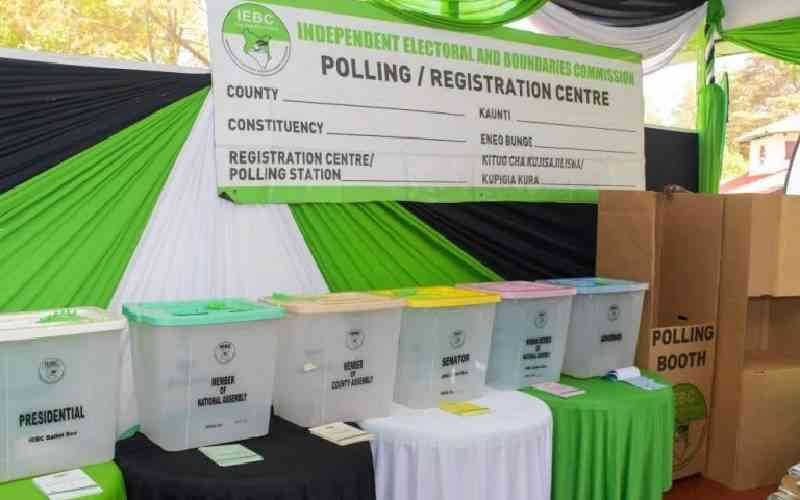
Kenya: Voter Registration Fraud Allegations Surface Near Uganda Border
Summary
- Allegations of irregular acquisition of Kenyan identity documents and voter registration have emerged along the Kenya-Uganda border.
- An investigation by The Standard uncovered testimonies and documents pointing to vulnerabilities in citizen identification and voter registration systems.
- The National Registration Bureau and the Independent Electoral and Boundaries Commission are under scrutiny due to these findings.
- These concerns raise questions about the integrity of the voters' roll ahead of Kenya's 2027 General Election.
What Happened
The potential for non-citizens to be irregularly registered as voters, facilitated by compromised identity documents, directly undermines the principle of one person, one vote, and the overall fairness of elections.
As Kenya prepares for the 2027 General Election, significant concerns are emerging regarding the integrity of the national voters' roll, particularly in regions bordering Uganda. Allegations have surfaced detailing the irregular acquisition of Kenyan identity documents and subsequent illicit voter registration. These claims suggest a systemic vulnerability that could compromise the electoral process.
An investigation conducted by The Standard has brought these issues to light, revealing both eyewitness testimonies and documentary evidence that underscore potential weaknesses within the systems designed to identify legitimate citizens and register eligible voters. The findings specifically point to irregularities along the Kenya-Uganda border, where the process of obtaining national identification and subsequently registering to vote appears to have been exploited.
This development has placed two key government bodies under intense scrutiny: the National Registration Bureau (NRB), responsible for issuing identity documents, and the Independent Electoral and Boundaries Commission (IEBC), tasked with managing voter registration and maintaining the integrity of the electoral register. The allegations imply a failure in oversight or process within both institutions, raising fundamental questions about the authenticity of the upcoming electoral list.
Regulatory Oversight Under Scrutiny
The National Registration Bureau plays a critical role in establishing the foundational identity of Kenyan citizens, issuing the national identity documents that are prerequisites for various civic functions, including voter registration. The allegations of irregular acquisition of these documents suggest a potential breach in the bureau's protocols, allowing individuals who may not be legitimate Kenyan citizens to obtain official identification. Such a compromise at the initial stage of identity verification creates a cascading effect, undermining subsequent processes, including those related to Kenyan identity document fraud.
Similarly, the Independent Electoral and Boundaries Commission bears the constitutional mandate of ensuring a credible and accurate voter register. Its systems for enrolling voters are directly reliant on the integrity of national identity documents. The reported vulnerabilities indicate that individuals who may have irregularly obtained Kenyan identity documents could then proceed to register as voters, thereby corrupting the electoral roll. This places the IEBC under considerable pressure to review and fortify its registration mechanisms ahead of the 2027 polls, especially concerning the influx of individuals from neighboring Uganda, potentially linked to Ugandan voter registration Kenya.
The joint scrutiny of both the NRB and the IEBC highlights the interconnectedness of national identity management and electoral administration. Any weakness in one system inevitably impacts the other, creating avenues for potential fraud that could skew election outcomes. The investigation's findings therefore call for a comprehensive review of the entire chain of identity verification and voter enrollment processes, particularly concerning National Registration Bureau ID irregularities.
Threat to Electoral Integrity
The emerging questions surrounding voter registration fraud along the Kenya-Uganda border pose a significant threat to the integrity of Kenya's democratic process, particularly as the nation gears up for the 2027 General Election. The potential for non-citizens to be irregularly registered as voters, facilitated by compromised identity documents, directly undermines the principle of one person, one vote, and the overall fairness of elections. Such irregularities could lead to widespread distrust in electoral outcomes and potentially trigger legal challenges, impacting the IEBC voter roll integrity 2027.
Maintaining a clean and accurate voter roll is paramount for any credible election. If the allegations of Kenya voter registration fraud Uganda prove to be substantiated, they could form the basis for electoral petitions challenging the results of the 2027 polls, citing fundamental flaws in the electoral register. This situation demands immediate and thorough investigation to ascertain the extent of the problem and implement robust corrective measures.
The implications extend beyond the immediate electoral cycle, touching upon national security and the sanctity of Kenyan identity. The reported irregularities highlight a critical need for enhanced vigilance and collaboration between relevant agencies to safeguard both the national registration system and the electoral framework against fraudulent activities. Addressing these vulnerabilities is crucial to upholding the democratic tenets of the nation and ensuring that the 2027 elections reflect the true will of the Kenyan populace.
Practical Implications
This development highlights potential vulnerabilities in Kenya's voter registration and ID issuance systems, which could lead to legal challenges regarding the integrity of the 2027 General Election. Lawyers advising political parties, candidates, or election monitoring bodies should closely track these investigations for potential grounds in electoral petitions or to advise on compliance with electoral laws.
Source
How does this affect you?
Get an AI analysis of this article grounded in your jurisdictions, practice areas, and any policy documents you've uploaded to Wansom.
Finish Reading the Full Story and the Expert Analysis.
Get the latest legal & regulatory intelligence in Kenya
Wansom is AI and can make mistakes.