
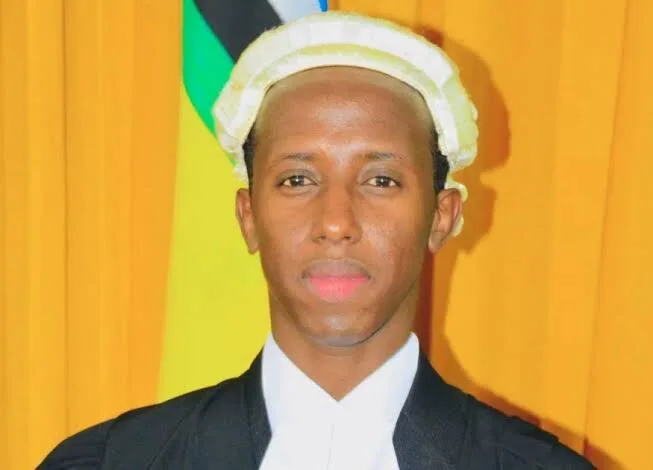
Milimani High Court: Abshir Abdi Found Marsabit, Habeas Corpus Adjourned
Summary
- Missing Nairobi lawyer Abshir Abdi was reportedly found dumped in Sololo, Marsabit County, 11 days after his alleged abduction.
- The Milimani High Court was informed of his discovery, leading Justice Alexander Muteti to adjourn a habeas corpus hearing and expect Abdi's production.
- Abdi's family had sought court orders against the Inspector General of Police, DCI, and NIS, alleging his abduction by armed individuals.
- The Law Society of Kenya expressed grave concerns over the abduction, linking it to Abdi's professional work and threatening industrial action.
- Family court documents also detailed Abdi's prior arrest by counter-terrorism police and alleged intimidation from security agencies.
The Disappearance and Discovery
This pattern of alleged intimidation and the recent abduction have intensified Kenya lawyer security concerns, underscoring the potential risks faced by legal practitioners, especially those handling sensitive cases that may involve state actors.
The search for missing Nairobi lawyer Abshir Ahmedsadak Abdi took a significant turn when he was reportedly discovered abandoned in Sololo, Marsabit County. This development, which emerged on Thursday, November 12, was communicated to the Milimani High Court, leading to an adjournment in the ongoing habeas corpus application concerning his whereabouts. A legal representative involved in the case informed the court that information had been received indicating the advocate's discovery in Sololo.
This finding followed an 11-day period since Abdi's alleged abduction on November 1. The incident reportedly occurred along Muchai Road, situated off Ngong Road in Nairobi. According to an affidavit submitted by his brother, Zakaria Abshir, armed individuals intercepted the lawyer. These assailants, some clad in tactical combat uniforms and bulletproof vests, were traveling in a black Toyota Land Cruiser Prado TX and a separate double-cabin vehicle.
The armed group reportedly pursued Abdi's white Toyota Premio before forcibly removing him from his vehicle and compelling him into the Land Cruiser. His car, bearing registration number KDL 356C, was subsequently located abandoned along Muchai Road and later transported to Kilimani Police Station. Following these events, Abdi's family initiated a missing person report as efforts to locate him intensified amidst widespread concern.
Judicial Intervention and Family's Allegations
The Milimani High Court had been actively engaged in the matter, with Justice Alexander Muteti presiding over the habeas corpus application. Upon learning of Abdi's discovery, Justice Muteti mandated that the case be mentioned again on Friday, November 13, with the expectation that Abshir Abdi would be presented before the court. This legal action was initiated by Abdi's family, who sought judicial orders to compel the Inspector General of Police, the Directorate of Criminal Investigations (DCI), the National Intelligence Service (NIS), and other state security agencies to disclose his location and ensure his appearance in court.
Prior to this development, Justice Muteti had emphasized the serious nature of the allegations surrounding the disappearance, ruling that the habeas corpus application warranted a substantive hearing. The judge underscored the responsibility of security agencies to account for missing citizens, asserting that they could not simply disclaim accountability by denying custody of an individual. Despite these judicial pronouncements, both the police and the DCI had consistently maintained that the missing lawyer Abshir Abdi was not in their custody.
Zakaria Abshir, the lawyer's brother, presented compelling evidence to the High Court on Wednesday, November 11. This included CCTV footage, which he stated depicted the circumstances of his brother's alleged abduction. Additionally, photographs related to Abdi's previous arrest and interrogation were submitted, aiming to shed light on the events leading to his disappearance. The family's court documents also alleged that Abdi had faced prior intimidation and threats from security agencies before he went missing.
Professional Outcry and Systemic Concerns
The disappearance of Abshir Abdi ignited significant outrage across the legal community, prompting the Law Society of Kenya (LSK) to demand immediate answers from security agencies and call for his prompt release. The LSK had warned of potential nationwide industrial action if Abdi was not located and produced, highlighting the incident as a grave threat to the independence and safety of legal professionals in Kenya. The society explicitly linked its concerns to Abdi's professional engagements, particularly his involvement in a criminal case before the Makadara Law Courts.
Further details from the family's court filings revealed a history of encounters between Abdi and state security apparatus. Zakaria Abshir stated that his brother had been arrested on October 9, 2025, by officers from the Counter-Terrorism Police Unit. These officers were reportedly later joined by personnel from the National Intelligence Service and military intelligence. Following this arrest, Abdi was taken to Kahawa Law Courts, where investigators sought a 10-day detention order for questioning.
The family also alleged that Abdi had previously reported receiving threats to senior security officials, yet no effective measures were taken to address these concerns. This pattern of alleged intimidation and the recent abduction have intensified Kenya lawyer security concerns, underscoring the potential risks faced by legal practitioners, especially those handling sensitive cases that may involve state actors. The Milimani High Court's ongoing oversight in this matter remains crucial for upholding constitutional rights and ensuring accountability.
Practical Implications
This case underscores the significant personal risks lawyers in Kenya may face, particularly when handling sensitive matters involving state security agencies. It also highlights the judiciary's critical role in enforcing constitutional rights like habeas corpus and demanding accountability from state actors for alleged abductions.
Source
How does this affect you?
Get an AI analysis of this article grounded in your jurisdictions, practice areas, and any policy documents you've uploaded to Wansom.
Finish Reading the Full Story and the Expert Analysis.
Get the latest legal & regulatory intelligence in Kenya
Wansom is AI and can make mistakes.